
Care Doctor
Two Hunters' CJD Cases Did Not Prove Deer-to-Human CWD Transmission

Correction, October 21, 2026: An earlier version incorrectly stated that CWD-infected venison killed hunters and that transmission to people had been established. The reported cases involved Creutzfeldt-Jakob disease (CJD). Their cause was not established as chronic wasting disease (CWD). We have corrected the headline and explanation.
Chronic wasting disease affects deer, elk and related animals. Reports about two hunters who developed a different prion disease raised questions about a possible connection, but did not prove one.
That distinction matters. A case report can identify a question worth investigating without demonstrating what caused a person's illness.
Two diseases need to be distinguished
CWD and CJD belong to the family of prion diseases, which involve abnormal proteins and damage to the nervous system. They are not interchangeable diagnoses.
Calling a person's CJD a confirmed case of deer-derived CWD goes beyond the evidence described in the report.
What the hunters' report actually described

A conference abstract published in Neurology in April 2024 discussed two CJD cases associated with the same hunting group. One patient was a 72-year-old man seen in 2022.
The authors reported a history of eating venison from a deer population affected by CWD. That history did not establish that a particular meal contained infected meat.
Why the cases raised questions

The report considered a possible relationship between the patients' histories and their illnesses. It called for further investigation and surveillance.
It also stated that causation remained unproven. The earlier version of this article incorrectly turned that uncertainty into a confirmed transmission event.
The diagnosis reported after death
The abstract described rapidly developing confusion and aggression in the older patient, followed by worsening illness. He died within a month of his initial presentation.
Postmortem examination identified sporadic CJD. A month from presentation is not evidence of a month-long incubation period after a specific meal.
What the second case establishes
The patient's friend had also died of CJD and had eaten venison from the same deer population, according to the abstract.
Those shared circumstances warranted investigation. They did not establish when either person was exposed or show that CWD caused either death.
The current human evidence
The CDC's CWD overview, updated in January 2026, says human CWD infections have never been reported. Whether people can become infected remains unknown.
That is a statement about the evidence available now, rather than a guarantee that transmission can never occur.
What laboratory research adds

A 2024 NIH study using human cerebral organoids found no CWD infection in that laboratory model after exposure and observation for up to six months.
The result supported a substantial species barrier. The researchers also acknowledged limitations, including possible genetic susceptibility and different prion strains. A laboratory model cannot settle every real-world exposure question.
Avoiding an unsupported comparison

The earlier article treated the hunters' cases as an established species jump and compared them with other outbreaks. That comparison depended on a conclusion the case report did not establish.
The corrected account keeps the patients' reported diagnosis separate from the hypothesis about its cause.
Geographic claims need a date
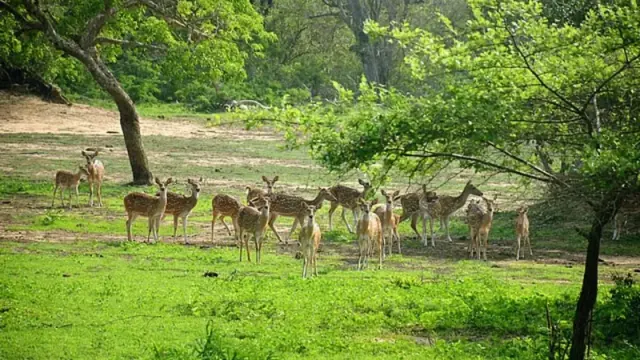
CWD has been detected across multiple US states. Its reported distribution changes as wildlife surveillance identifies additional cases.
The earlier article's state count and ranking are removed here because they were not adequately dated or supported. They should not be read as a current map of risk.
What remains uncertain
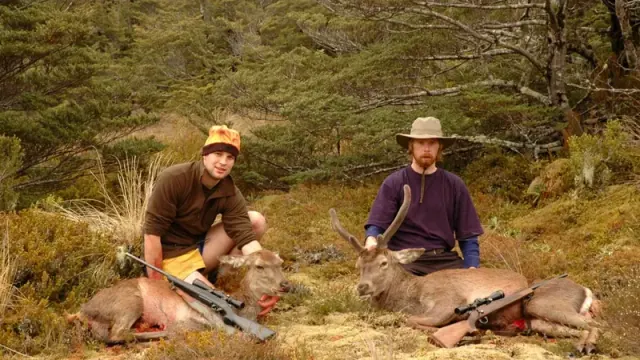
Researchers continue to investigate possible transmission to people. The evidence discussed here does not establish that the two hunters acquired CWD from venison.
Readers should use current public-health and wildlife-agency guidance for their location rather than treating this historical case report as individualized advice.
Why the correction is material
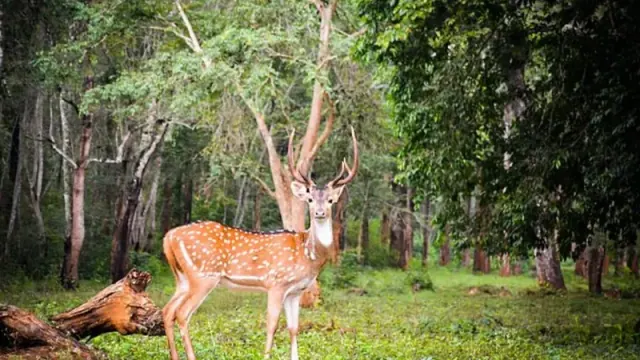
The distinction between a possible association and a proven cause changes the meaning of the story. The earlier headline stated a conclusion the sources did not support.
The correction makes that error explicit while retaining the historical article and its original contributor credit.
Related stories



Stephanie Bontorin
Stephanie Bontorin is a Vancouver-based writer and editor whose work covers news, lifestyle, travel, and literature. She also writes short stories, zines, and fiction.