Care Doctor
How a Grandmother’s Health Scare Inspired Jelly Drops
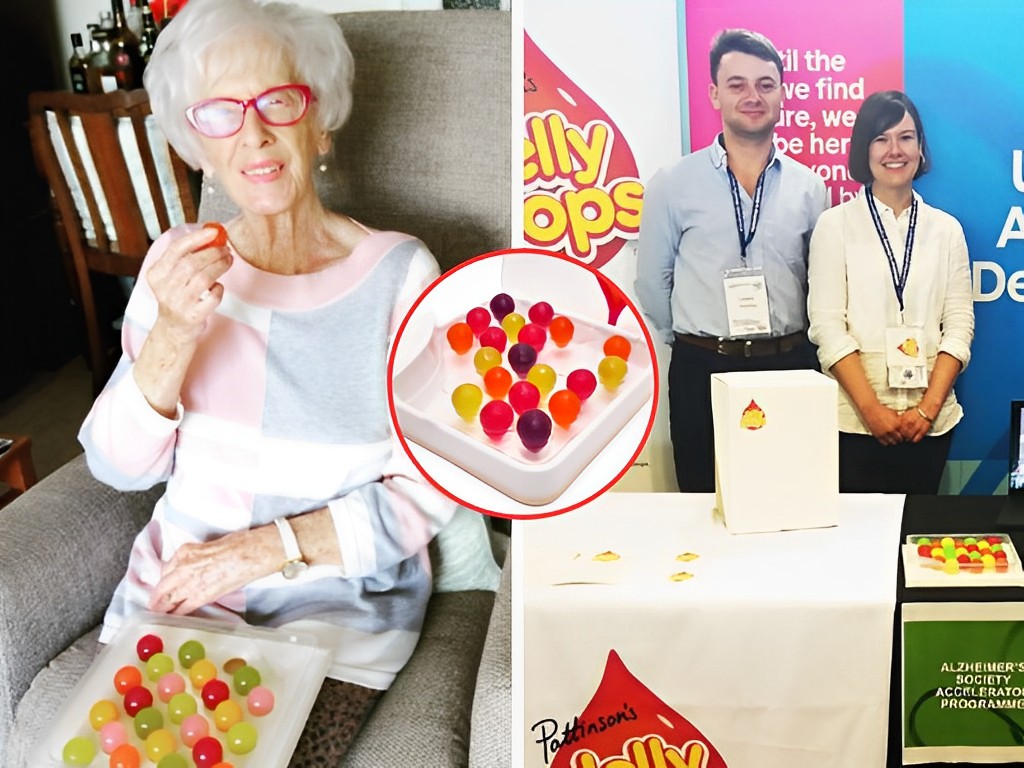
Lewis Hornby wanted to help his grandmother Pat drink more. She was living with dementia, and a hospital admission for dehydration made the problem urgent for her family. His response was a design project that eventually became Jelly Drops: brightly colored, water-rich sweets.
The story began with someone he loved. It also raised a practical question for anyone designing a care product: how do you make something useful easy to recognize, pick up and enjoy?
A Problem Close to Home
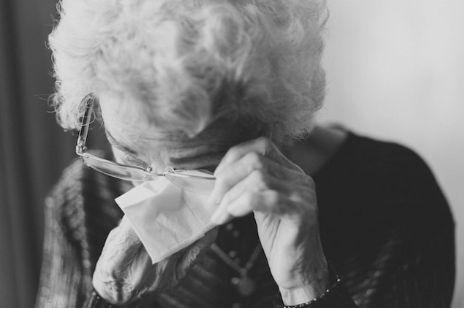
Pat's experience gave Hornby a reason to look closely at everyday care. Having water nearby did not necessarily mean she would drink enough of it. He began considering what else might encourage her to take in fluids.
That distinction matters. Putting a glass on a table is one step; helping someone notice it, want it and use it can take more thought. Hornby was trying to understand those steps through his grandmother's experience.
Dementia Changes Everyday Tasks

Dementia describes a group of symptoms that affect abilities such as memory, thinking and decision-making. Alzheimer's disease is one cause. The effects differ from person to person, so it would be a mistake to assume that everyone needs the same kind of help.
For Hornby, the challenge was personal and specific. He wasn't designing a cure for dementia. He was looking for another way to make fluids appealing to his grandmother.
Why a Drink Can Be Missed
Someone living with dementia may forget to drink, have trouble recognizing a cup or need help reaching it. Preferences matter as well: a drink that goes untouched may be the wrong temperature or an unappealing flavor.
These are different problems, and swallowing difficulty is another issue again. Jelly Drops should not be treated as a solution for that difficulty. The manufacturer explicitly says the product is not suitable for people who have trouble swallowing.
Care Still Comes First
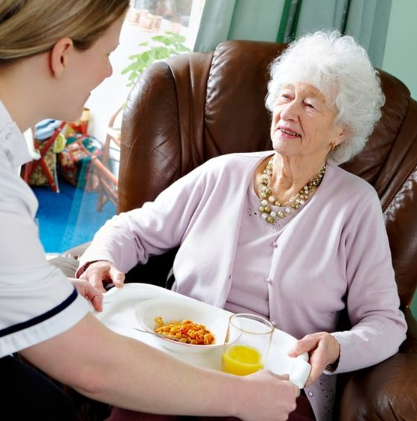
If someone is struggling to drink or swallow, their care team needs to assess what is happening. A professional may recommend changes to food or drink consistency, but those choices should be tailored to the person. A family should not assume that a soft-looking sweet is safe simply because it contains water.
Jelly Drops are intended to supplement fluid intake. They do not replace usual drinks, a swallowing assessment or treatment for dehydration.
An Idea With a Specific Purpose

It is easy for an invention story to grow into a claim much bigger than the product itself. Here, the aim was to offer water in a form Pat might enjoy. That is a useful design problem without calling the result a cure.
People with dementia can still receive treatment and support even though there is no general cure for the condition. Their hydration needs also remain individual and may change over time.
The Hospital Visit That Prompted It

According to Alzheimer's Society's account, Pat was taken to hospital with dehydration and received intravenous fluids over 24 hours. The experience prompted Hornby to investigate ways of helping her drink more.
It wasn't a minor inconvenience for the family. But neither does the story mean that sweets can replace medical treatment when dehydration becomes serious. The hospital care and the later design work served very different purposes.
Starting With Someone He Knew
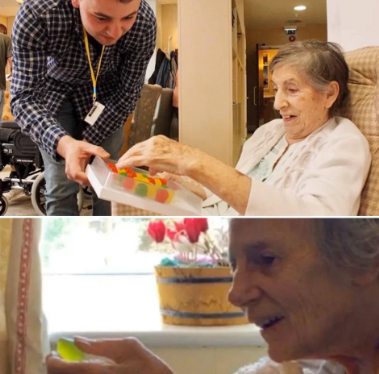
Hornby had a reason to keep asking questions: he wanted daily life to be easier for his grandmother. Rather than begin with a broad promise about a new product, he focused on what she responded to.
That gave the project a clear starting point. Could a familiar-looking treat encourage her to take in a little more water? Her preferences helped shape both the appearance of the sweets and the way they were presented.
Learning in a Care Home
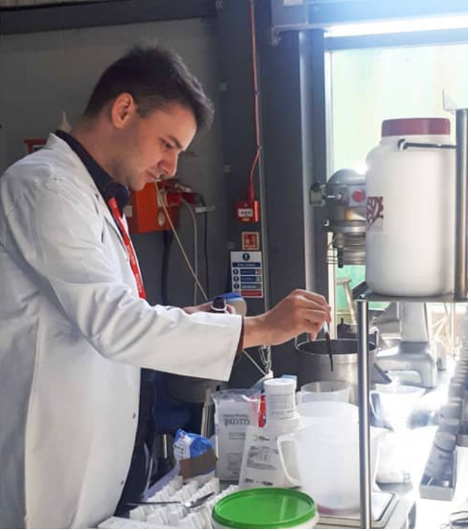
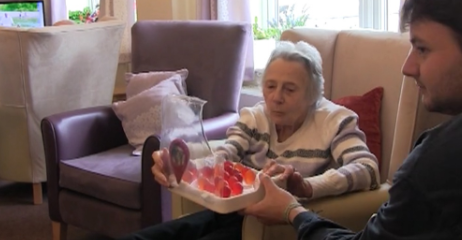
Alzheimer's Society describes Hornby spending a month in his grandmother's care home while researching the idea. He also consulted people with relevant expertise as he developed it.
Watching daily routines offered something a sketch alone could not: a chance to see what people reached for, what they ignored and which tasks required help. Those observations informed the prototypes. They did not make him an expert on every person's experience of dementia.
The Result Became Jelly Drops
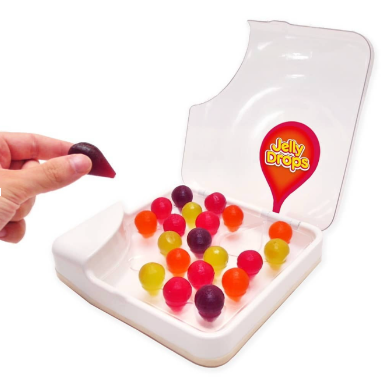
The eventual product looked more like a treat than a glass of water. Its bright colors and small pieces were intended to invite people to pick it up. That was a change in presentation, not a promise that drinking would never be difficult again.
The drops are solid sweets. They are not little containers with liquid centers, and their appearance should not be used to judge whether they are suitable for someone with swallowing problems.
Water in a Different Form
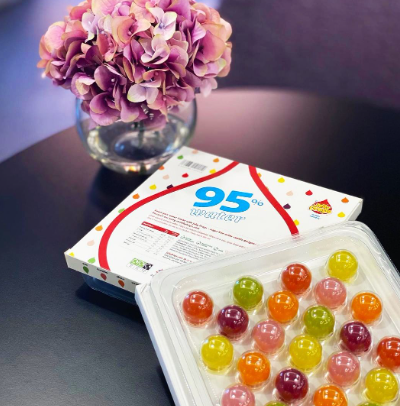
The manufacturer describes its current sweets as 95% water, with a firm texture rather than a liquid middle. The attraction is straightforward: someone who enjoys eating them takes in some water too.
Product formulations and sizes can change, so current packaging is the place to check ingredients and serving information. An old photograph or an early prototype description does not establish what is in a box sold today.
Making the Product Recognizable
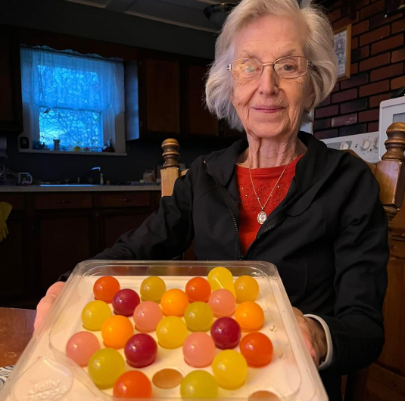
The early design avoided the look of medication. Instead, it used the colors and presentation of sweets. Hornby described that familiarity as part of the appeal for people trying the prototypes.
It was a practical observation about how something looked on the table. It did not mean that every person with dementia would recognize the product, like its taste or want to eat it. Individual preferences still mattered.
A Treat Someone Might Choose
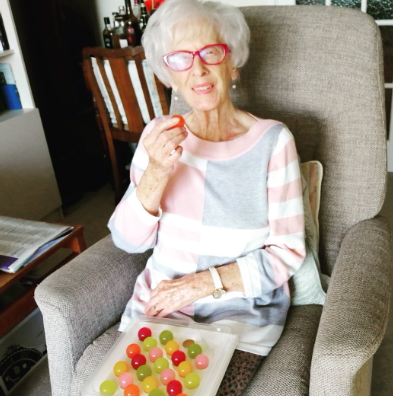
Offering another option can change a routine. A person who leaves one drink untouched might respond to a different flavor or to a food they enjoy. Hornby's work followed that line of thought.
The point was not to force a response. It was to find something Pat might choose for herself. Claims that sweetness restores memory or that all people with dementia find eating easier than drinking go beyond what this story establishes.
Pat’s Preferences Helped Shape It
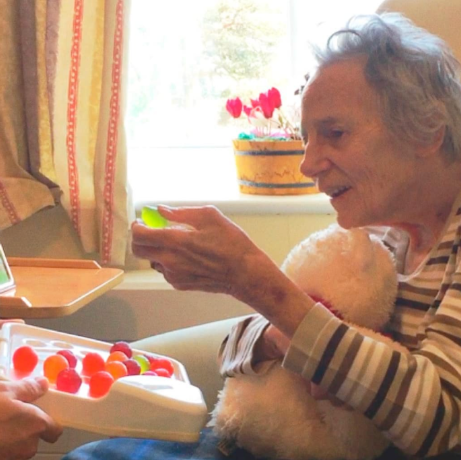
Pat's fondness for sweets was part of the inspiration. Brightly colored pieces gave Hornby a way to build on something she already liked, rather than asking her to adopt an entirely unfamiliar habit.
That personal detail makes the origin of Jelly Drops easy to understand. It also explains why the product should be considered individually. What appealed to Pat might appeal to another person, but her response cannot stand in for theirs.
Why the Packaging Mattered
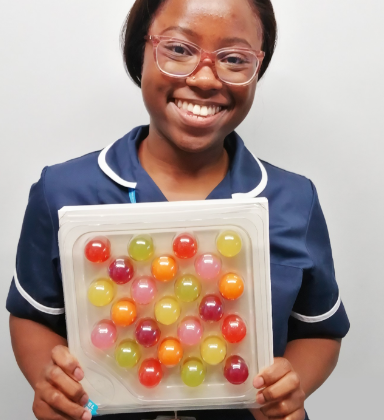
The early clear packaging let people see the sweets without first opening the lid. A box that hides its contents asks the user to remember what is inside; a transparent one puts that information in view.
Hornby treated those small decisions as part of the product. The container was not just a way to transport the drops. It affected whether someone might notice them and understand what was available.
Fewer Steps to Open a Box
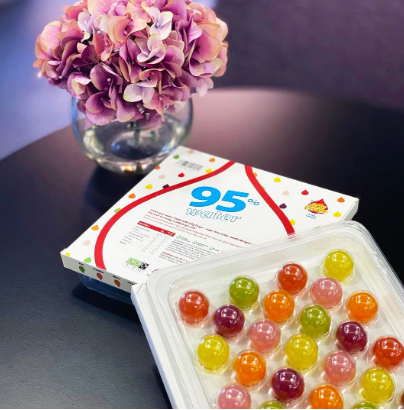
The original design also paid attention to opening and holding the container. A handle and a lid that stayed upright were intended to make the process easier, leaving a hand free to pick up a sweet.
Those details belonged to the early packaging pictured in the story. They show the kind of problem Hornby was considering: even a promising food can be difficult to use if its box adds unnecessary steps.
Designing Around the Hand
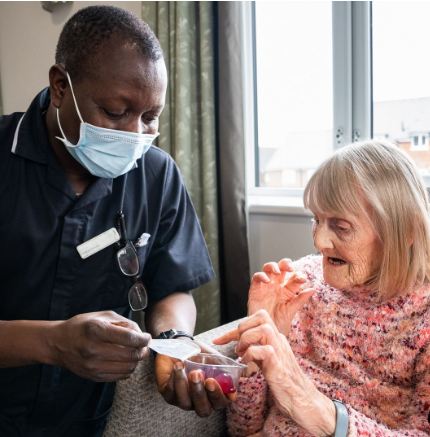
Shape and texture mattered as much as color. The early drops were designed to be easy to grasp, so the person eating them would not necessarily need a utensil. Hornby was thinking about the whole sequence, from noticing the box to taking a piece.
Ease of handling is not the same as safe swallowing. A product can be simple to pick up and still be inappropriate for a particular person's care needs.
Read the Current Label

The sweets are marketed as sugar-free and vegan. Those descriptions may help someone decide whether a product fits their preferences, but neither means that it is suitable for everybody or free of possible side effects.
Check current ingredients, serving guidance and storage instructions. If the person has dietary restrictions or a fluid limit, discuss the product with their clinician. Do not rely on an old article for a current formulation or a personal care plan.
Early Enthusiasm Was Encouraging
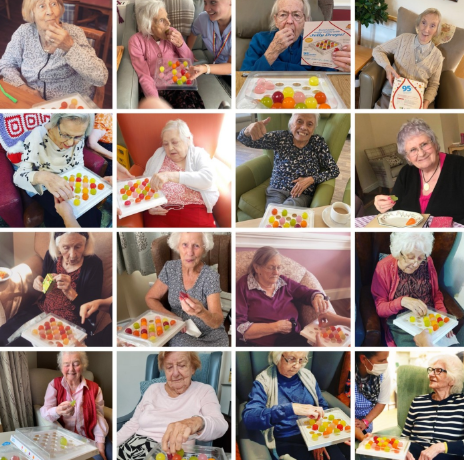
Hornby reported an enthusiastic response from his grandmother and others who tried the early versions. Seeing people reach for something he had made was an encouraging part of the project.
Those early accounts help explain why he kept developing the idea. They do not establish that the product prevents hospitalization or works for everyone. Nor should a serving comparison from a prototype automatically be applied to today's differently sized sweets.
From Design Project to Product

Jelly Drops attracted attention beyond the care home as Hornby developed the idea. The original coverage followed that move from a personal project toward a commercial product, with recognition in design and innovation circles.
The early photographs belong to that development story. Jelly Drops are no longer simply an invention being imagined for future sale. When considering them now, look at the current product information rather than assuming every early detail remains unchanged.
Attention Does Not Settle Every Question
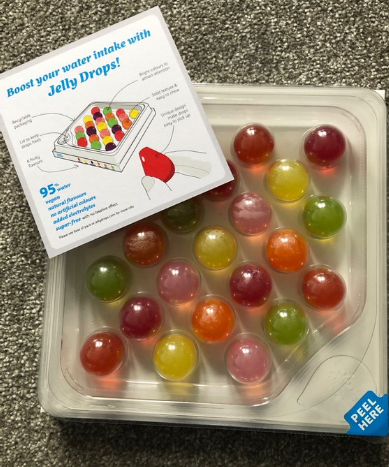
A compelling family story can bring an invention to a much wider audience. That happened here, with interest in how a sweet might help someone take in additional water.
Publicity is useful for introducing an idea. It is not a substitute for understanding who can use it, what it contributes and what it cannot do. Families still need clear guidance, especially where swallowing safety or an existing medical condition is involved.
Keep the Purpose in View

Jelly Drops were developed as a way to supplement water intake. That purpose does not make them a complete source of nutrition, an emergency treatment or a solution to water shortages. Those are much larger problems.
The invention is interesting on its own terms. It changes the way water is offered to someone who might enjoy a sweet. There is no need to add claims about every other situation in which people need fluids.
A Family Idea Reached Other People

Hornby's grandmother gave the project its starting point, but the practical question resonated with other families and carers. Many recognized the frustration of trying to encourage someone they loved to drink.
That shared experience helps explain the interest. It is worth keeping the human detail in the story without turning Hornby into someone who has solved every hydration problem. He developed an option, and its usefulness depends on the person and their circumstances.
Availability Changed Over Time
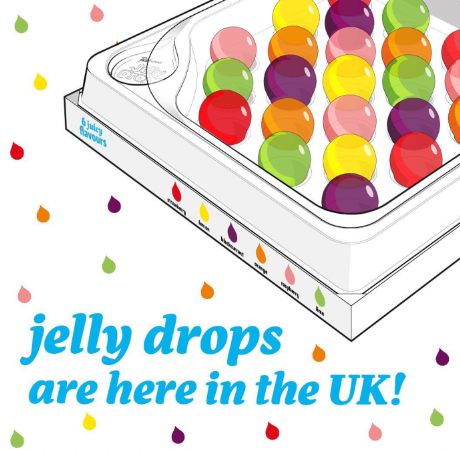
Early coverage focused on the United Kingdom, where the product was developed. Readers elsewhere wanted to know whether they could obtain it too.
Availability is a separate question from suitability. Finding a seller does not answer whether a product belongs in someone's care routine. The same checks about swallowing, ingredients and individual needs apply wherever a box is bought.
A Product, With Limits
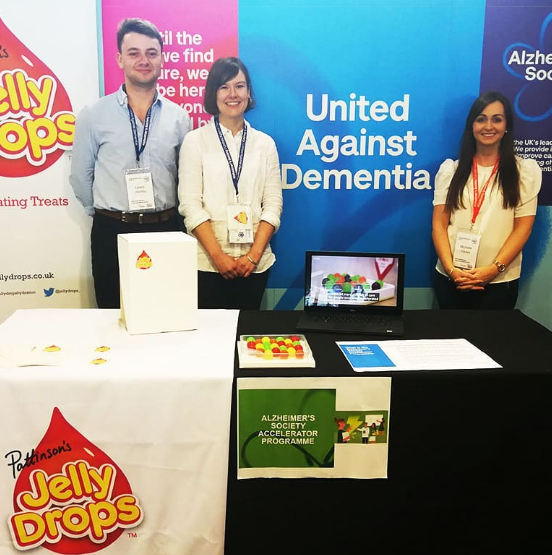
The company later offered Jelly Drops in the United States as well. Families should check the relevant current product page for availability and instructions, since these can change.
For someone who can safely eat them and enjoys them, water-rich sweets may provide another option alongside usual fluids. For someone with swallowing difficulties, the manufacturer's warning is clear: these sweets are not suitable. A care professional can advise on appropriate alternatives.
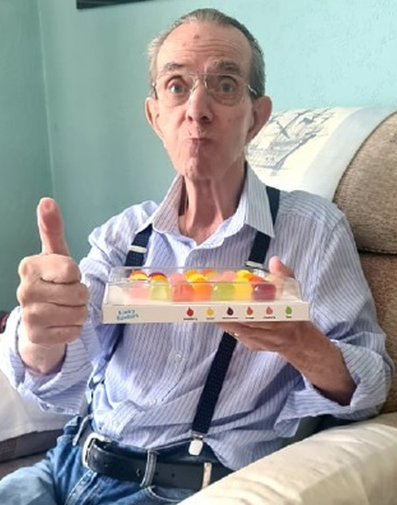
The memorable part of this story is the attention Hornby paid to Pat's everyday life. He noticed a problem, watched how she responded and built an idea around something she enjoyed. Keeping that story accurate means preserving its limits as carefully as its promise.