Care Doctor
What to Put in a Sleep Diary Before a Doctor’s Visit

The cost of arriving with only a feeling
A sleep appointment goes further when the clinician has specifics in front of them. Arrive with only a sense that you sleep badly, and part of the visit goes to reconstructing recent weeks from memory. The U.S. National Heart, Lung, and Blood Institute (NHLBI) addresses this directly in its guidance on diagnosing sleep deprivation. It tells patients what to discuss with a clinician and recommends recording bed and wake times, naps, total sleep, and alertness or sleepiness.
NHLBI also publishes a printable sleep diary, with columns for sleep and daytime habits and example entries. The week below is not a copy of that form. It is an original sketch built around the same items, and every entry in it is hypothetical, invented to show the format and not drawn from any real person.
One limit belongs up front. NHLBI says a clinician may use sleep history and a diary to assess insomnia, and that the diary is not diagnostic on its own. The record supports a conversation. It does not settle one.
Time in bed and sleep time are different numbers
Bed and wake times give you time in bed: the stretch from getting into bed to getting up. Total sleep is the part of that stretch spent asleep. NHLBI lists them as separate items to record, and the separation matters because they need not match. A person in bed from 10:30 pm to 6:00 am has 7.5 hours in bed. If they judge that they slept for 6 of those hours, 6 is the sleep time.
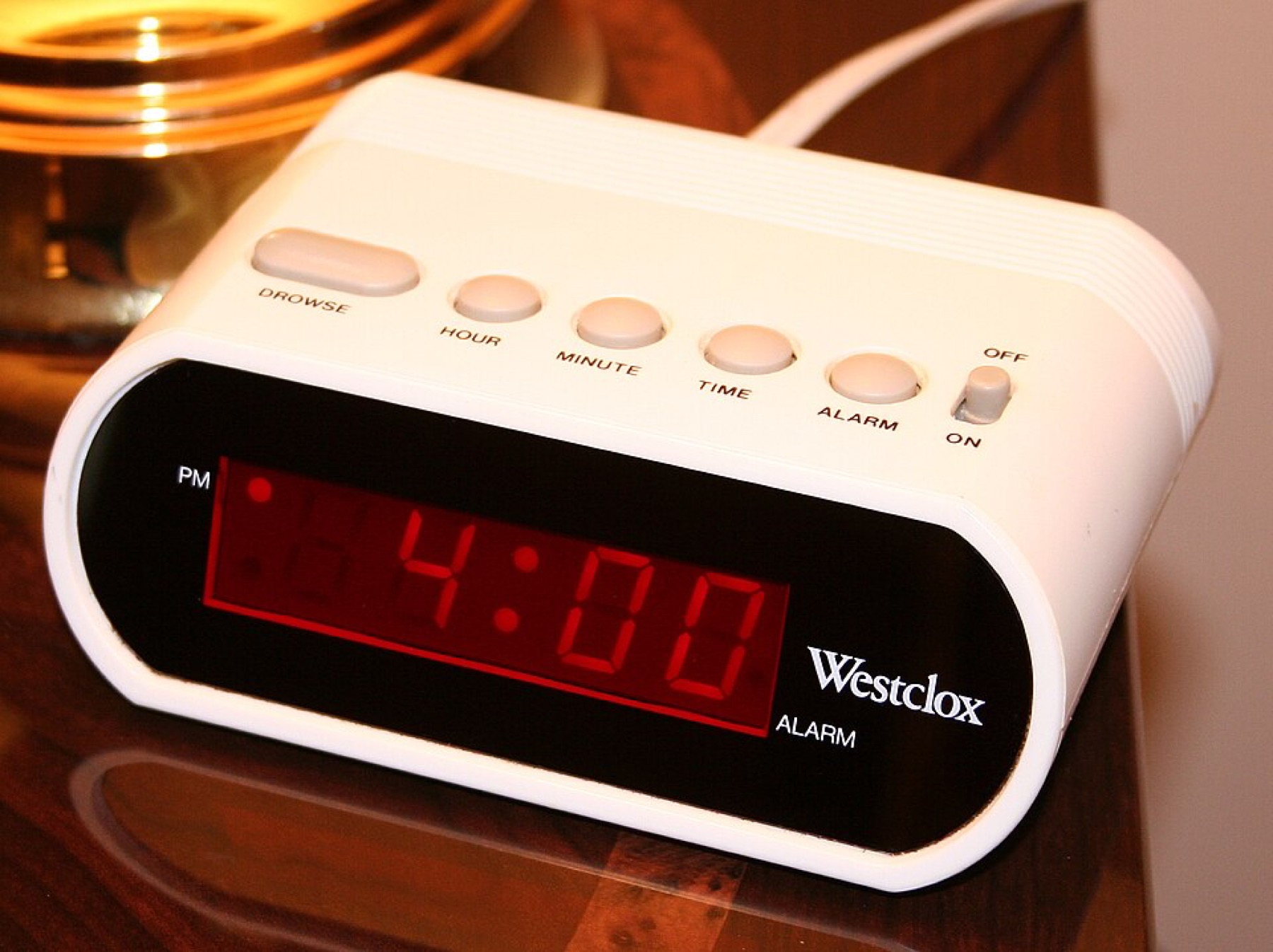
Recording both keeps a night from looking better or worse than it was. Time in bed alone can flatter a night spent mostly awake. Sleep time alone hides how long someone stayed in bed. The diary does not explain the gap between the two. That reading belongs to the clinician.
Sleep time is an estimate, and few people can name the minute they dropped off. Rounding to the nearest half hour is a practical choice, not an NHLBI instruction. What helps is using the same habit every day, so the entries can be compared with each other.
A hypothetical week: five work days, two days off
The entries below are listed by the morning the person woke up. Each gives bedtime, wake time, time in bed, estimated sleep, any nap, and a short note on daytime alertness. All figures are invented.
Monday, work day: in bed 10:30 pm, up 6:00 am. Time in bed 7.5 hours, estimated sleep 6 hours. No nap. Drowsy in the mid-afternoon.
Tuesday, work day: in bed 11:00 pm, up 6:00 am. Time in bed 7 hours, estimated sleep 5.5 hours. A 20-minute nap at 4:00 pm. Sleepy through the morning.
Wednesday, work day: in bed 10:30 pm, up 6:00 am. Time in bed 7.5 hours, estimated sleep 6.5 hours. No nap. Fairly alert all day.
Thursday, work day: in bed 11:30 pm, up 6:00 am. Time in bed 6.5 hours, estimated sleep 5 hours. No nap. Sleepy after lunch and again in the evening.
Friday, work day: in bed 11:00 pm, up 6:00 am. Time in bed 7 hours, estimated sleep 6 hours. No nap. Drowsy after lunch, brighter by evening.
Saturday, day off: in bed 12:00 am, up 9:30 am. Time in bed 9.5 hours, estimated sleep 8.5 hours. No nap. Alert.
Sunday, day off: in bed 12:30 am, up 10:00 am. Time in bed 9.5 hours, estimated sleep 8 hours. A one-hour nap at 3:00 pm. Alert, with a dip in the evening.
Added up, the hypothetical work days average about 5.8 hours of estimated sleep across 7.1 hours in bed. The two days off average 8.25 hours of estimated sleep across 9.5 hours in bed. Naps appear on two days, and sleepiness is noted on four of the five work days. Keep work days and days off visible in the log. A single weekly average would hide the gap between them.
Naps get their own entry because NHLBI lists them as a separate item, and a 20-minute nap at 4:00 pm is a different fact from a one-hour nap at 3:00 pm.
Why a clinician can use the record
NHLBI says a clinician may use sleep history and a diary together when assessing insomnia. The diary adds written detail: timing, naps and daytime effects, entered close to the time they happened. Bring the dated entries so the clinician can relate a rough night or a nap to the schedule around it.
NHLBI also names three things worth telling a clinician about: persistent daytime sleepiness, waking up unrefreshed, and trouble adapting to shift work. The alertness note covers the first. Waking unrefreshed is a separate matter from daytime alertness, so a few words on how you felt on waking are a low-effort addition. For shift workers the work-day and day-off split may not fit. Writing the actual clock times for each sleep period keeps the record accurate whatever the schedule.
Effort, limits and the next step
The honest objection is effort. A diary is one more chore, and the neat version, filled in every day without gaps, is not how most weeks go. A partial record still carries information. A page with two missed days and a note saying so is more useful than a tidy page reconstructed in the waiting room.

How many days of entries a clinician wants is a question for the clinic. Ask when booking the appointment so the pages match the request.
The approach also fails in a few ordinary ways. Estimates drift when entries are written days late. And if the nightly entry starts to feel like an exam, trimming it to the items NHLBI names is a fair compromise: a short, honest page serves the visit better than an elaborate one abandoned on day three.
Date each page, mark work days and days off, and mark missed days as missed. Totals are optional; the daily entries carry the information. Keep notes factual: what happened, and at what time, in your own words. The interpretation can wait for the conversation.
The bounded next step is small. Tomorrow morning, write down bedtime, wake time, estimated sleep, any nap, and one line on alertness. Repeat, and bring the pages. It is not a substitute for raising a concern: NHLBI says persistent daytime sleepiness, waking unrefreshed and trouble adapting to shift work are worth telling a clinician about, and that holds whether or not the diary is complete. The diary can make that conversation more specific. It cannot do the assessing.