Care Doctor
Where to Find Vaccination Records: A Search List
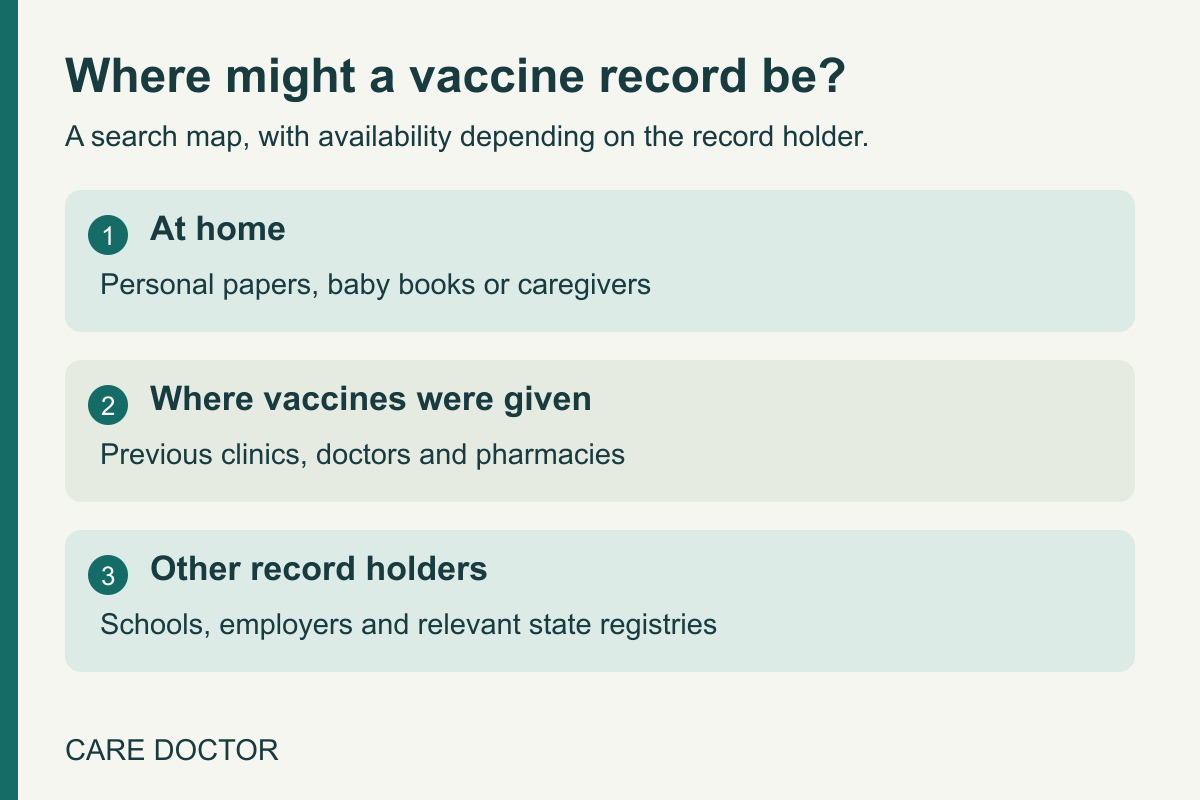
The person coordinating a vaccination record search starts with a phone and a blank page. That might be an adult, a grown child helping a parent, or a parent helping a young adult. The next step is the same for each. Write down every place a vaccine could have been recorded, then ask them one at a time. There is no national office to call. The CDC says no national organization maintains vaccination records, and the CDC does not have this information. The records that exist are the ones handed over when the vaccines were given and the ones in the medical record of the doctor or clinic that gave them. An individual doctor or clinic may hold a person's complete history, though the list covers the cases where none does. The CDC page on keeping vaccine records lists where to look.
A vaccination record, also called an immunization record, is the history of vaccines a person received as a child and as an adult. The CDC notes it may be required for certain jobs, travel abroad or school registration. Because the request often comes from someone else's form, the coordinator should learn what that organization wants before the search spreads out.
What should I ask the requesting organization first?
Before calling anyone else, ask the employer, school or travel office what it needs. Ask whether it wants a full history or specific vaccines, whether a personal copy is enough or an official one is required, and what format it will take. Write the answer at the top of the search list, with the name of the person who gave it, so every later call is aimed at the same target.
If you are gathering records for someone else, get that person's agreement first, since the search involves their health history. Then ask each office how to request a copy for another person and what you need to bring or have them sign.
Where should I look for childhood and school records?
Start at home. The CDC suggests asking parents or other caregivers whether they have records of childhood immunizations, and looking through baby books or other saved documents. Copy every clinic, pharmacy and town name onto the list, even when the entry is only a signature or a stamp.
Next come institutions tied to a stage of life. The CDC says to check with high school and college health services for the dates of any immunizations, and notes that records there are generally kept only one to two years after students leave. Previous employers, including the military, may hold records if they required immunizations.
Which clinics and pharmacies belong on the list?
List every doctor's office, public health clinic and pharmacy that may have given a vaccine, most recent first. The CDC says to check with your doctor or public health clinic, and cautions that vaccination records are maintained at a doctor's office for a limited number of years. It does not say how many, so ask each office directly whether it holds records for the years the person was a patient. If it does not, ask whether it knows where records from that period were sent.
Before each call, have the person's name at the time and the years of care ready. Ask how long a copy takes, whether there is a fee, and whether it is official or a printout of dates.
How do I use a state immunization registry?
Some states run an immunization information system, or IIS, a registry that can hold a person's vaccine history. The CDC says some states have registries that include adult vaccines, so ask whether a state's registry covers adults and not only children. If you live or have lived in an area with an operational IIS, the CDC's contact page suggests contacting the IIS in your state, or in the state where you or your child received the last shots. It also points to the immunization provider and to the local or state immunization program through the health department.
In the CDC directory, Alabama lists a phone line, 800-469-4599, and a registry called ImmPRINT. Colorado lists a public portal for its Immunization Information System. New York City has its own Citywide Immunization Registry, 347-396-2400, and Philadelphia lists PhilaVax along with a record request form. Look up each state and city on your list instead of assuming the process matches the last one.
How do I keep track of what I find?
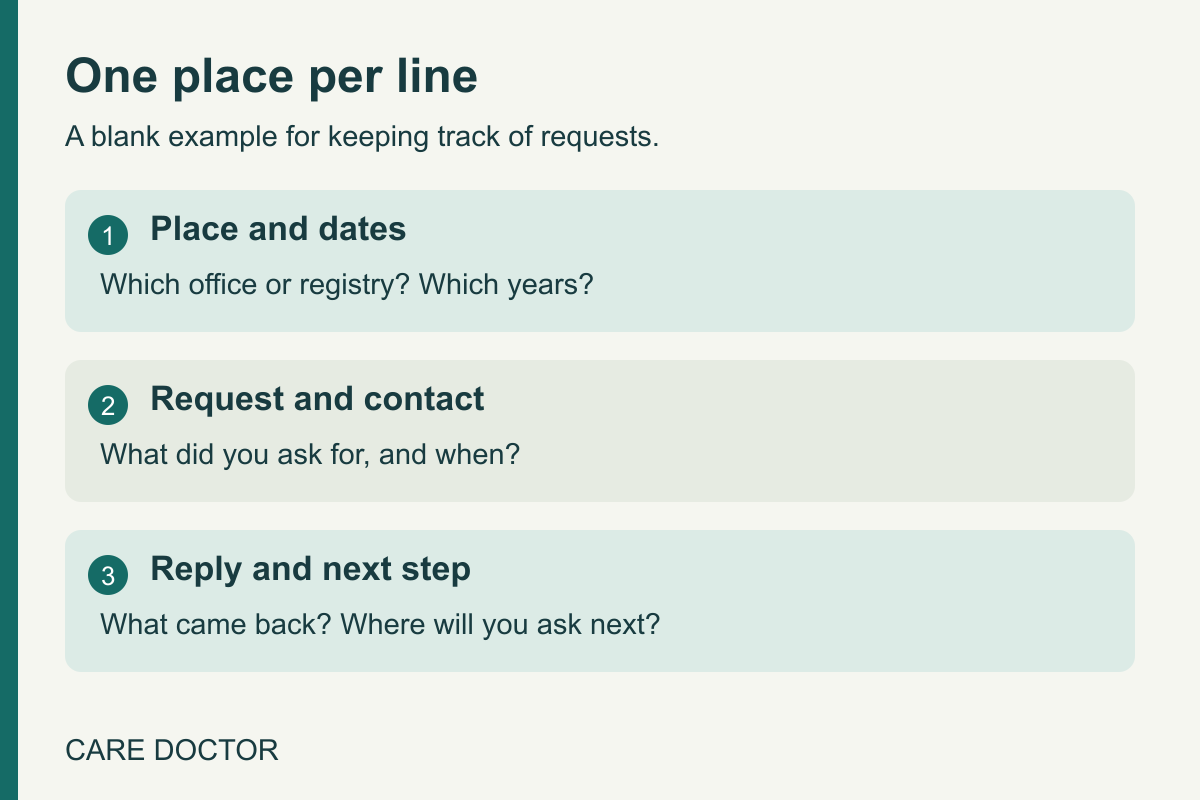
Keep one page where each line is a place. For each, note the contact, the date you asked, what you asked for and what came back. Record the answers that say no too, with the name of the person you spoke to, so nobody calls the same office twice. Keep copies of whatever arrives with other important documents, labeled with where each came from.
What does a search list look like in practice?
Here is a hypothetical example. A caregiver named Sam is helping a parent gather adult vaccination records for a new employer. Sam asks the parent's permission, then writes the employer's requirement at the top of the sheet. The places to ask are the parent's saved papers, a college health service, the military because the parent once served, the most recent doctor, a pharmacy and the registry in each state where the parent lived. Sam calls the employer first to ask whether a registry printout is acceptable.
With the parent's permission, Sam gives a sibling a copy of the list and the second half of the calls. If Sam is unavailable for a week, the sibling continues from the notes. If no sibling or friend is available, Sam writes the notes so the parent could pick them up, and keeps the sheet where the parent keeps other important papers.
What if a record is still missing?
Some gaps may remain after every place has been asked. Tell the requesting organization where the search stands, with the dates you asked, so it can say whether partial documentation is usable. For the missing entries, bring the written list to the clinician, show which places were checked and what each said, and ask what the clinician recommends. If one call to the most recent doctor produces everything, the list cost a few minutes. It earns its place when the first answers come back empty.
How do I keep a record from now on?
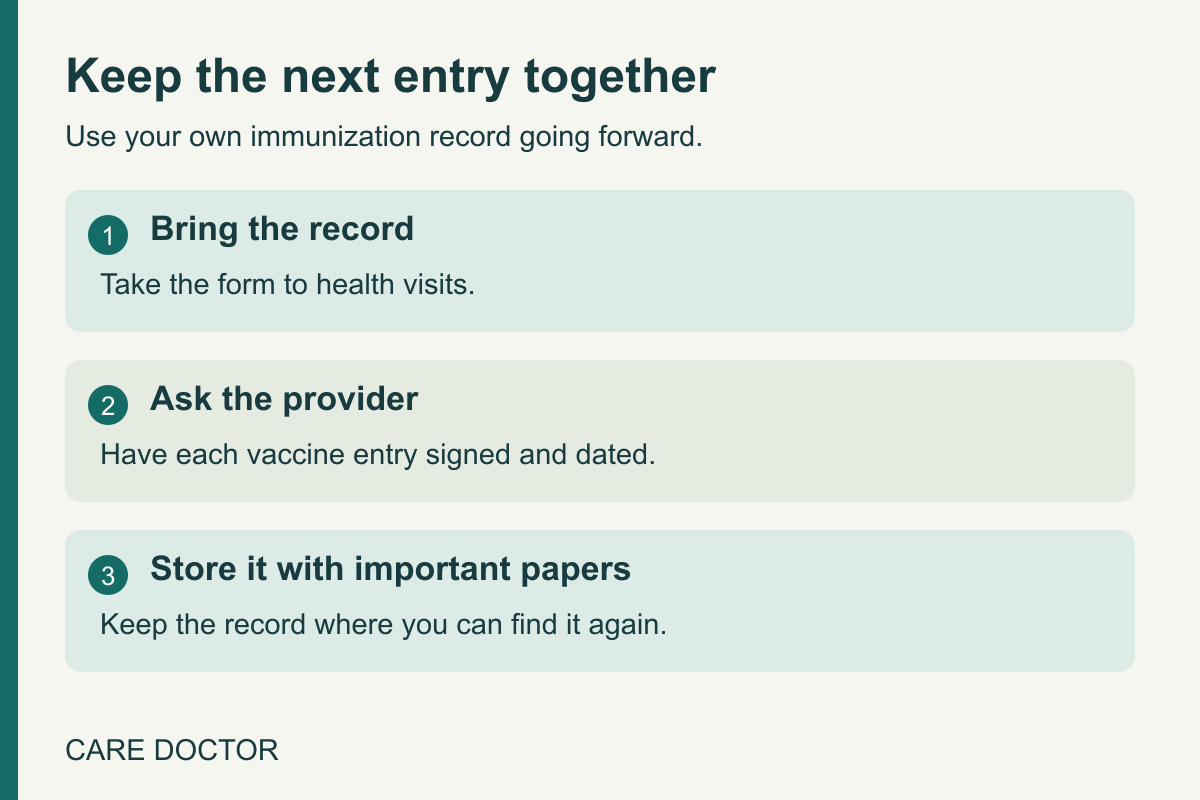
The CDC calls it critical to keep an accurate, up-to-date record. Ask a doctor, pharmacist or other vaccine provider for an immunization record form, or download the CDC's four-page form, and bring it to health visits. Ask the provider to sign and date it for each vaccine, and to document the vaccine in an immunization registry if the provider participates in one.
With the record owner's agreement, a scanned or photographed copy can go to one trusted person, so the record does not depend on one folder. The goal is a documented trail, not a perfect file. Whoever carries the list should be able to answer one question: if you stopped today, who would make the next call, and where is the sheet?