Care Doctor
What MCV Measures in a Blood Test and What to Ask About It

A blood test result often reaches you before the conversation about it does. You may be looking at a grid of abbreviations and a few numbers, with an appointment still ahead of you and limited time once you get there. If one of those rows is MCV, a small amount of preparation lets you bring one clear question instead of a pile of worries.
MCV stands for mean corpuscular volume. MedlinePlus defines it as the average size of your red blood cells. On a report, it sits with other measures your clinician can read together.
What MCV measures
Red blood cells are one of the things a complete blood count, or CBC, looks at. MedlinePlus explains that MCV is often included as part of that panel. Each cell has a size, and MCV reports the average across the cells in your sample. It is a single summary figure for a large crowd of cells.
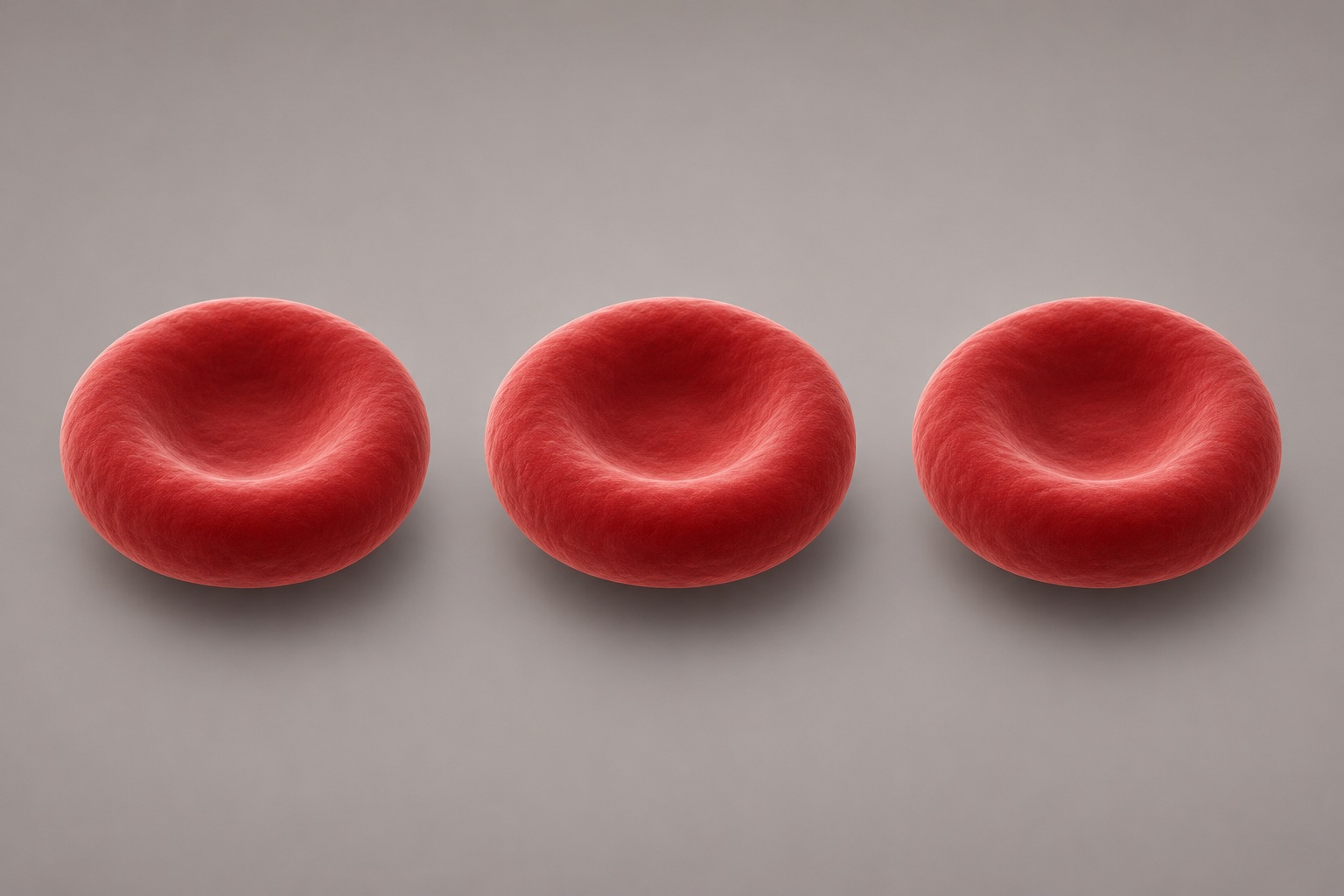
The word average carries weight here. An average describes the typical cell, not every cell, and it says nothing by itself about why the size came out the way it did. That is a separate question, and it is the one your clinician is trained to work on.
A CBC itself is not a sign that something is wrong. MedlinePlus notes that it can be part of a routine check or ordered for other reasons. So seeing MCV on your report tells you the test was run, and nothing more about what anyone suspects.
Finding the MCV row on your report
Lab reports differ in layout, but you are looking for a handful of labeled items. Find the test name, which may read MCV or spell out mean corpuscular volume. Then find your result, the reference range the lab printed, any flag, and the units. Copy each down exactly as it appears.
Expect MCV to sit among many rows. A CBC measures several features of the blood, so the page is busy, and you only need one line of it.
Sample report excerpt (fictional)
Test name: MCV
Result: [number]
Units: [units]
Reference range: [range printed by the lab]
Flag: [blank, H or L]
Collected: [date]
The sample above is invented, and the brackets stand in for whatever your report shows. Keep the reference range line close, because MedlinePlus advises using the range the lab provides. Methods, ranges, and units can vary between labs, so a range quoted online or printed on a friend's report may not apply to yours.
A number is not an interpretation
The result on your report is a measurement. The interpretation is a judgment about what that measurement means for you, and those are two different jobs. A flag beside the result marks where it falls against the lab's range. MedlinePlus is plain on this point: a flagged value does not by itself establish a condition.
The same holds in both directions. MedlinePlus says high and low MCV results can each have multiple causes, so a single figure cannot point to one explanation. That is a reason to be patient with the number, not a reason to be frightened of it or to dismiss it.
Think of a grocery receipt. The total is a number, and whether it is a good total depends on what you meant to buy. The comparison stops working at one point: you can check a receipt against your own list, while your clinician holds the parts of the list you cannot see from the report alone.
This matters most when you hold more than one report. If an earlier CBC came from a different lab, the two reports may use different methods, ranges, or units, because MedlinePlus notes those can vary. Bring both to the visit so the labels can be matched up together.
Why your clinician reads it with the whole picture
MedlinePlus describes CBC results as something considered in context. That means MCV is read alongside the other rows of the same report, not on its own.
The second part of the context is you. Your clinician knows why the test was ordered, what else is in your record, and what you have told them in the room. None of that appears on the printout, and it can all shape how a result is read.
This approach has limits. A question built on the MCV number alone can go nowhere if the answer depends on other rows, so ask about the result in context rather than in isolation. It also falls short if your report shows no reference range, or if the portal shows only a flag. In that case, the useful question is how to get the full report. And if how you feel is worrying you before the appointment, contact the clinic now instead of holding the question.
Preparing one question without spending the whole visit on it
The practical objection is time. Appointment time is limited, and a blood test may be one of several things you want to cover. That is a fair reason to keep this to a single question. One question is easier to ask and easier to answer than ten, and it leaves room for the rest of the visit.

Write down what the MCV row shows: the result, the units, the reference range the lab printed, the flag if there is one, and the test date. Then write the question in your own words. Here is one you can adapt:
My MCV result is [result] with the lab's reference range of [range]. How do you read it alongside the rest of my CBC and what you know about my health?
Keep the written question to two sentences. If you find yourself adding another row, another test, or a theory from the internet, set it aside for now and return to the MCV row you came with.
If your clinic offers secure messages, you can send the question ahead of the visit. If not, read it out at the start or hand over the written copy. Either way, the question asks for an explanation, not a decision. What happens next is for you and your clinician to settle after they have read the result in context.
Before you go
Before you go, you need less than you might think. You need to know that MCV is the average size of your red blood cells, that a flag marks where a number falls against the lab's range, and that the meaning of the result is worked out with the rest of your CBC and your history. That is enough to ask a good question.
Bring the written question and the row you copied. Then let the person who ordered the test tell you what it means in your case, and write down their answer while you are still in the room.