Menopause
Black Cohosh for Hot Flashes During Menopause
A plain-language look at what the evidence actually says about black cohosh and menopausal vasomotor symptoms.
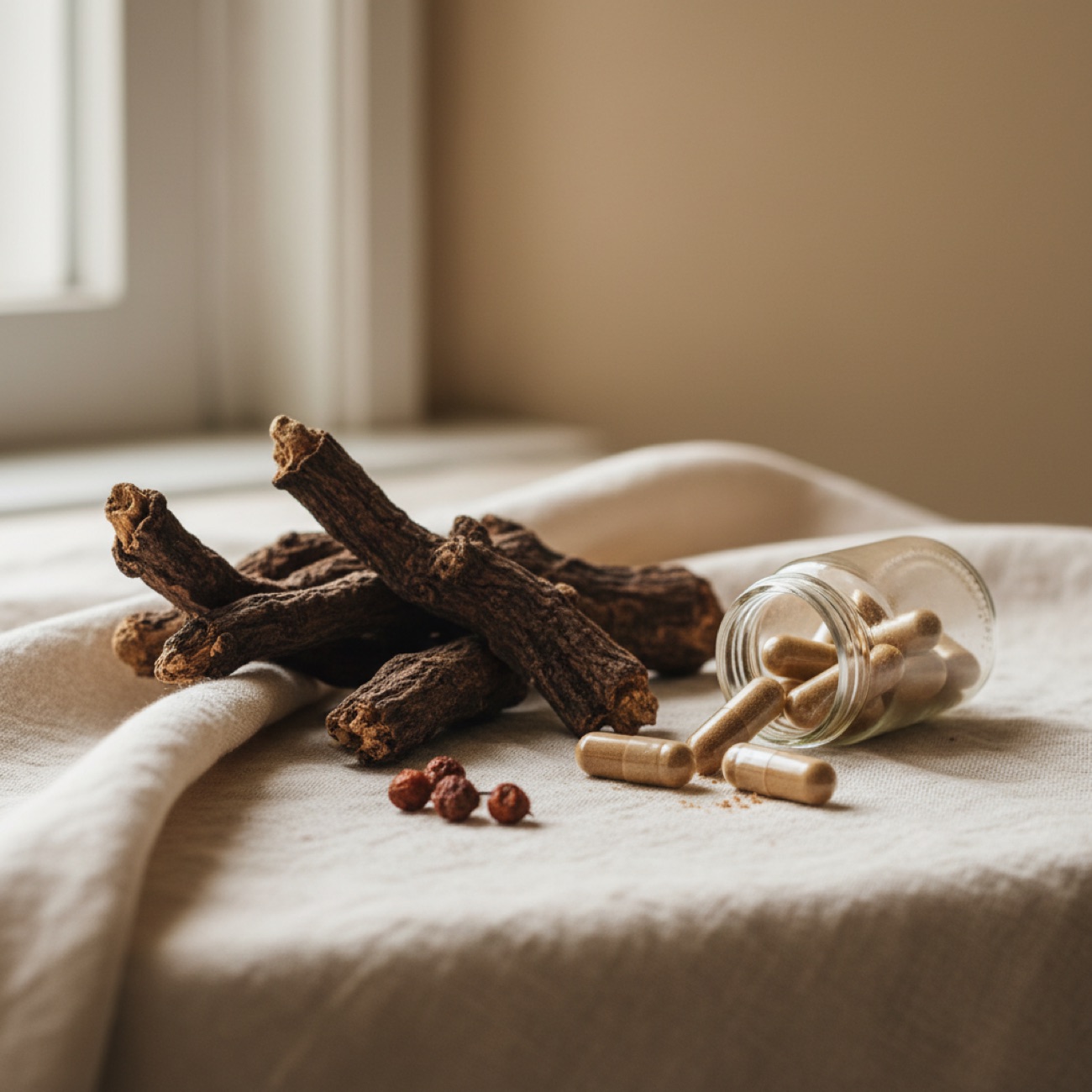
Black cohosh is one of the most commonly used botanical supplements among people going through menopause, particularly for hot flashes and night sweats. However, according to the NIH Office of Dietary Supplements (ODS), the current evidence that it relieves these symptoms is insufficient, and important safety questions remain open.
What Is Black Cohosh?
Black cohosh (Actaea racemosa, formerly Cimicifuga racemosa) is a flowering plant native to North America. Its root and rhizome have been used in traditional herbal medicine for generations. Today it is sold widely as a capsule, tablet, or liquid extract and is marketed primarily for relief of menopausal vasomotor symptoms such as hot flashes and night sweats.
It is important to note from the outset that black cohosh is not an essential nutrient. It has no established role in normal human physiology, no adult intake target has been set, and no upper limit has been defined by nutrition authorities. The NIH ODS does not classify it alongside vitamins or minerals that the body requires to function.
How Might It Work? Proposed Mechanisms
Researchers have not identified the active ingredients in black cohosh, and its mechanism of action, if any, is unknown. Several hypotheses have been studied over the years, and the NIH ODS notes the following proposed but unproven ideas:
- Modulation of serotonergic pathways, which are involved in temperature regulation
- Possible antioxidant or anti-inflammatory activity
- Possible selective estrogen receptor modulator activity, meaning it could interact with estrogen receptors in some tissues without acting exactly like estrogen
None of these mechanisms has been confirmed in humans, and no single compound in black cohosh has been shown to be responsible for any observed effects.
What Does the Research Say? An Honest Evidence Grade
The NIH ODS grades the evidence on three key questions, and on all three the rating is insufficient:
- Whether black cohosh relieves menopausal vasomotor symptoms such as hot flashes and night sweats: insufficient evidence
- Whether black cohosh reduces the number of hot flashes compared with placebo: insufficient evidence
- Whether black cohosh has a defined role in normal human physiology: insufficient evidence
An insufficient rating does not mean a supplement has been proven ineffective. It means the studies conducted so far are too small, too short, too inconsistent in methodology, or too limited in quality to draw a reliable conclusion either way. Until larger, well-designed clinical trials are completed and replicated, no firm claim about effectiveness can be made.
Because of this evidence gap, black cohosh supplements are not intended to diagnose, treat, cure, or prevent any disease, and these statements have not been evaluated by the FDA.
Safety: What You Need to Know
Clinical trials of black cohosh have generally reported a low incidence of adverse effects. The most commonly noted side effects are mild and transient, including gastrointestinal upset and skin rashes. For many participants in short-term studies, tolerability has been acceptable.
The more significant safety concern involves the liver. According to the NIH ODS, at least 83 cases of liver damage worldwide have been associated with black cohosh use. Importantly, no causal relationship has been established in those cases, meaning researchers have not been able to confirm that black cohosh was definitively responsible. However, the association is taken seriously by regulatory bodies around the world:
- Australia requires a label warning stating that black cohosh may harm the liver in some individuals.
- The U.S. Pharmacopeia recommends a cautionary label for black cohosh products sold in the United States.
Anyone who experiences symptoms such as unusual fatigue, loss of appetite, yellowing of the skin or eyes, or dark urine while using black cohosh should stop taking it and contact a healthcare provider promptly. People with existing liver conditions should speak with a doctor before considering this supplement.
Drug Interactions
According to the NIH ODS, black cohosh is not known to have any clinically relevant interactions with medications. However, this area has not been systematically studied, which means the absence of known interactions should not be taken as a guarantee of safety when combining black cohosh with prescription or over-the-counter drugs.
If you take any medications, including hormone therapy, chemotherapy, or drugs that affect the liver, talk to your doctor or pharmacist before adding black cohosh to your routine. This is especially important because the supplement's mechanism of action is unknown and its potential to interact with other substances cannot be fully ruled out.
Dosing: No Established Target
Because black cohosh is not an essential nutrient, no recommended daily intake or tolerable upper intake level has been established by nutrition authorities. Doses used in clinical trials have varied widely, making it difficult to identify a standard amount. Consult a clinician or pharmacist for guidance on whether a specific product and dose makes sense for your individual health situation. Do not exceed the amount listed on a product label without professional advice.
Talking to Your Doctor
Hot flashes and night sweats can significantly affect quality of life, and it is completely reasonable to explore options with your healthcare team. When you bring up black cohosh, a few practical points are worth discussing:
- Your personal health history, including any liver conditions or family history of liver disease
- All other supplements and medications you currently take
- Evidence-based alternatives, including prescription options that have stronger clinical support
- How long you plan to use the supplement and how you will monitor for side effects
Your doctor can help you weigh the limited evidence for benefit against the known and potential risks in a way that is specific to your health profile.
The Bottom Line
Black cohosh is a widely used supplement for menopausal hot flashes, but the NIH ODS rates the evidence supporting its effectiveness as insufficient. Its active ingredients and mechanism of action are unknown, no intake targets have been established, and while most reported side effects are mild, a small number of liver injury cases have been associated with its use. If you are considering black cohosh, speak with a healthcare provider first, particularly if you have liver concerns or take other medications.
Sources: NIH Office of Dietary Supplements, Black Cohosh Fact Sheet for Health Professionals (https://ods.od.nih.gov/factsheets/BlackCohosh-HealthProfessional/) and Black Cohosh Fact Sheet for Consumers (https://ods.od.nih.gov/factsheets/BlackCohosh-Consumer/).
Sources
- S1.gov verifiedNIH Office of Dietary SupplementsBlack Cohosh - Fact Sheet for Health Professionalsods.od.nih.gov/factsheets/BlackCohosh-HealthProfessi
- S2.gov verifiedNIH Office of Dietary SupplementsBlack Cohosh - Fact Sheet for Consumersods.od.nih.gov/factsheets/BlackCohosh-Consumer/