Cholesterol
Supplements That May Affect Cholesterol: Garlic, Niacin, and Fiber
A plain-language look at what the NIH evidence actually shows about garlic, niacin, and psyllium fiber and their effects on blood lipids.
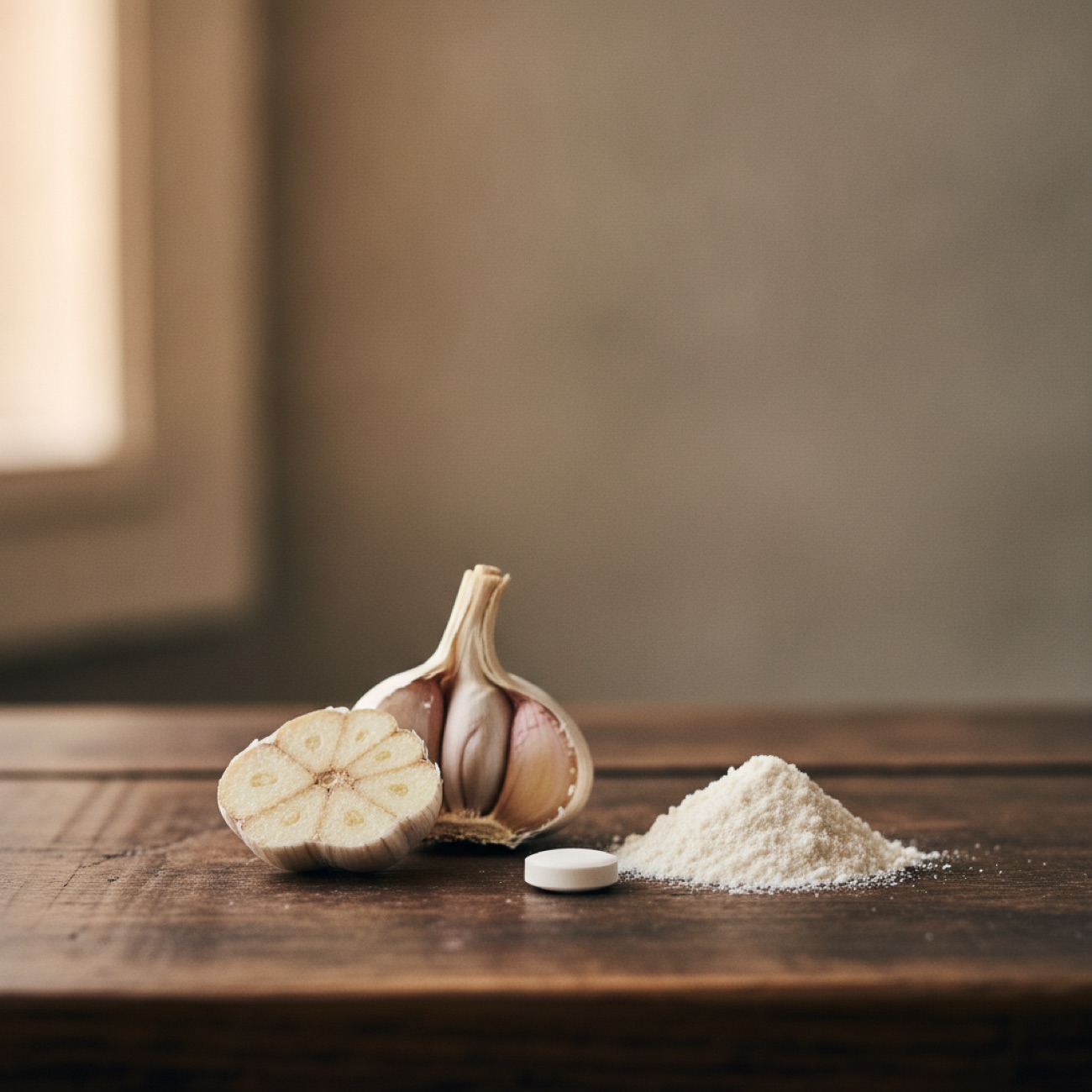
Garlic supplements, high-dose niacin, and soluble fiber such as psyllium are among the most studied supplements in the context of blood cholesterol. The evidence behind each one varies considerably, and none of them is a substitute for medical care or a heart-healthy diet.
Important Disclaimer
Dietary supplements are not intended to diagnose, treat, cure, or prevent any disease, and these statements have not been evaluated by the FDA. Talk to a doctor or pharmacist before adding any supplement to your routine, especially if you take prescription medications or have a chronic health condition.
Garlic
What It Is and What Research Shows
Garlic contains organosulfur compounds, including allicin, that have been studied for effects on blood lipids. According to the National Center for Complementary and Integrative Health, the evidence grades out as follows:
- Cholesterol and LDL: Garlic supplements may reduce total and LDL cholesterol to a small extent in people with high blood cholesterol. The evidence for this is graded moderate based on meta-analyses.
- Blood pressure: Garlic supplements may reduce blood pressure to a small extent in people with high blood pressure. Evidence is graded limited.
- Blood sugar: Garlic supplements may reduce blood sugar to a small extent in people with diabetes. Evidence is graded limited.
- Cancer risk and immune function: Evidence is graded insufficient to draw conclusions.
No adult daily target or upper limit has been established by the NIH Office of Dietary Supplements for garlic.
Safety
Oral garlic has been used safely in studies lasting up to seven years. Common side effects include breath and body odor, abdominal pain, flatulence, and nausea, and these are more common with raw garlic. Allergic reactions can occur. Fresh raw garlic applied to the skin is a separate matter and may not be safe, as it can cause severe skin irritation and chemical burns.
Drug Interactions
Garlic supplements may increase the risk of bleeding. This is relevant in several situations:
- Anticoagulants such as warfarin: Combined use may increase bleeding risk.
- Aspirin and antiplatelet medicines: Combined use may further affect bleeding risk.
- Surgery: Garlic supplements may raise bleeding risk around surgical procedures. Disclose use to your surgeon in advance.
- Saquinavir (an HIV protease inhibitor): Garlic has been reported to reduce blood levels of this drug. Discuss any herbal supplement use with your provider, as some herbs and medicines interact in harmful ways.
Niacin (Vitamin B3)
What It Is and What Research Shows
Niacin is an essential B vitamin. According to the NIH Office of Dietary Supplements, the adult Recommended Dietary Allowance is 16 mg of niacin equivalents per day for men and 14 mg per day for women. The tolerable upper intake level for supplemental niacin is 35 mg per day for adults aged 19 and older.
Niacin serves as the precursor to NAD, a coenzyme required by more than 400 enzymes, more than for any other vitamin-derived coenzyme. As NADP, it also enables anabolic reactions including the synthesis of cholesterol and fatty acids.
The evidence grades for niacin are as follows:
- Energy metabolism: Niacin as NAD and NADP is required for energy-yielding metabolism and hundreds of enzymatic redox reactions. Evidence is graded strong.
- Pellagra prevention: Adequate niacin prevents and reverses pellagra, the deficiency disease. Evidence is graded strong.
- Lipid profiles at pharmacologic doses: High-dose nicotinic acid in the thousands of milligrams per day improves blood lipid profiles, raising HDL and lowering LDL, triglycerides, and lipoprotein(a). Evidence is graded strong.
- Cardiovascular event reduction: Evidence that nicotinic acid supplementation reduces the risk of cardiovascular events is graded insufficient.
Safety
Niacin from foods is safe and has no reported adverse effects. The supplemental upper limit of 35 mg per day is based on skin flushing and applies to both nicotinic acid and nicotinamide, but not to people receiving niacin under medical supervision. Pharmacologic doses in the thousands of milligrams, sometimes used to address dyslipidemias, act as a drug and should only be taken with medical approval and monitoring. Do not self-prescribe high-dose niacin.
Drug Interactions
- Isoniazid and pyrazinamide (used for tuberculosis): These drugs are structural analogs of niacin that interrupt niacin production from tryptophan. Pellagra can occur in treated patients unless niacin intake is increased.
- Antidiabetes medications: Large doses of nicotinic acid at 1.5 g per day or more can raise blood glucose by causing or aggravating insulin resistance and increasing hepatic glucose production. People on antidiabetes drugs taking high-dose nicotinic acid may need blood glucose monitoring and dose adjustments.
Fiber (Psyllium)
What It Is and What Research Shows
Psyllium is a soluble, gel-forming fiber. The NIH Office of Dietary Supplements notes that the Adequate Intake for total dietary fiber is 38 g per day for men aged 19 to 50 and 25 g per day for women aged 19 to 50, set at roughly 14 g per 1,000 calories consumed. No upper limit has been established.
The evidence grades for fiber are as follows:
- Bowel regularity: Psyllium and other fibers increase stool bulk and water content and support normal laxation. Evidence is graded strong.
- LDL cholesterol: Psyllium and other soluble gel-forming fibers lower serum LDL cholesterol as part of a diet low in saturated fat and cholesterol. Evidence is graded strong.
- Blood glucose control: Viscous fibers such as psyllium improve glycemic and insulin responses and can aid blood glucose control. Evidence is graded moderate.
- Cardiovascular disease and type 2 diabetes risk: Higher dietary fiber intake is associated with lower risk of cardiovascular disease and type 2 diabetes. Evidence is graded moderate.
- Colorectal cancer association: Higher fiber intake is associated with lower risk of some cancers such as colorectal cancer. Evidence is graded limited.
- Weight management: Fiber may increase fullness and support appetite control. Evidence is graded limited.
Safety
For most people, psyllium fiber is safe and well tolerated. The main side effects are gas, bloating, and cramping, which can be reduced by increasing intake gradually and drinking enough water. Psyllium and other bulk-forming fibers must be taken with adequate water to avoid choking or obstruction of the throat, esophagus, or bowel. Psyllium should not be used by anyone who has difficulty swallowing or has a condition that narrows the digestive tract.
Drug Interactions
Psyllium and other viscous fibers can slow or reduce the absorption of medications taken at the same time. Separate other drugs from fiber doses by about one to two hours, or as advised by a pharmacist. Specific concerns include:
- Lithium, carbamazepine, and digoxin: Fiber may reduce absorption of these drugs, potentially lowering their levels.
- Levothyroxine: Fiber may reduce absorption of thyroid medication. Separate thyroid medication from fiber doses.
- Insulin and oral diabetes medications: Fiber can enhance blood-glucose-lowering effects. Monitor glucose levels and consult your care team.
Putting It Together
Each of these three supplements has a different evidence profile and a different safety picture. Psyllium fiber has strong evidence for lowering LDL cholesterol as part of a low-saturated-fat diet. High-dose niacin has strong evidence for improving lipid profiles but must only be used under medical supervision. Garlic supplements have moderate evidence for a modest effect on total and LDL cholesterol in people who already have elevated levels.
None of these supplements replaces a conversation with your doctor about managing cholesterol. Consult a clinician or pharmacist for personal dosing guidance, and always tell your healthcare team about every supplement you take so they can check for interactions with your medications.
Sources
- S1.gov verifiedNIH National Center for Complementary and Integrative Health (NCCIH)Garlic: Usefulness and Safetywww.nccih.nih.gov/health/garlic
- S2.gov verifiedNIH Office of Dietary Supplements (ODS)Dietary Supplement Fact Sheets (list-all; Garlic sourced from NCCIH)ods.od.nih.gov/factsheets/list-all/
- S3.gov verifiedNIH National Center for Complementary and Alternative Medicine (NCCAM/NCCIH)Garlic (fact sheet, historical)www.govinfo.gov/content/pkg/GOVPUB-HE20_7250-PURL-gp
- S4.gov verifiedNIH Office of Dietary SupplementsNiacin - Health Professional Fact Sheetods.od.nih.gov/factsheets/Niacin-HealthProfessional/
- S5.gov verifiedNIH Office of Dietary SupplementsNiacin - Consumer Fact Sheetods.od.nih.gov/factsheets/Niacin-Consumer/