Dosing
How much choline you need per day by age and sex
A plain-language breakdown of the NIH adequate intake targets, upper limits, and food sources for choline across every life stage.
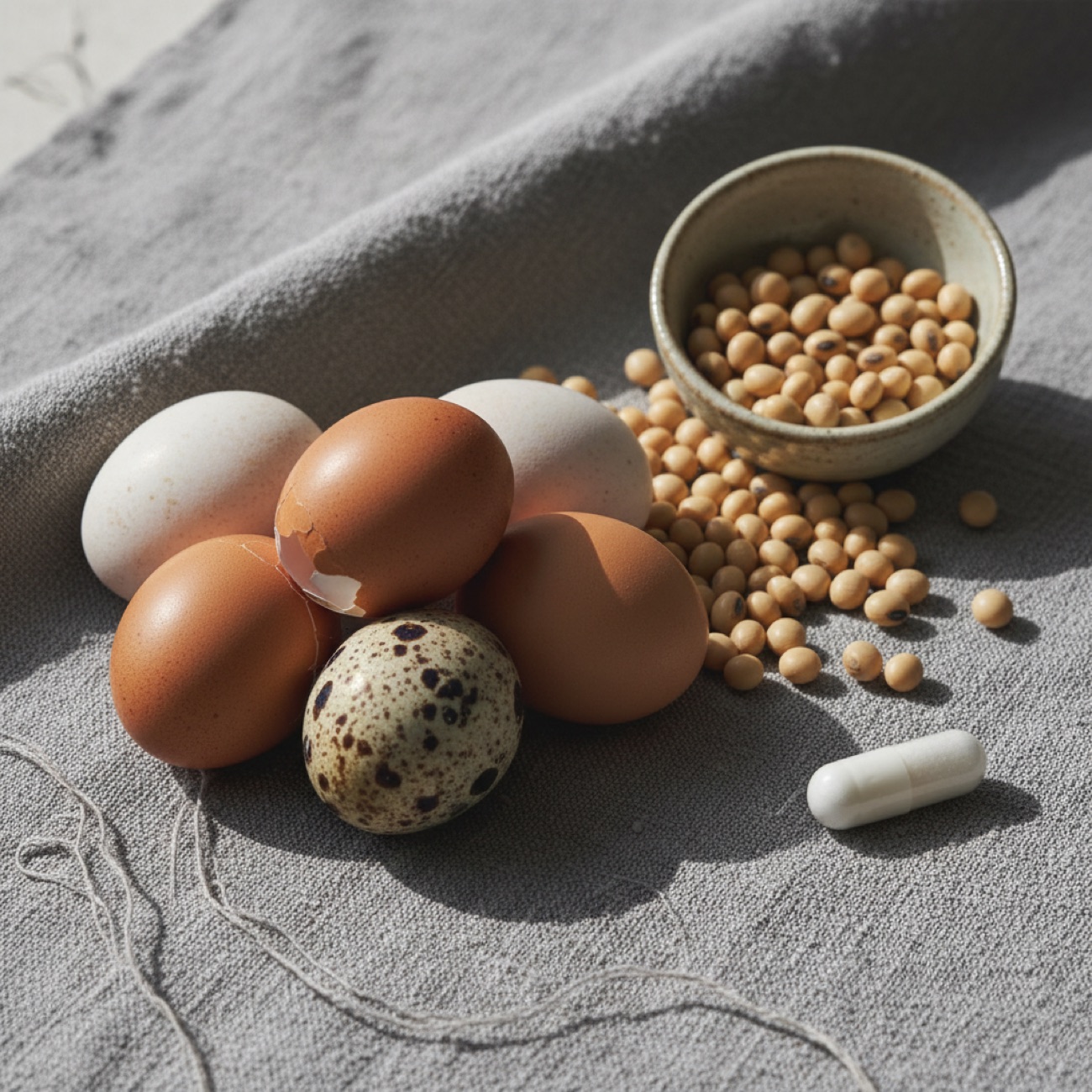
Short answer: Most adults need 425 to 550 mg of choline per day, depending on sex, according to the NIH Office of Dietary Supplements. No Recommended Dietary Allowance (RDA) exists for choline; instead, an Adequate Intake (AI) has been set for every age group.
What is choline and why does the body need it?
Choline is an essential nutrient that the liver can produce in small amounts, but not enough to meet the body's full needs. The rest must come from food or, when diet falls short, from supplements.
According to the NIH Office of Dietary Supplements, choline serves three core physiological roles:
- Cell membrane structure. Choline is needed to synthesize phosphatidylcholine and sphingomyelin, phospholipids that are vital components of every cell membrane. The evidence supporting this role is rated strong.
- Neurotransmitter production. Choline is needed to produce acetylcholine, a neurotransmitter involved in memory, mood, and muscle control. This role is also supported by strong evidence.
- Methyl group metabolism. Choline serves as a source of methyl groups required for many steps in metabolism, including DNA synthesis and gene expression.
Adequate choline intake is also needed for normal liver function and to prevent fat accumulation in the liver, a relationship backed by strong evidence. Research on whether higher dietary choline is associated with a lower risk of nonalcoholic fatty liver disease is currently rated limited, meaning findings are promising but not yet conclusive. Claims that choline improves cognition or slows dementia progression in adults are also rated limited at this time, and evidence on choline's relationship to cardiovascular disease risk is currently insufficient to draw conclusions.
Choline intake targets by age and sex
The values below come from the NIH Office of Dietary Supplements and reflect Adequate Intake (AI) levels, not RDAs. An AI is used when there is not yet enough data to set a full RDA. All figures are in milligrams per day.
Infants
- 0 to 6 months: 125 mg per day
- 7 to 12 months: 150 mg per day
No Tolerable Upper Intake Level (UL) could be set for infants. The NIH states that breast milk, infant formula, and food should be the only sources of choline for this age group.
Children
- 1 to 3 years: 200 mg per day
- 4 to 8 years: 250 mg per day
- 9 to 13 years: 375 mg per day
Adolescents
- 14 to 18 years, males: 550 mg per day
- 14 to 18 years, females: 400 mg per day
Adults
- 19 years and older, men: 550 mg per day
- 19 years and older, women: 425 mg per day
Pregnancy and lactation
- Pregnant people of any age: 450 mg per day
- Breastfeeding people of any age: 550 mg per day
Choline needs rise during pregnancy and lactation because the nutrient is actively transported to the developing fetus and is present in breast milk. If you are pregnant or breastfeeding, speak with your doctor or midwife before making any changes to your supplement routine.
The Tolerable Upper Intake Level for choline
The NIH Office of Dietary Supplements sets the Tolerable Upper Intake Level (UL) for adults aged 19 and older at 3,500 mg per day. The UL represents the highest daily intake likely to pose no risk of adverse effects for most healthy people. It is not a target or a recommended amount.
Intakes above the UL are associated with fishy body odor, excessive sweating, increased salivation, vomiting, low blood pressure (hypotension), and liver toxicity. Staying well below 3,500 mg per day from all combined sources is advisable for the general population.
People receiving choline as part of total parenteral nutrition (TPN) under medical supervision represent a special case that falls outside standard population guidance. If you are in a clinical setting, your care team will manage your intake directly.
Food sources of choline
Many common foods provide meaningful amounts of choline. According to data from the USDA FoodData Central, some of the richest sources include:
- Beef liver and other organ meats
- Eggs (particularly the yolk)
- Fish and shellfish, including salmon and shrimp
- Chicken and other poultry
- Soybeans and soy products such as tofu
- Beef and pork
- Potatoes, kidney beans, and quinoa (moderate amounts)
- Dairy products including milk and yogurt
Most people who eat a varied diet that includes eggs and meat will come close to or meet their AI. Vegans and vegetarians who avoid eggs may need to pay closer attention to plant-based choline sources or discuss supplementation with a registered dietitian.
Choline supplements
Choline is available in several supplement forms, including choline bitartrate, choline chloride, and alpha-GPC. These products are not intended to diagnose, treat, cure, or prevent any disease, and these statements have not been evaluated by the FDA.
If you are considering a choline supplement, keep the following in mind:
- Add up choline from all dietary sources before choosing a supplement dose, to avoid approaching the 3,500 mg per day UL.
- Per the NIH Office of Dietary Supplements, choline is not known to have any clinically relevant interactions with medications. Even so, you should talk to a doctor or pharmacist before combining any supplement with prescription or over-the-counter medications.
- Consult a clinician or registered dietitian for personal dosing guidance, especially if you are pregnant, breastfeeding, managing a liver condition, or have other health considerations.
Key takeaways
- Choline has an Adequate Intake (AI), not an RDA, because the science is still developing.
- Adult men need 550 mg per day; adult women need 425 mg per day, according to the NIH Office of Dietary Supplements.
- Needs are higher during pregnancy (450 mg) and lactation (550 mg).
- The adult UL is 3,500 mg per day; exceeding it is associated with unpleasant and potentially harmful side effects.
- Eggs, meat, fish, and soy are reliable food sources. Most people who eat a varied diet can meet their AI through food alone.
- For personal dosing recommendations, speak with a qualified healthcare provider.
Sources
- S1.gov verifiedNIH Office of Dietary SupplementsCholine - Health Professional Fact Sheetods.od.nih.gov/factsheets/Choline-HealthProfessional
- S2.gov verifiedNIH Office of Dietary SupplementsCholine - Consumer Fact Sheetods.od.nih.gov/factsheets/Choline-Consumer/
- S3.gov verifiedInstitute of Medicine (NASEM), Food and Nutrition BoardDietary Reference Intakes: Thiamin, Riboflavin, Niacin, Vitamin B6, Folate, Vitamin B12, Pantothenic Acid, Biotin, and Cholinewww.nap.edu/catalog/6015/dietary-reference-intakes-f
- S4.gov verifiedUSDA Agricultural Research ServiceFoodData Centralfdc.nal.usda.gov/