Prenatal
Choline in Pregnancy for Fetal Brain and Memory Development
A practical, evidence-based look at why choline matters during pregnancy, how much you need, and where to find it.
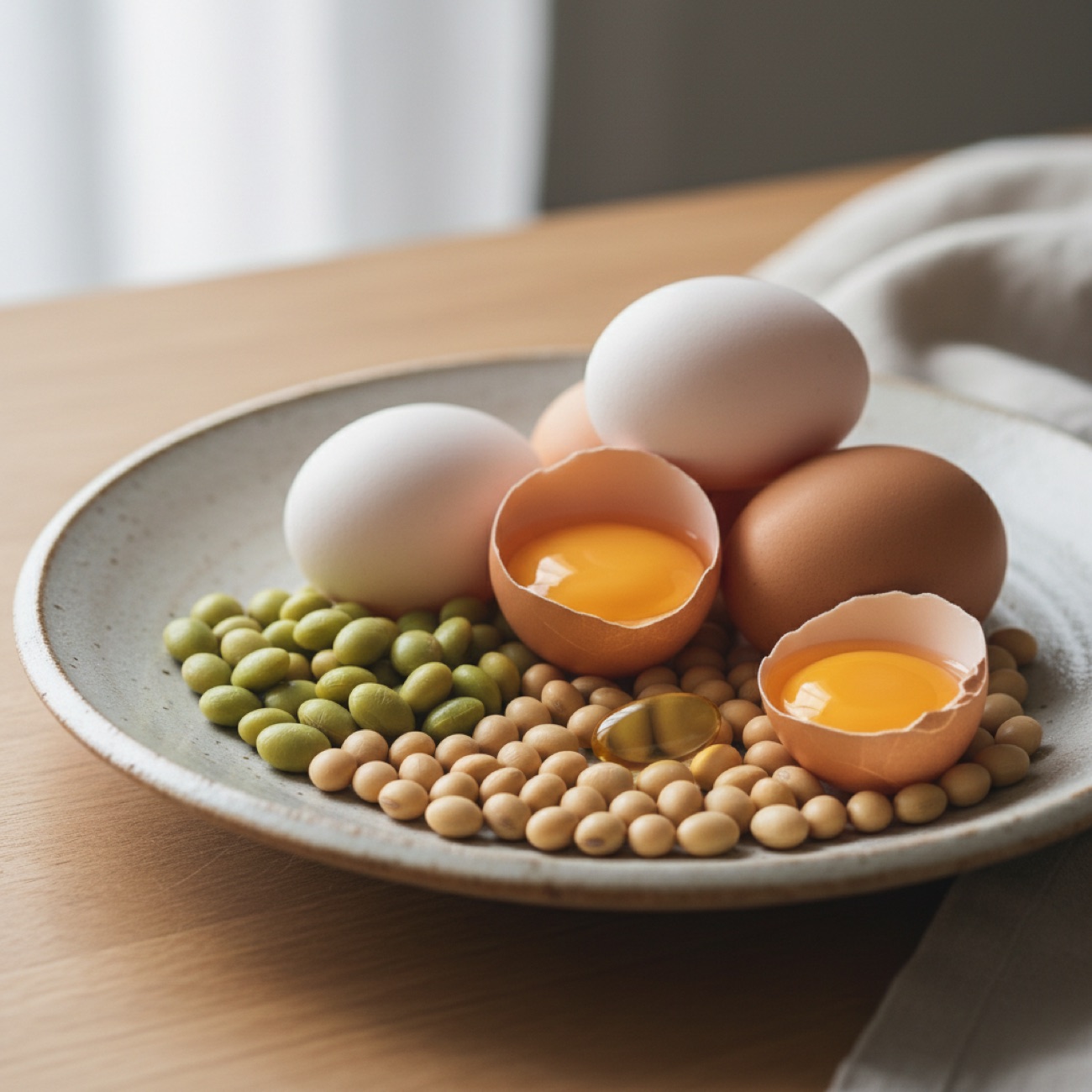
Short answer: Choline is an essential nutrient that plays a well-established role in building cell membranes and producing the neurotransmitter acetylcholine, both of which are critical during fetal brain development. Most pregnant people in the United States do not reach the Adequate Intake level set by health authorities, making it one of the more commonly overlooked nutrients in prenatal nutrition.
What Is Choline and Why Does It Matter in Pregnancy?
Choline is a water-soluble compound that the body produces in small amounts, though not enough to meet daily needs on its own. According to the NIH Office of Dietary Supplements (ODS), choline serves three core physiological functions that are especially relevant during pregnancy.
- Cell membrane structure: Choline is required to synthesize phosphatidylcholine and sphingomyelin, two phospholipids that are fundamental building blocks of every cell membrane in the body. Evidence for this role is rated strong by the NIH ODS.
- Neurotransmitter production: Choline is needed to produce acetylcholine, a neurotransmitter involved in memory, mood, and muscle control. This role is also supported by strong evidence.
- Methyl group donation: Choline serves as a source of methyl groups needed for many steps in metabolism, including processes involved in gene expression during fetal development.
Because the fetal brain grows at a rapid rate during the second and third trimesters, the demand for both phospholipids and acetylcholine is particularly high. The placenta actively transports choline to the fetus, and fetal concentrations are maintained at levels several times higher than those in the mother's blood.
How Much Choline Do Pregnant People Need?
The NIH ODS notes that no Recommended Dietary Allowance (RDA) currently exists for choline because research has not yet been sufficient to establish one. Instead, an Adequate Intake (AI) has been set. For non-pregnant women aged 19 and older, the AI is 425 mg per day. During pregnancy, that figure rises to 450 mg per day, and during lactation it increases further to 550 mg per day, according to NIH ODS data.
The Tolerable Upper Intake Level (UL) for adults aged 19 and older is 3,500 mg per day, as reported by the NIH ODS. Intakes above this level are associated with fishy body odor, excessive sweating, increased salivation, vomiting, low blood pressure, and potential liver toxicity. Staying well within the UL is straightforward for most people eating a varied diet and taking a standard prenatal supplement.
Because the AI is based on the best available data rather than a full dose-response analysis, individual needs can vary. Always consult a clinician or pharmacist before adjusting your intake, and speak with your doctor before combining any supplements with prescription or over-the-counter medications.
Food Sources of Choline
Whole foods remain the most reliable way to meet choline needs. The following are among the richest dietary sources, based on data from the USDA FoodData Central database.
- Beef liver (cooked, 3 oz): approximately 356 mg
- Eggs (one large, hard-boiled): approximately 147 mg
- Beef, top round (cooked, 3 oz): approximately 117 mg
- Soybeans (roasted, 0.5 cup): approximately 107 mg
- Chicken breast (roasted, 3 oz): approximately 72 mg
- Fish, cod (cooked, 3 oz): approximately 71 mg
- Kidney beans (canned, 0.5 cup): approximately 45 mg
- Quinoa (cooked, 1 cup): approximately 43 mg
- Milk, 2% fat (1 cup): approximately 40 mg
- Broccoli (cooked, 0.5 cup): approximately 31 mg
Eggs and animal proteins tend to provide the highest amounts per serving, but a varied diet that includes legumes, whole grains, and dairy can contribute meaningfully to overall intake.
Choline in Prenatal Supplements
Many standard prenatal vitamins contain little or no choline. A 2019 survey of prenatal supplements found that fewer than half included choline, and those that did often provided amounts well below the pregnancy AI. If you are relying primarily on a prenatal multivitamin, check the label and discuss any gap with your healthcare provider.
Choline is available as a standalone supplement, most commonly as choline bitartrate or as phosphatidylcholine. As with all dietary supplements, these products are not intended to diagnose, treat, cure, or prevent any disease, and these statements have not been evaluated by the FDA. The appropriate form and dose for your situation should be determined in conversation with a qualified clinician.
What Does the Research Actually Show?
It is important to be clear about what the evidence supports and where it falls short.
- Cell membrane and neurotransmitter roles (strong evidence): The NIH ODS rates the evidence as strong that choline is required for phosphatidylcholine and sphingomyelin synthesis and for acetylcholine production. These are established biochemical facts.
- Liver function (strong evidence): Adequate choline intake is needed for normal liver function and to prevent fat accumulation in the liver, also rated strong by the NIH ODS.
- Cognition in adults (limited evidence): Research suggesting that higher choline intake improves cognition or slows dementia progression in adults is currently rated as limited by the NIH ODS. This means findings are promising but not yet definitive.
- Cardiovascular risk (insufficient evidence): Claims linking choline intake to cardiovascular or peripheral artery disease risk are rated insufficient by the NIH ODS. The data do not yet support firm conclusions in either direction.
Observational studies in humans have found associations between higher maternal choline intake and certain measures of infant cognitive performance, but these studies cannot establish cause and effect on their own. Randomized controlled trials in pregnant populations are limited in number and size. In short, the physiological rationale for adequate choline during pregnancy is well established, but the clinical evidence base for specific cognitive outcomes in children is still developing.
Practical Takeaways
- The pregnancy AI for choline is 450 mg per day, according to the NIH ODS. Most pregnant people fall short of this target.
- Eggs, meat, fish, and soy foods are the most concentrated dietary sources.
- Many prenatal vitamins provide little choline. Check your supplement label.
- Do not exceed 3,500 mg per day, the adult UL set by the NIH ODS, without medical supervision.
- Talk to your doctor or a registered dietitian to assess your individual intake and determine whether a standalone choline supplement is appropriate for you.
Sources
NIH Office of Dietary Supplements, Choline Fact Sheet for Health Professionals: https://ods.od.nih.gov/factsheets/Choline-HealthProfessional/ | NIH ODS Consumer Fact Sheet: https://ods.od.nih.gov/factsheets/Choline-Consumer/ | National Academies of Sciences, Dietary Reference Intakes for Thiamin, Riboflavin, Niacin, Vitamin B6, Folate, Vitamin B12, Pantothenic Acid, Biotin, and Choline (1998): https://www.nap.edu/catalog/6015 | USDA FoodData Central: https://fdc.nal.usda.gov/
Sources
- S1.gov verifiedNIH Office of Dietary SupplementsCholine - Health Professional Fact Sheetods.od.nih.gov/factsheets/Choline-HealthProfessional
- S2.gov verifiedNIH Office of Dietary SupplementsCholine - Consumer Fact Sheetods.od.nih.gov/factsheets/Choline-Consumer/
- S3.gov verifiedInstitute of Medicine (NASEM), Food and Nutrition BoardDietary Reference Intakes: Thiamin, Riboflavin, Niacin, Vitamin B6, Folate, Vitamin B12, Pantothenic Acid, Biotin, and Cholinewww.nap.edu/catalog/6015/dietary-reference-intakes-f
- S4.gov verifiedUSDA Agricultural Research ServiceFoodData Centralfdc.nal.usda.gov/