Dosing
How much copper you need each day and the upper limit
A plain-language guide to the daily copper target, the safety ceiling, and what the evidence actually says about this essential mineral.
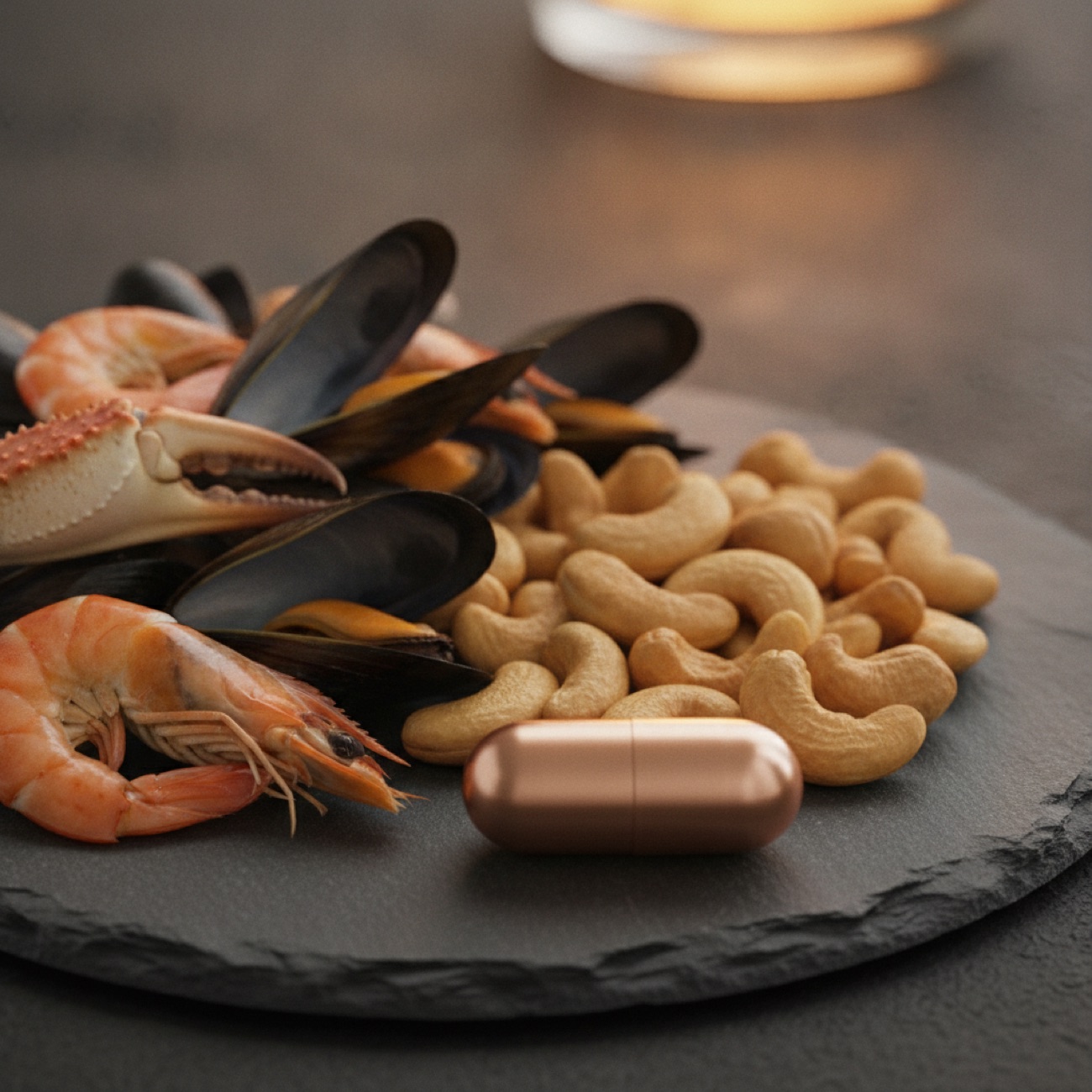
Short answer: Most adults need 900 micrograms (mcg) of copper per day, according to the NIH Office of Dietary Supplements (ODS). The Tolerable Upper Intake Level for adults is 10,000 mcg (10 mg) per day, a threshold set to protect against adverse effects from consistently high intakes.
What copper does in the body
Copper is an essential trace mineral that the body cannot make on its own. It must come from food or, when dietary intake is insufficient, from supplements. According to the NIH ODS, copper serves several well-documented physiological roles.
- Energy production: Copper acts as a cofactor for cuproenzymes involved in producing ATP, the primary energy currency of cells.
- Iron metabolism: The copper-containing enzyme ceruloplasmin plays a central role in how the body processes and transports iron.
- Connective tissue formation: Copper contributes to the synthesis of connective tissue, which supports the structure of skin, bones, and blood vessels.
- Antioxidant defense: Copper is a component of superoxide dismutases, enzymes that help neutralize harmful free radicals. The evidence for this role is rated strong by the NIH ODS.
- Neurotransmitter synthesis: Copper-dependent enzymes are involved in producing certain neurotransmitters in the brain and nervous system.
These are established physiological functions. Copper supplements are not intended to diagnose, treat, cure or prevent any disease, and these statements have not been evaluated by the FDA.
Daily copper targets by life stage
The figures below come from the Dietary Reference Intakes published by the National Academies and summarized by the NIH ODS. The Recommended Dietary Allowance (RDA) is the average daily intake sufficient to meet the needs of nearly all healthy people in a given group.
- Adult men and women (19 years and older): 900 mcg per day
- Pregnant adults: 1,000 mcg per day
- Breastfeeding adults: 1,300 mcg per day
These are population reference values. If you have a specific health condition or are unsure how much copper is right for you, consult a clinician or registered dietitian for personal guidance.
The upper limit and why it matters
The Tolerable Upper Intake Level (UL) for copper in adults is 10,000 mcg (10 mg) per day, as established by the National Academies and reported by the NIH ODS. This is not a recommended intake. It is the highest daily amount considered unlikely to cause harm in healthy adults when consumed consistently over time.
Intakes above the UL are associated with gastrointestinal symptoms such as nausea, vomiting, and abdominal pain. Chronically excessive copper intake can lead to liver damage. For context, the U.S. Environmental Protection Agency sets a recommended upper limit of 1.3 mg per liter for copper in public drinking water.
One important note: copper status is not routinely assessed in clinical practice, and no single biomarker reliably measures copper levels in the body. This makes it difficult to identify mild deficiency or excess without specialized testing. If you are concerned about your copper status, speak with a doctor rather than adjusting supplementation on your own.
People with Wilson's disease
Wilson's disease is a genetic disorder that causes copper to accumulate to dangerous levels in the liver, brain, and other organs. People with Wilson's disease must avoid additional copper from supplements. If you have this condition or a family history of it, discuss any supplement use with your doctor before making changes.
What the research says (with honest evidence grades)
The NIH ODS grades the strength of evidence for various health claims related to copper. Here is a straightforward summary.
- Essential functions (energy, iron metabolism, connective tissue, neurotransmitter synthesis): Evidence is rated strong. These roles are well established through decades of biochemical and clinical research.
- Antioxidant defense via superoxide dismutases: Evidence is rated strong.
- Cardiovascular disease risk: Evidence is rated insufficient. Research has examined whether copper concentrations or supplementation affect heart disease risk, but the data do not yet support firm conclusions.
- Alzheimer's disease: Evidence is rated insufficient. Some studies have looked at associations between copper status and Alzheimer's disease risk or symptoms, but results are inconsistent and no clear relationship has been established.
Insufficient evidence means the research is too limited, too inconsistent, or too preliminary to draw reliable conclusions. It does not mean copper has been shown to have no effect on these outcomes.
Interactions with zinc and medications
The most clinically relevant interaction for copper involves zinc. High dietary or supplemental zinc interferes with copper absorption. According to the NIH ODS, moderately high zinc intakes of around 60 mg per day for up to 10 weeks reduced a copper status marker called erythrocyte copper-zinc superoxide dismutase. Excessive zinc supplementation over time can cause copper deficiency. The evidence for this interaction is rated moderate.
If you take a zinc supplement regularly, especially at doses above the RDA for zinc, talk to a clinician or pharmacist about whether your copper intake needs attention.
Regarding medications, the NIH ODS reports that copper is not known to have any clinically relevant interactions with medications. That said, always talk to a doctor or pharmacist before combining any supplement with a prescription or over-the-counter medication.
Food sources of copper
Most people in the United States meet the copper RDA through diet alone. Foods that naturally contain meaningful amounts of copper include beef liver and other organ meats, shellfish (particularly oysters), nuts and seeds, whole grains, dark chocolate, and legumes such as lentils and chickpeas. A varied diet built around whole foods is generally sufficient to meet daily copper needs for healthy adults.
Bottom line
The NIH ODS recommends 900 mcg of copper per day for most adults, with an upper safety limit of 10,000 mcg per day. Copper plays well-supported roles in energy metabolism, iron processing, connective tissue formation, and antioxidant defense. Evidence for copper's role in cardiovascular disease or Alzheimer's disease is currently insufficient to draw conclusions. High-dose zinc supplementation is the primary nutritional concern for copper status. For personal dosing decisions, speak with a clinician or pharmacist rather than relying on population reference values alone.
Sources: NIH Office of Dietary Supplements Copper Fact Sheet (Health Professional and Consumer versions); Dietary Reference Intakes for Vitamin A, Vitamin K, Arsenic, Boron, Chromium, Copper, Iodine, Iron, Manganese, Molybdenum, Nickel, Silicon, Vanadium, and Zinc, National Academies Press.
Sources
- S1.gov verifiedNIH Office of Dietary Supplements (ODS)Copper - Health Professional Fact Sheetods.od.nih.gov/factsheets/Copper-HealthProfessional/
- S2.gov verifiedNIH Office of Dietary Supplements (ODS)Copper - Consumer Fact Sheetods.od.nih.gov/factsheets/Copper-Consumer/
- S3.gov verifiedInstitute of Medicine (NASEM), Food and Nutrition BoardDietary Reference Intakes for Vitamin A, Vitamin K, Arsenic, Boron, Chromium, Copper, Iodine, Iron, Manganese, Molybdenum, Nickel, Silicon, Vanadium, and Zinc (2001)nap.nationalacademies.org/catalog/10026/dietary-refe