Myths
Does Cranberry Treat a Urinary Tract Infection?
Cranberry products are widely used for urinary health, but the evidence supporting their role is more limited than many people realize.
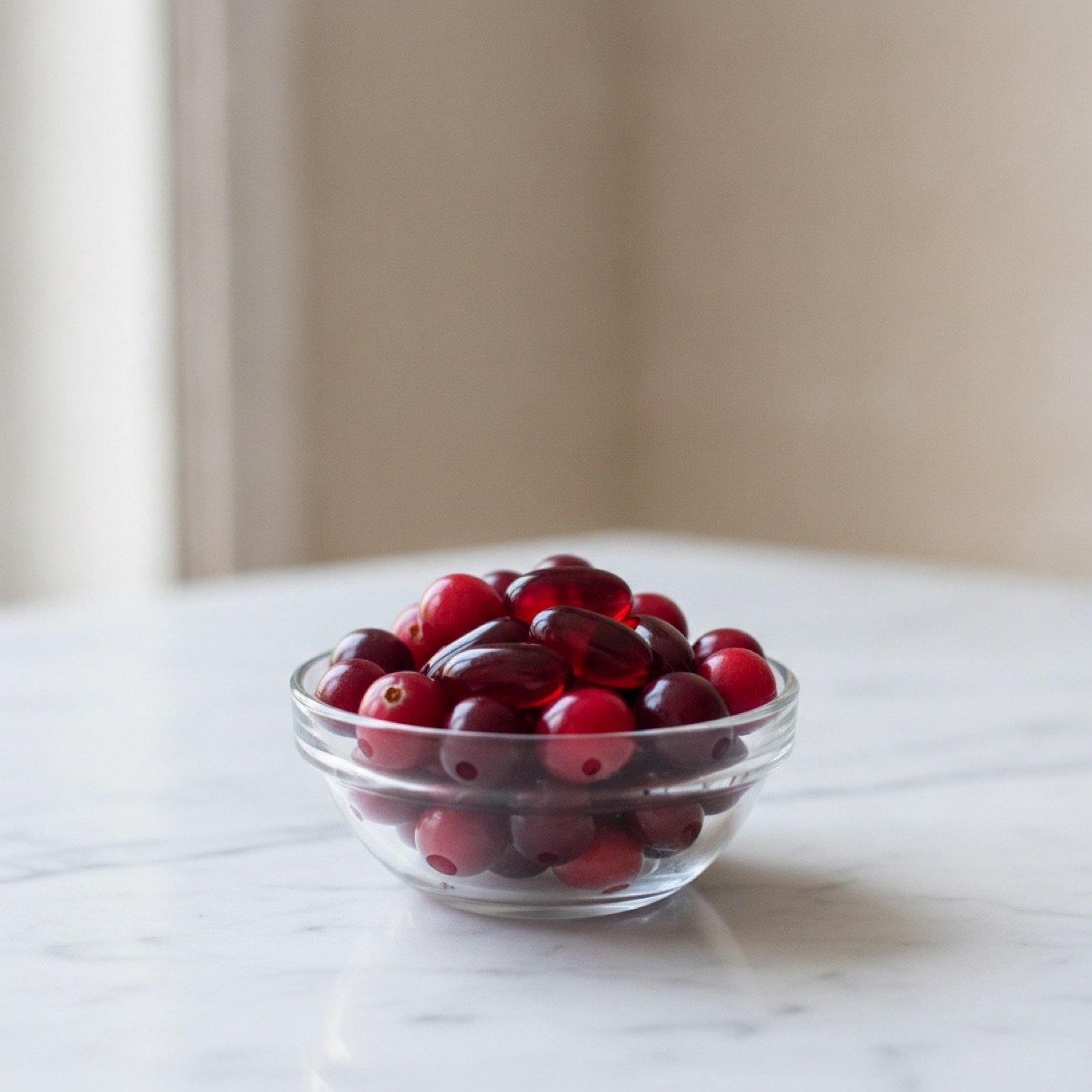
Short answer: Cranberry products have not been shown to treat or cure an existing urinary tract infection, and they should never replace medical care. Some limited research suggests they may help reduce the risk of recurrent UTIs in certain women, but the evidence is not strong enough to make a firm recommendation for most people.
What Is Cranberry and Why Do People Use It for Urinary Health?
Cranberry (Vaccinium macrocarpon) is a tart, red berry native to North America. It is consumed as whole fruit, juice, dried berries, and concentrated capsule or tablet supplements. People have long associated cranberry with urinary tract health, and that association has prompted decades of scientific investigation.
According to the NIH National Center for Complementary and Integrative Health (NCCIH), cranberry is one of the most commonly used natural products in the United States. The interest in cranberry for urinary health is rooted in its unique chemical makeup rather than in any single vitamin or mineral.
Key Nutrients and Compounds in Cranberry
The NIH Office of Dietary Supplements notes that no adult daily target or upper tolerable intake level has been established for cranberry. Unlike vitamins or minerals with formal Dietary Reference Intake values, cranberry is valued for the combination of compounds it delivers as a whole food matrix, including:
- Proanthocyanidins (PACs): A class of polyphenols that have received the most scientific attention in relation to urinary health.
- Anthocyanins: Pigment compounds that also belong to the polyphenol family.
- Organic acids: Naturally occurring acids that contribute to the berry's characteristic tartness.
- Vitamin C: An antioxidant nutrient present in the fruit matrix.
- Glucose and fructose: Natural sugars found in the berry.
These components work together as part of a whole food, and researchers believe the PACs are the fraction most relevant to the proposed urinary health mechanism described below.
How Might Cranberry Affect the Urinary Tract? The Proposed Mechanism
In laboratory studies, PACs from cranberry have been shown to reduce the ability of certain bacteria, specifically P-fimbriated Escherichia coli, to adhere to the cells that line the bladder wall. The thinking is that if bacteria cannot attach firmly to bladder cells, they may be less likely to establish the infection that causes UTI symptoms.
This is an important distinction. The proposed action is about reducing bacterial adhesion, not about killing bacteria the way an antibiotic does. Cranberry does not have antibiotic properties. Because of this, it has been studied primarily as a nonantibiotic approach that might lower the chance of a symptomatic, recurrent UTI in some women who are at increased risk, not as a treatment for an infection that has already started.
What Does the Research Actually Show?
It is important to read the evidence carefully, because popular claims about cranberry often go further than the science supports. Here is how the NIH and independent researchers grade the current evidence:
Laboratory Findings on PACs and Bacterial Adhesion
The evidence that PACs reduce P-fimbriated E. coli adhesion in cell and lab models is rated as moderate. This is a plausible biological mechanism, but laboratory findings do not automatically translate into clinical benefit in humans.
Reducing Risk of Recurrent UTIs in Some Women
The evidence that cranberry products may decrease the risk of symptomatic, recurrent UTIs in some women at increased risk is rated as limited. A Cochrane systematic review of randomized trials found that cranberry products produced a small reduction in recurrent UTIs in women, but the effect was modest and results across studies were inconsistent. The FDA has authorized a qualified health claim for cranberry products and UTIs, but a qualified claim means the evidence is suggestive rather than conclusive.
Treating an Existing UTI
The evidence that cranberry treats or cures an existing UTI is rated as insufficient. The NCCIH is explicit on this point: cranberry should not be used to treat an existing UTI or as a substitute for proven treatment. Anyone who thinks they have a UTI should see a healthcare provider for diagnosis and appropriate care.
High-Risk Groups Such as Elderly People and Pregnant Women
The evidence that cranberry reduces UTI risk in high-risk groups, including elderly people in long-term care and pregnant women, is also rated as insufficient by current research standards.
Safety Considerations
The NCCIH states that cranberry taken by mouth is generally thought to be safe for most adults. However, a few points are worth knowing:
- Very large amounts of cranberry can cause stomach upset and diarrhea, a concern that is especially relevant for young children.
- Cranberry juice is high in natural sugars and calories, which matters for people managing blood sugar or caloric intake.
- Cranberry is not a substitute for medical treatment. If you have symptoms of a UTI, such as burning during urination, frequent urges to urinate, or cloudy urine, contact a healthcare provider promptly.
As a reminder, dietary supplements are not intended to diagnose, treat, cure, or prevent any disease, and these statements have not been evaluated by the FDA.
Drug Interactions
Before adding cranberry products to your routine, consider potential interactions with medications:
- Warfarin: The NCCIH reports conflicting evidence about whether cranberry interacts with warfarin. Some case reports and warfarin product labeling raise concern about a possible increase in INR and bleeding risk, while several randomized studies found no significant pharmacodynamic interaction. Anyone taking warfarin should speak with their healthcare provider before using cranberry in any form.
- Other medications: The NCCIH advises that some herbs and medicines interact in harmful ways. Some professional references note that cranberry may affect medicines metabolized by the enzymes CYP2C9 or CYP3A, with examples including atorvastatin and nifedipine, though this evidence is limited and has not been confirmed by the NIH. Anyone taking prescription or over-the-counter medications should consult their provider or pharmacist before using cranberry supplements.
Practical Takeaways
- Cranberry does not treat an active UTI. See a doctor if you have symptoms.
- Limited evidence suggests cranberry products may modestly reduce recurrent UTI risk in some women, but this is not a guaranteed effect.
- No official daily intake target exists for cranberry. Consult a clinician or pharmacist for guidance on whether a product and dose make sense for your situation.
- Talk to your doctor before combining cranberry with any medication, particularly warfarin.
Sources
Information in this guide is drawn from the NIH National Center for Complementary and Integrative Health (nccih.nih.gov/health/cranberry), the NIH Office of Dietary Supplements (ods.od.nih.gov), the FDA qualified health claim announcement (fda.gov), and the Cochrane systematic review on cranberry for UTI prevention (Cochrane Library, CD001321).
Sources
- S1.gov verifiedNIH National Center for Complementary and Integrative Health (NCCIH)Cranberry: Usefulness and Safetywww.nccih.nih.gov/health/cranberry
- S2.gov verifiedNIH Office of Dietary Supplements (ODS)Dietary Supplements: What You Need to Know (ODS cross-references NCCIH for botanical ingredients such as cranberry)ods.od.nih.gov/factsheets/list-all/
- S3.gov verifiedU.S. Food and Drug Administration (FDA)Letter of Enforcement Discretion - Cranberry juice beverages and cranberry dietary supplements and reduced risk of recurrent urinary tract infection in healthy women (July 21, 2020)www.fda.gov/food/cfsan-constituent-updates/fda-annou
- S4.gov verifiedCochrane (cited by NIH/NCCIH)Williams G, Hahn D, Stephens JH, et al. Cranberries for preventing urinary tract infections. Cochrane Database of Systematic Reviews. 2023;4(4):CD001321www.cochranelibrary.com/cdsr/doi/10.1002/14651858.CD