Myths
Does St. John's Wort Help With Depression?
Research suggests it may help with mild to moderate depression, but the evidence has real limits and the drug interactions are serious.
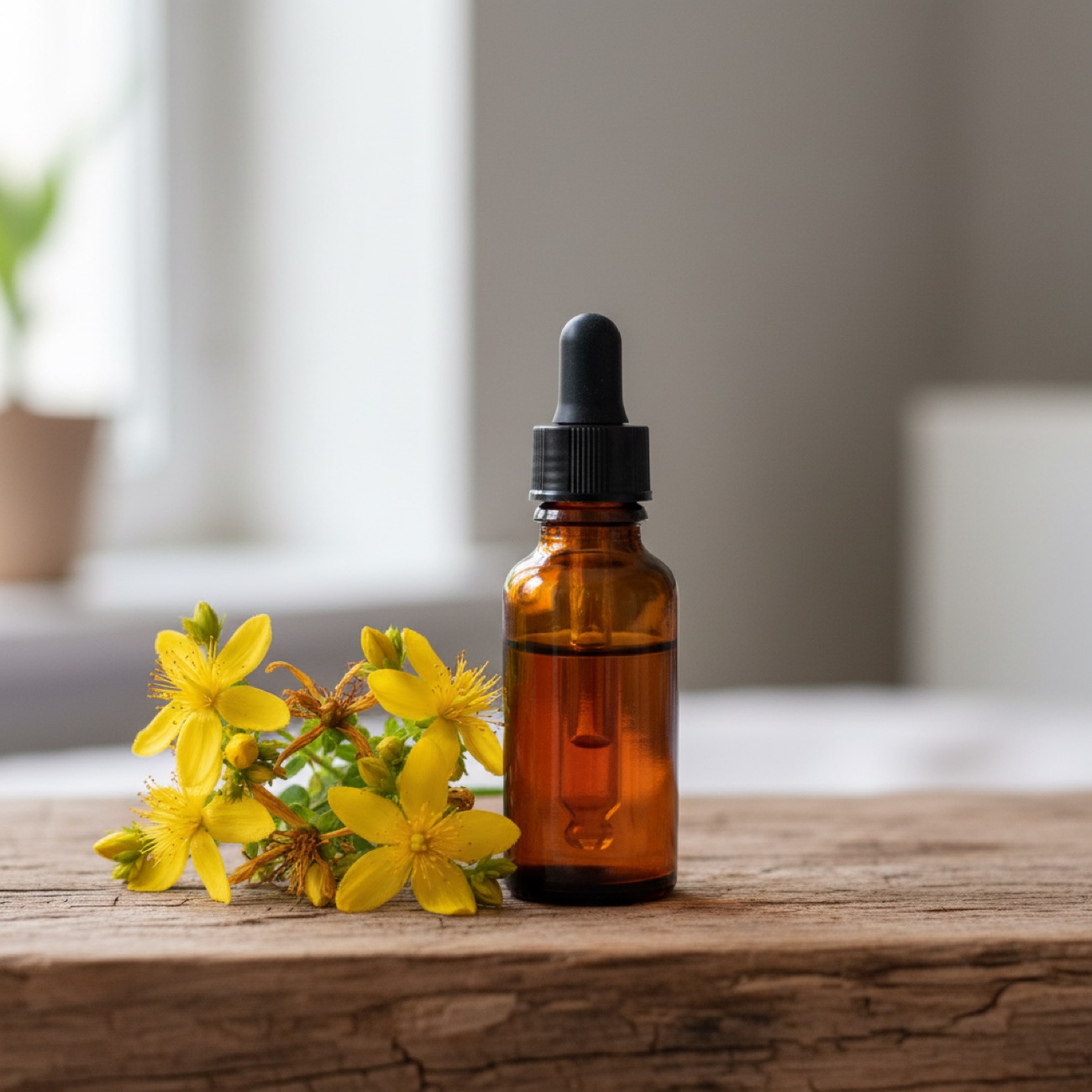
For mild to moderate depression, St. John's wort may be more effective than a placebo and roughly as effective as standard antidepressants, according to research reviewed by the NIH. However, evidence for severe depression is insufficient, the safety window is short, and the herb interacts with a large number of common medicines.
What Is St. John's Wort?
St. John's wort is a flowering plant whose scientific name is Hypericum perforatum. It has been used in traditional medicine for centuries to address low mood, wound healing, and other complaints. Today it is sold widely as a dietary supplement, most often in capsule or tablet form.
It is important to note from the outset that supplements are not intended to diagnose, treat, cure, or prevent any disease, and these statements have not been evaluated by the FDA.
How Might It Work?
St. John's wort is not an essential nutrient and has no established role in normal human physiology, according to the NIH Office of Dietary Supplements. Laboratory work suggests that certain constituents of the plant, particularly hypericin and hyperforin, may influence chemical messengers such as serotonin in the brain. However, the exact mechanism in people is not fully established, and researchers are still working to understand which compounds are most active and how they interact with human biology.
What Does the Evidence Actually Show?
The NIH Office of Dietary Supplements grades the research on St. John's wort as follows:
- Mild to moderate depression (Moderate evidence): Multiple clinical trials suggest St. John's wort may be more effective than a placebo and about as effective as standard antidepressant medicines for mild to moderate depression. This is the strongest evidence base the herb has.
- Severe depression (Insufficient evidence): Studies have not demonstrated that St. John's wort is effective for severe depression. People experiencing severe depressive symptoms should speak with a doctor rather than relying on this supplement.
- Long-term use beyond roughly 12 weeks (Insufficient evidence): Research on outcomes beyond about 12 weeks is lacking, so it is not known whether benefits or risks change with prolonged use.
- Menopausal symptoms and hot flashes (Limited evidence): A small amount of research exists, but it is not strong enough to draw firm conclusions.
- ADHD, irritable bowel syndrome, OCD, premenstrual syndrome, somatic symptom disorder, and smoking cessation (Insufficient evidence): Current research does not support using St. John's wort for these conditions.
- Topical wound healing and skin conditions (Limited evidence): Some preliminary findings exist for topical preparations, but evidence remains limited.
Grading evidence honestly matters here. Moderate evidence means the finding is reasonably consistent across studies but not definitive. Insufficient evidence means the research simply has not shown a reliable effect, not that the question has been settled in the negative.
Is St. John's Wort Safe?
For most adults who are not taking any medicines, St. John's wort appears to be safe when taken by mouth for up to 12 weeks, according to the NIH Office of Dietary Supplements. Safety beyond that period has not been established, so longer use should only happen under medical supervision.
St. John's wort may be unsafe during pregnancy, and anyone who is pregnant or planning to become pregnant should speak with a healthcare provider before considering it.
No standard adult target dose or established upper limit has been set for St. John's wort by regulatory or dietary reference bodies. This means there is no officially recognised safe ceiling. Always consult a clinician or pharmacist before deciding on a dose, and never adjust the amount you take based solely on product labeling.
Drug Interactions: A Serious Concern
This is arguably the most critical section of this guide. St. John's wort interacts with a very large number of prescription and over-the-counter medicines. These are not minor interactions. Some can be life-threatening or lead to treatment failure. The NIH Office of Dietary Supplements highlights the following key interactions:
- Antidepressants including SSRIs, SNRIs, tricyclics such as amitriptyline, and bupropion: Combining St. John's wort with these medicines can raise serotonin to dangerous levels and cause a potentially life-threatening condition called serotonin syndrome. This interaction means that anyone already taking an antidepressant should not add St. John's wort without direct medical guidance.
- Birth control pills (oral contraceptives): St. John's wort can reduce the effectiveness of hormonal contraceptives, leading to breakthrough bleeding and a risk of unintended pregnancy.
- Cyclosporine and other transplant anti-rejection drugs: The herb can lower blood levels of these medicines, which may put a transplanted organ at risk of rejection.
- Warfarin and other anticoagulants: St. John's wort can reduce the blood-thinning effect of these drugs, which may increase the risk of clotting events.
This list is not exhaustive. St. John's wort affects liver enzymes that process many other drugs, including certain HIV medicines, some cancer treatments, and other cardiovascular drugs. If you take any prescription medicine at all, talk to your doctor or pharmacist before using this supplement.
Who Should Be Especially Cautious?
- Anyone currently taking a prescription antidepressant
- People using hormonal contraception
- Organ transplant recipients
- Anyone on anticoagulant therapy
- People who are pregnant or breastfeeding
- Anyone with moderate to severe or treatment-resistant depression
The Bottom Line
St. John's wort has a moderate evidence base suggesting it may support mood in cases of mild to moderate depression, which makes it one of the better-studied herbal supplements in this area. That said, the evidence for severe depression is insufficient, safety data beyond 12 weeks is lacking, and the drug interaction profile is extensive and serious.
If you are considering St. John's wort, the most important step is to speak with a doctor or pharmacist first, particularly if you take any other medicines. Depression is a medical condition that deserves proper clinical evaluation, and a healthcare provider can help you weigh whether this supplement is appropriate alongside or instead of other treatments.
All data in this guide is sourced from the NIH National Center for Complementary and Integrative Health and the NIH Office of Dietary Supplements.
Sources
- S1.gov verifiedNIH National Center for Complementary and Integrative Health (NCCIH)St. John's Wort: Usefulness and Safetywww.nccih.nih.gov/health/st-johns-wort
- S2.gov verifiedNIH National Center for Complementary and Integrative Health (NCCIH)St. John's Wort and Depression: In Depthwww.nccih.nih.gov/health/st-johns-wort-and-depressio
- S3.gov verifiedNIH Office of Dietary Supplements (ODS)Dietary Supplement Fact Sheets (Botanicals)ods.od.nih.gov/factsheets/list-all/