Myths
Does Turmeric Curcumin Actually Fight Inflammation?
Lab studies are promising, but the clinical evidence in people is still limited to insufficient depending on the condition.
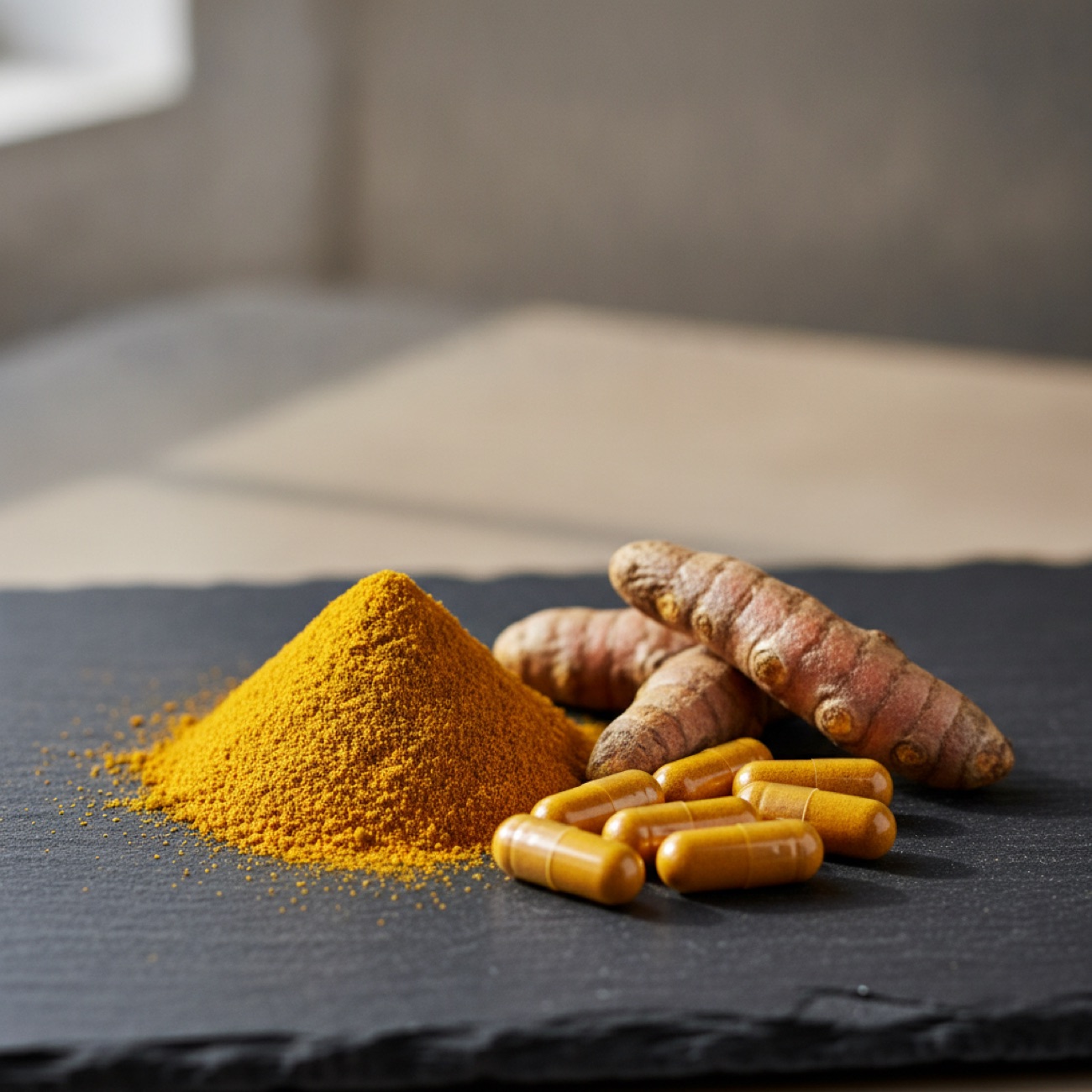
Short answer: Curcumin, the active compound in turmeric, does show antioxidant and anti-inflammatory activity in laboratory research. However, according to the NIH Office of Dietary Supplements, clinical benefit in people has not been established for most conditions, and the evidence ranges from limited to insufficient across the health outcomes studied so far.
What Is Turmeric Curcumin?
Turmeric is a spice derived from the root of Curcuma longa, a plant native to South Asia. Its deep yellow color comes from a group of compounds called curcuminoids, the most studied of which is curcumin. Beyond its role in cooking, turmeric has been used for centuries in Ayurvedic, Chinese, Islamic, and Thai systems of traditional medicine for a wide range of complaints.
Today, curcumin is sold widely as a dietary supplement, often marketed around its potential anti-inflammatory properties. Before adding it to your routine, it helps to understand what the science actually supports and where the gaps remain.
What the NIH Says About the Evidence
The NIH Office of Dietary Supplements grades the available research on turmeric and curcumin as follows. These grades reflect the quality and consistency of human clinical trials, not just laboratory findings.
- Provides the yellow color and flavor of turmeric spice used as food: Strong evidence. This is the one area where the science is unambiguous.
- Improves osteoarthritis symptoms when taken orally: Limited evidence. Some clinical trials suggest a modest benefit, but the body of research is not yet large or consistent enough to draw firm conclusions.
- Improves nonalcoholic fatty liver disease (NAFLD) measures: Insufficient evidence. Early findings exist, but well-designed human trials are lacking.
- Relieves oral mucositis symptoms as a mouthwash in cancer patients: Insufficient evidence. Research is preliminary and cannot support a reliable conclusion.
- Beneficial for any specific health condition overall: Insufficient evidence.
The honest takeaway is that while curcumin is a genuinely interesting compound in the laboratory, translating that activity into proven human health benefits has proven difficult. Researchers are still working to understand why.
Why Is the Gap Between Lab and Clinic So Wide?
One major reason is bioavailability. Standard curcumin is poorly absorbed by the body when taken orally. Much of it passes through the digestive tract without entering the bloodstream in meaningful amounts. This is why many supplement manufacturers now offer enhanced formulations, such as those combined with piperine (a compound from black pepper) or packaged in lipid-based delivery systems, to improve absorption.
Ironically, these high-bioavailability formulations introduce their own concerns, which are covered in the safety section below.
Dosage: No Official Target Has Been Set
According to the NIH Office of Dietary Supplements, no adult Recommended Dietary Allowance (RDA) or Adequate Intake (AI) has been established for turmeric or curcumin, and no official Tolerable Upper Intake Level (UL) has been set either. This means there is no universally agreed-upon daily target for supplementation.
Supplement labels vary widely in the doses they suggest, and the right amount for any individual depends on factors like age, health status, and other medications. Please consult a clinician or pharmacist to determine whether turmeric or curcumin supplementation is appropriate for you and, if so, at what dose.
These statements have not been evaluated by the FDA, and supplements are not intended to diagnose, treat, cure, or prevent any disease.
Safety: What You Need to Know
The National Center for Complementary and Integrative Health (NCCIH) states that conventionally formulated oral turmeric or curcumin is likely safe in recommended amounts for up to 2 to 3 months and is generally well tolerated at typical food and supplement amounts.
However, there are important safety considerations to keep in mind:
- Liver injury risk with high-bioavailability formulations: Enhanced curcumin products designed to improve absorption have been linked to liver damage in some people. This risk may be greater when these formulations are combined with other substances that can stress the liver. If you use any enhanced or highly bioavailable curcumin product, discuss this with your healthcare provider.
- Pregnancy: Use of turmeric supplements during pregnancy may be unsafe beyond typical food amounts. Pregnant individuals should avoid supplemental doses and speak with their provider.
- Breastfeeding: Safety during breastfeeding is unclear beyond the amounts normally found in food. Caution is advised.
Drug Interactions: Talk to Your Doctor First
NCCIH advises that anyone taking medication should speak with their healthcare provider before using any herbal product, because some herbs and medicines interact in harmful ways. For curcumin specifically, the following interactions have been identified, though the supporting evidence is limited in each case:
- Anticoagulant and antiplatelet medications: Curcumin may add to the blood-thinning effects of medicines such as warfarin, aspirin, and clopidogrel. This could increase the risk of bleeding. Do not combine curcumin supplements with these medications without medical guidance.
- Diabetes medications: Curcumin may lower blood sugar and could add to the glucose-lowering effect of diabetes drugs. This combination warrants monitoring and a conversation with your provider.
If you take any prescription or over-the-counter medication, please speak with your doctor or pharmacist before starting a curcumin supplement.
Getting Turmeric Through Food
Turmeric has a long, safe history as a culinary spice. Using it in cooking, whether in curries, soups, rice dishes, or warm drinks, is a low-risk way to incorporate it into your diet. The amounts consumed through food are generally far lower than those in concentrated supplements, which is part of why food-level intake carries a more established safety profile.
Bottom Line
Curcumin is a well-studied plant compound with genuine antioxidant and anti-inflammatory activity in laboratory settings. For everyday people, the NIH evidence grades tell a more cautious story: limited evidence for osteoarthritis symptom relief, and insufficient evidence for most other proposed benefits. No daily intake target has been established, and enhanced formulations carry real safety considerations including a possible link to liver injury.
If you are curious about turmeric or curcumin for a specific health concern, the best first step is a conversation with your healthcare provider. They can help you weigh the potential benefits against the risks in the context of your personal health history and any medications you take.
Sources
- S1.gov verifiedNIH National Center for Complementary and Integrative Health (NCCIH)Turmericwww.nccih.nih.gov/health/turmeric
- S2.gov verifiedNIH Office of Dietary Supplements (ODS)Dietary Supplements for Whole-Body Health (background on supplement regulation; ODS maintains no turmeric-specific Health Professional fact sheet)ods.od.nih.gov/factsheets/list-all/