Seniors
Fiber for Digestive Health and Regularity in Older Adults
A practical, evidence-based look at how dietary fiber and psyllium supplements support bowel regularity, and what older adults need to know before adding them to a daily routine.
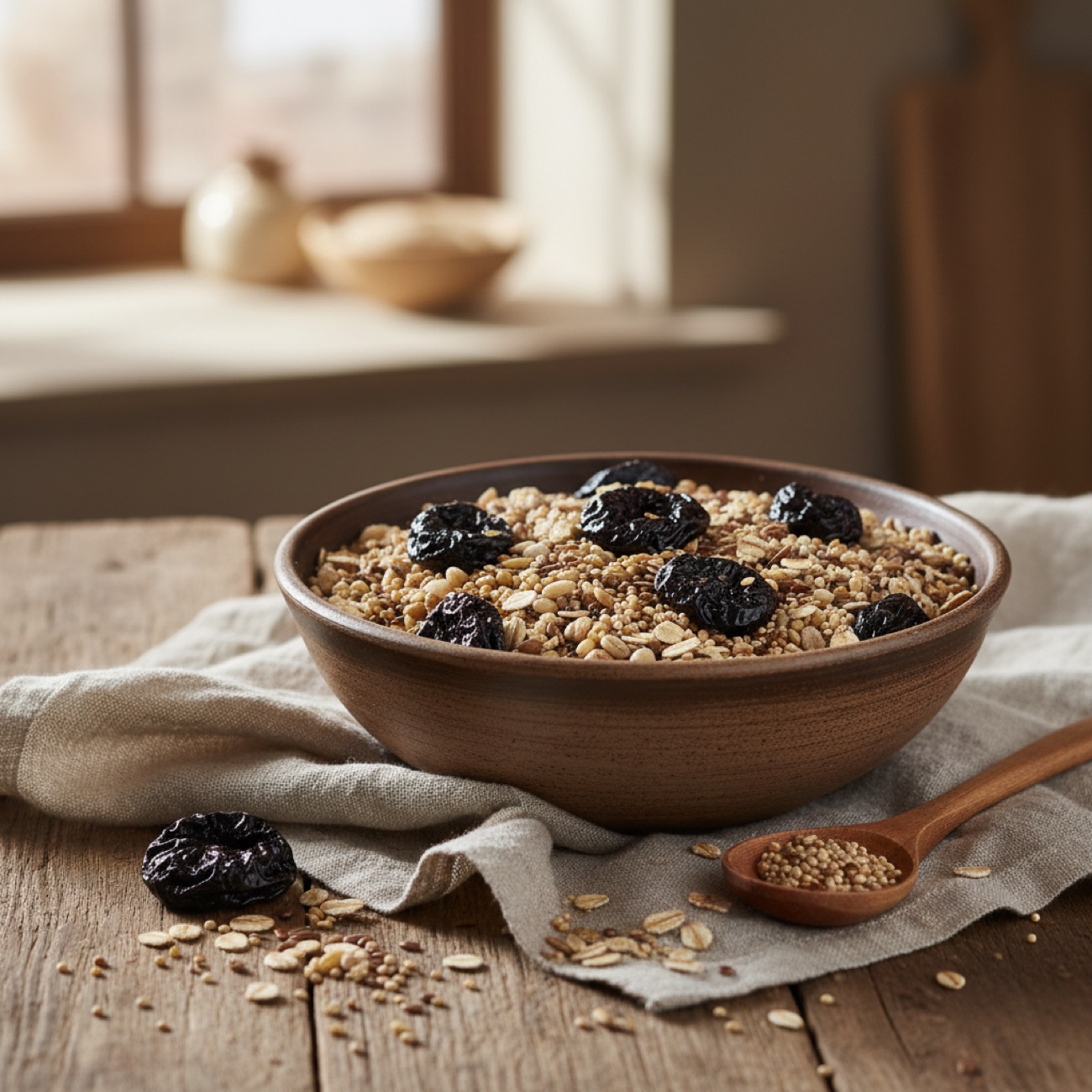
Dietary fiber is one of the most studied nutrients for digestive health, and for good reason: strong evidence shows it increases stool bulk and water content, supporting normal, comfortable bowel movements. If you are an older adult wondering whether a fiber supplement such as psyllium might help with regularity, this guide explains what the research says, how much you may need, and what to watch out for.
What Is Dietary Fiber?
Dietary fiber is the indigestible portion of plant foods. It is broadly divided into two types. Soluble fiber dissolves in water and forms a thick gel in the digestive tract. Insoluble fiber does not dissolve and adds physical bulk to stool. Psyllium husk is a well-studied soluble, gel-forming fiber that is widely available as a supplement and is the focus of much of the clinical research cited below.
How Fiber Supports Digestive Health
According to the NIH Office of Dietary Supplements, fiber works through several distinct physical mechanisms:
- Stool bulk and water retention. Both soluble gel-forming and coarse insoluble fibers absorb water and increase stool size and softness, which supports normal laxation and regularity.
- Slowed glucose absorption. The viscous gel that psyllium forms in the gut slows the rate at which glucose enters the bloodstream, helping to normalize blood glucose and insulin responses after meals.
- Cholesterol binding. Soluble fibers such as psyllium bind bile acids and dietary cholesterol in the intestine, which can lower serum LDL cholesterol as part of a diet low in saturated fat and cholesterol.
How Much Fiber Do Older Adults Need?
The National Academies of Sciences set an Adequate Intake (AI) for total fiber, not a Recommended Dietary Allowance (RDA), because the evidence base supports a general target rather than a precise requirement. The AI is calibrated at roughly 14 grams of fiber per 1,000 calories consumed. For reference, the general adult targets established by the NIH Office of Dietary Supplements are 38 grams per day for men aged 19 to 50 and 25 grams per day for women aged 19 to 50.
Calorie needs typically decline with age, which means fiber needs also shift downward for many older adults. Because individual energy intake varies considerably, the most practical approach is to aim for the 14 grams per 1,000 calories benchmark and discuss a personal target with your clinician or a registered dietitian. No tolerable upper intake level for fiber has been established by the National Academies.
Food Sources First
Whole grains, legumes, vegetables, fruits, nuts, and seeds all contribute fiber to the diet. Reaching daily targets through food is generally preferred because whole foods also provide vitamins, minerals, and phytonutrients that a supplement cannot replicate. When food sources are not enough to meet a personal target, a fiber supplement may be a reasonable addition under the guidance of a healthcare provider.
What the Evidence Shows
The following evidence grades reflect those used by the NIH Office of Dietary Supplements and the Linus Pauling Institute:
- Strong evidence: Soluble gel-forming and coarse insoluble fibers, including psyllium, increase stool bulk and water content and support normal laxation.
- Strong evidence: Psyllium and other soluble gel-forming fibers lower serum LDL cholesterol as part of a diet low in saturated fat and cholesterol.
- Moderate evidence: Viscous fibers such as psyllium improve glycemic and insulin responses and can aid blood glucose control.
- Moderate evidence: Higher dietary fiber intake is associated with lower risk of cardiovascular disease and type 2 diabetes.
- Limited evidence: Higher fiber intake is associated with lower risk of some cancers, including colorectal cancer.
- Limited evidence: Fiber, including psyllium, increases feelings of fullness and may support weight management and appetite control.
It is important to note that fiber supplements are not intended to diagnose, treat, cure, or prevent any disease, and these statements have not been evaluated by the FDA.
Safety and Side Effects
For most people, fiber including psyllium is safe and well tolerated. The most common side effects are gas, bloating, and cramping. These effects are typically mild and can be reduced by two straightforward steps: increasing fiber intake gradually over several weeks rather than all at once, and drinking adequate fluid throughout the day.
One safety point deserves particular emphasis for older adults: psyllium and other bulk-forming fibers must always be taken with a full glass of water and should never be taken dry. Without sufficient fluid, there is a risk of choking or obstruction in the throat, esophagus, or bowel. Psyllium should not be used by anyone who has difficulty swallowing.
Drug Interactions: A Critical Consideration for Older Adults
Older adults are more likely to take prescription medications, which makes the interaction profile of fiber supplements especially important. Psyllium and other viscous fibers can slow or reduce the absorption of medications taken at the same time. The practical guidance from the NIH Office of Dietary Supplements is to separate other drugs from fiber doses by about 1 to 2 hours, or as specifically advised by a pharmacist or prescriber.
Certain medications carry a higher risk of clinically meaningful interactions:
- Lithium, carbamazepine, and digoxin. Psyllium may reduce absorption of these drugs, potentially lowering their blood levels and reducing their effectiveness.
- Levothyroxine (thyroid medication). Fiber can reduce absorption of levothyroxine, so thyroid medication should always be taken well separated from fiber doses.
- Insulin and oral diabetes medications. Because fiber can enhance the blood-glucose-lowering effect of these drugs, blood glucose should be monitored carefully when starting or changing fiber intake.
Before combining a fiber supplement with any prescription or over-the-counter medication, talk to your doctor or pharmacist. Do not adjust medication timing or dosing on your own based on this guide.
Practical Tips for Getting Started
- Start with a small amount, such as half the labeled serving, and increase gradually over two to four weeks to allow the digestive system to adjust.
- Drink at least one full glass of water with each fiber supplement dose, and stay well hydrated throughout the day.
- Take fiber supplements at a different time from any prescription medications, ideally 1 to 2 hours apart, and confirm the timing with your pharmacist.
- Keep a simple log of bowel habits and any side effects during the first few weeks so you can share useful information with your clinician.
- Ask your doctor or a registered dietitian for a personal fiber target based on your calorie intake, health conditions, and medications.
The Bottom Line
Fiber, including psyllium, has strong evidence supporting its role in promoting stool bulk, water content, and normal bowel regularity. Moderate and limited evidence points to additional benefits for blood glucose, cholesterol, and long-term disease risk. For older adults, the most important steps are increasing intake gradually, drinking plenty of water, and discussing any supplement with a clinician before starting, particularly if you take prescription medications. Personalized guidance from a healthcare provider is the safest path to finding the right amount for your individual needs.
Sources
- National Academies of Sciences. Dietary Reference Intakes for Energy, Carbohydrate, Fiber, Fat, Fatty Acids, Cholesterol, Protein, and Amino Acids. https://nap.nationalacademies.org/catalog/10490/dietary-reference-intakes-for-energy-carbohydrate-fiber-fat-fatty-acids-cholesterol-protein-and-amino-acids
- NIH Office of Dietary Supplements. Dietary Supplement Fact Sheets. https://ods.od.nih.gov/factsheets/list-all/
- Linus Pauling Institute Micronutrient Information Center. Fiber. https://lpi.oregonstate.edu/mic/other-nutrients/fiber
- U.S. Code of Federal Regulations, Title 21, Section 101.81. https://www.ecfr.gov/current/title-21/chapter-I/subchapter-B/part-101/subpart-E/section-101.81
- NIH Dietary Supplement Label Database, Label 74719. https://dsld.od.nih.gov/label/74719
Sources
- S1.gov verifiedNIH / National Academies (NASEM, formerly IOM)Dietary Reference Intakes for Energy, Carbohydrate, Fiber, Fat, Fatty Acids, Cholesterol, Protein, and Amino Acids (2005) - Total Fiber Adequate Intake tablesnap.nationalacademies.org/catalog/10490/dietary-refe
- S2.gov verifiedNIH Office of Dietary SupplementsDietary Supplement Fact Sheets (list of ODS resources; no standalone Fiber or Psyllium ODS fact sheet)ods.od.nih.gov/factsheets/list-all/
- S3.gov verifiedLinus Pauling Institute, Oregon State UniversityFiber - Micronutrient Information Centerlpi.oregonstate.edu/mic/other-nutrients/fiber
- S4.gov verifiedU.S. Food and Drug Administration21 CFR 101.81 - Health claims: soluble fiber from certain foods and risk of coronary heart disease (psyllium husk)www.ecfr.gov/current/title-21/chapter-I/subchapter-B
- S5.gov verifiedNIH Office of Dietary SupplementsDietary Supplement Label Database (DSLD) - psyllium fiber supplement labelsdsld.od.nih.gov/label/74719