Safety
Garlic Supplements and Bleeding Risk
Garlic supplements may raise bleeding risk in certain situations, and knowing the interactions before you take them matters.
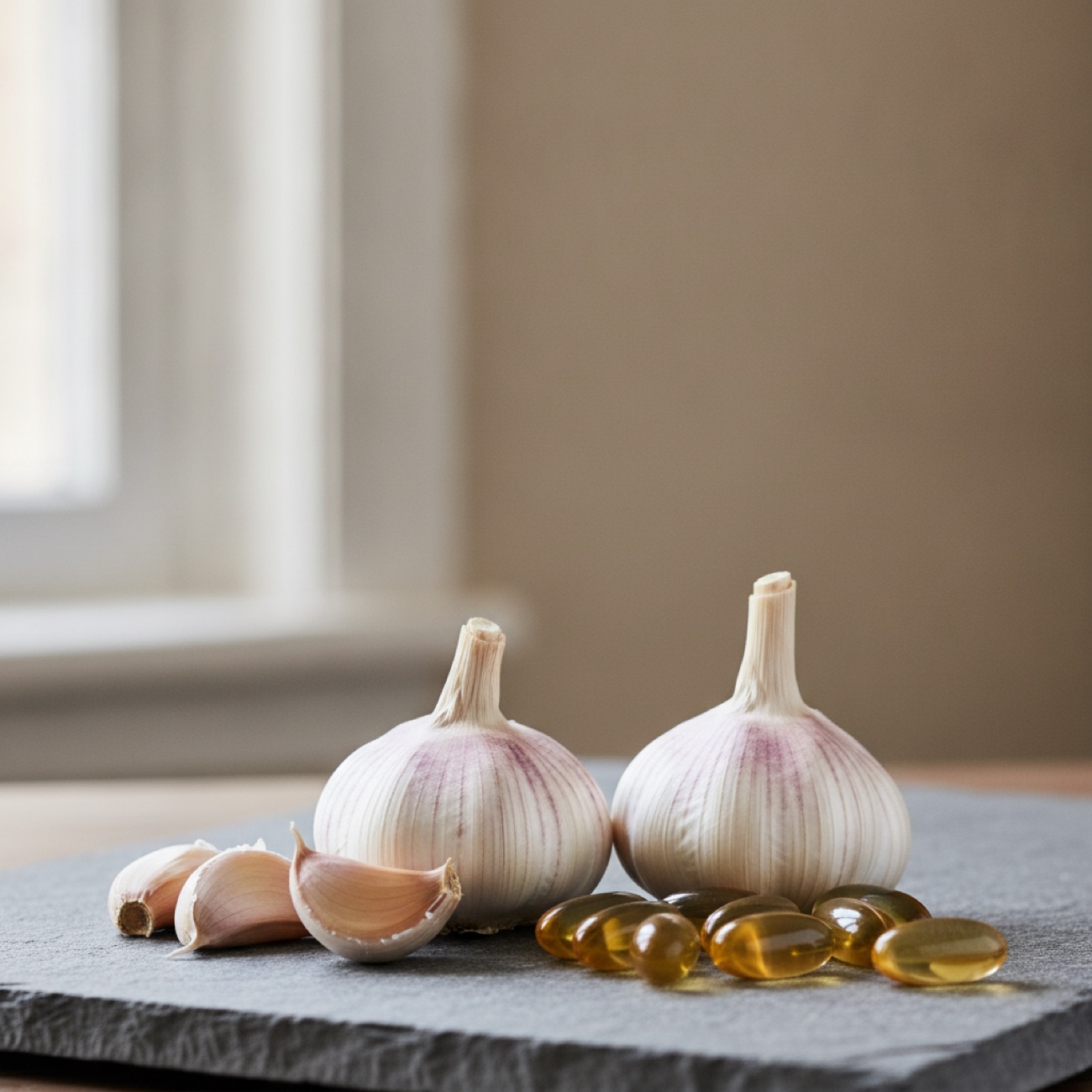
Garlic supplements are widely used, but they carry a clinically relevant caution that is easy to overlook: they may increase the risk of bleeding, particularly when combined with blood thinners or taken close to surgery. This guide explains what the evidence shows, who needs to be most careful, and what to discuss with your clinician or pharmacist.
What Garlic Supplements Contain
Garlic supplements are derived from Allium sativum and deliver organosulfur compounds, the most studied of which is allicin. These compounds are responsible for most of the physiological effects that researchers have investigated, including effects on blood lipids, blood pressure, blood sugar, and platelet activity. According to the NIH Office of Dietary Supplements, no adult daily target or upper tolerable intake level has been formally established for garlic as a nutrient.
Supplements are not intended to diagnose, treat, cure or prevent any disease, and these statements have not been evaluated by the FDA.
The Bleeding Risk Concern
The most important safety signal for garlic supplements is their potential effect on bleeding. The NIH Office of Dietary Supplements notes that garlic supplements may increase the risk of bleeding. This concern becomes especially relevant in three situations.
Blood Thinners Such as Warfarin
Garlic supplements may increase the risk of bleeding when combined with anticoagulant medications such as warfarin. Warfarin already requires careful monitoring, and adding a supplement that may further affect clotting activity can make that balance harder to maintain. If you take warfarin or any anticoagulant, talk to your doctor before adding a garlic supplement to your routine.
Aspirin and Antiplatelet Medicines
Combined use of garlic supplements with aspirin or other antiplatelet medicines may further affect bleeding risk. Even over-the-counter aspirin taken daily for cardiovascular reasons counts here. Your pharmacist can help you think through whether the combination is appropriate for your situation.
Surgery
Garlic supplements may raise bleeding risk around surgical procedures. For this reason, it is important to disclose any supplement use to your surgeon before a planned operation. Many surgical teams ask patients to stop certain supplements in the weeks before a procedure, and garlic is commonly on that list.
Other Drug Interactions to Know
Beyond bleeding risk, garlic supplements have at least one other documented interaction worth noting. Garlic has been reported to reduce blood levels of saquinavir, an HIV protease inhibitor, based on prior guidance from the National Center for Complementary and Integrative Health. If you take any HIV medication, or any prescription drug, discuss herbal and supplement use with your provider, because some combinations can affect how a medicine works in ways that matter for your health.
What the Evidence Says About Garlic and Health
Below is a summary of what research shows, graded honestly to reflect the actual strength of the evidence, in keeping with how the NIH Office of Dietary Supplements presents it.
Cholesterol and LDL Levels
Evidence grade: Moderate. Garlic supplements may reduce total cholesterol and LDL cholesterol to a small extent in people who already have high blood cholesterol, according to meta-analyses reviewed by the NIH Office of Dietary Supplements. The effect is modest, and garlic supplements are not a replacement for prescribed lipid-lowering therapy. Talk to your doctor about the full picture of your cardiovascular care.
Blood Pressure
Evidence grade: Limited. Some research suggests garlic supplements may reduce blood pressure to a small extent in people with high blood pressure. The body of evidence here is smaller and less consistent than for cholesterol, which is why the NIH grades this as limited rather than moderate.
Blood Sugar
Evidence grade: Limited. A small number of studies suggest garlic supplements may modestly affect blood sugar in people with diabetes. The evidence is not strong enough to draw firm conclusions, and people managing diabetes should not adjust their treatment plan based on this alone.
Cancer Risk and Immune Function
Evidence grade: Insufficient. The NIH Office of Dietary Supplements notes that evidence is insufficient to draw conclusions about whether garlic influences the risk of stomach or colorectal cancer, or whether garlic supplements support immune function or help prevent colds and flu. Insufficient evidence means the research has not yet answered these questions, not that the answer is definitely no, but it also means there is no reliable basis for using garlic supplements with these goals in mind.
General Safety and Side Effects
Garlic taken orally has been used in studies lasting up to seven years without serious safety concerns emerging at the population level, according to the NIH Office of Dietary Supplements. Common side effects include breath and body odor, abdominal pain, flatulence, and nausea. These effects are more common with raw garlic than with processed supplements. Allergic reactions can occur in some people.
One important topical note: fresh raw garlic applied directly to the skin may not be safe. The NIH Office of Dietary Supplements flags that topical use can cause severe skin irritation and chemical burns. This is separate from oral supplement use but worth knowing if you encounter home remedies that suggest applying garlic to the skin.
Who Should Be Most Cautious
- People taking warfarin or other anticoagulant medications
- People taking daily aspirin or antiplatelet drugs
- Anyone scheduled for surgery or a medical procedure
- People taking HIV protease inhibitors such as saquinavir
- Anyone managing a chronic condition with prescription medication
A Note on Dosing
Because no adult daily target or upper intake level has been established for garlic by the NIH, there is no population-level reference dose to cite here. Product labels vary widely in the amount and form of organosulfur compounds they contain. For guidance on whether a garlic supplement is appropriate for you and at what amount, consult a clinician or pharmacist who can review your full health picture and medication list.
Bottom Line
Garlic supplements have a modest and honestly graded evidence base for effects on cholesterol and blood pressure, and a meaningful safety consideration around bleeding risk that deserves attention. The interaction with blood thinners, antiplatelet medicines, and surgical procedures is the most clinically important thing to know. Always tell your doctor and pharmacist about any supplement you take, and never combine supplements with prescription medications without professional guidance.
Sources: NIH National Center for Complementary and Integrative Health (nccih.nih.gov/health/garlic) and NIH Office of Dietary Supplements (ods.od.nih.gov).
Sources
- S1.gov verifiedNIH National Center for Complementary and Integrative Health (NCCIH)Garlic: Usefulness and Safetywww.nccih.nih.gov/health/garlic
- S2.gov verifiedNIH Office of Dietary Supplements (ODS)Dietary Supplement Fact Sheets (list-all; Garlic sourced from NCCIH)ods.od.nih.gov/factsheets/list-all/
- S3.gov verifiedNIH National Center for Complementary and Alternative Medicine (NCCAM/NCCIH)Garlic (fact sheet, historical)www.govinfo.gov/content/pkg/GOVPUB-HE20_7250-PURL-gp