Safety
Green Tea EGCG Liver Safety and Medication Interactions
A plain-language review of what NIH evidence says about green tea extract safety, liver risk, and drug interactions.
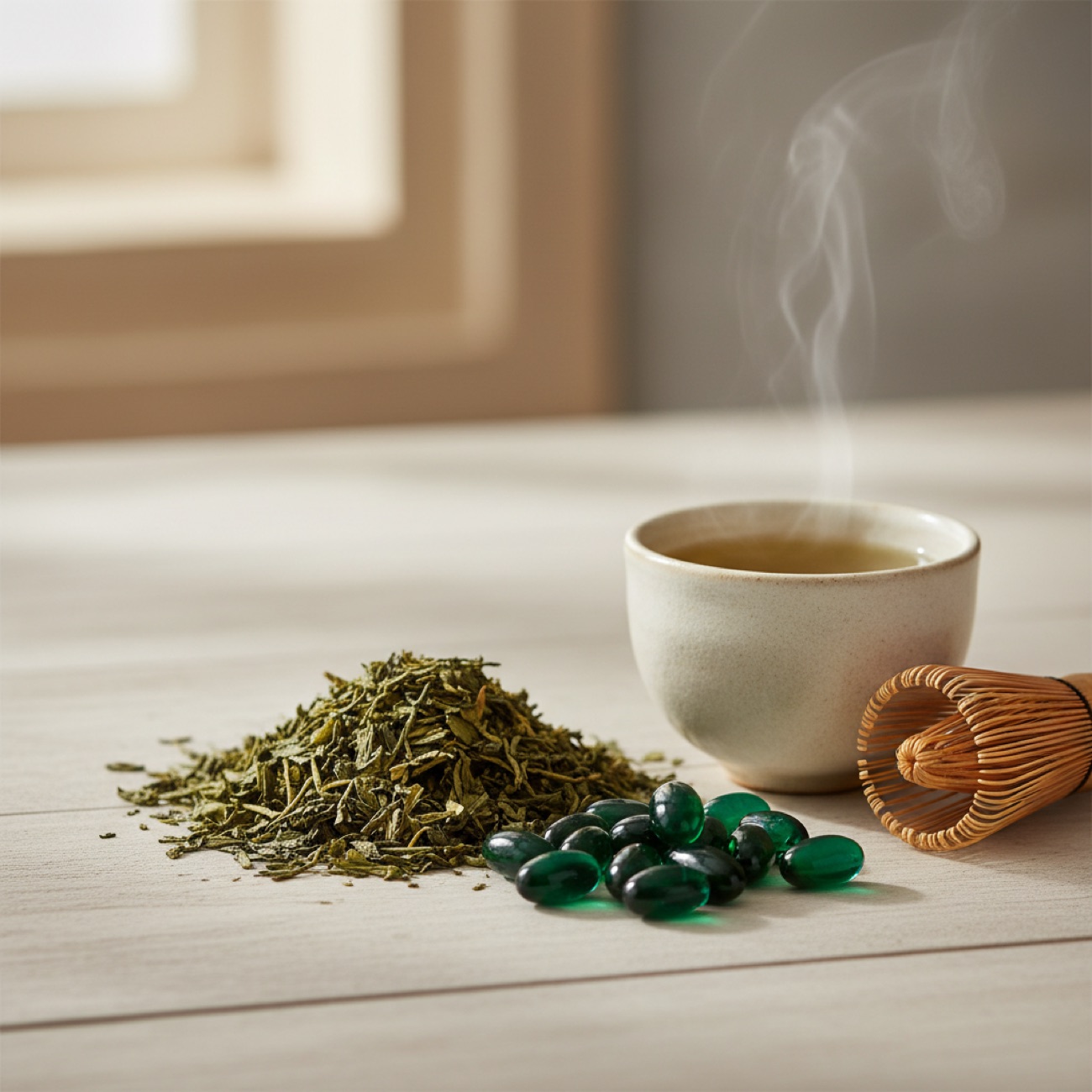
Green tea as a beverage is considered safe for most adults in moderate amounts, but green tea extract carries a documented, if uncommon, risk of liver injury that makes it meaningfully different from a cup of tea. If you take prescription medications, several specific interactions are worth knowing before you add an extract to your routine.
What Is EGCG and What Does It Do?
Epigallocatechin gallate, or EGCG, is the most abundant catechin in green tea extract. Catechins are a class of polyphenols, and EGCG acts as an antioxidant polyphenol in the body. This role is graded as Strong evidence by the NIH Office of Dietary Supplements (ODS). Non-decaffeinated green tea and its extracts also supply caffeine, which stimulates the central nervous system.
According to the NIH ODS, no adult Estimated Average Requirement, Recommended Dietary Allowance, or Tolerable Upper Intake Level has been established for green tea extract or EGCG. Because no population reference values exist, there is no universally agreed safe dose. Always consult a clinician or pharmacist to determine whether an extract is appropriate for you and at what amount.
Supplements are not intended to diagnose, treat, cure or prevent any disease, and these statements have not been evaluated by the FDA.
Liver Safety: The Key Concern With Green Tea Extract
The NIH ODS and the U.S. Pharmacopeia (USP) both flag liver injury as a meaningful safety concern for green tea extract. The evidence that green tea extract can cause liver injury in susceptible people is graded Moderate. While the overall incidence appears uncommon, the consequences can be serious.
Who Is at Higher Risk
- People who already have liver problems should not use green tea extract, according to NIH guidance.
- Anyone who develops symptoms of liver injury, such as yellowing of the skin or eyes, dark urine, severe fatigue, or upper abdominal pain, should stop use immediately and contact a healthcare provider.
How to Reduce Risk When Using Extract
- The NIH ODS and USP advise taking green tea extract with food, not on an empty stomach. Taking it on an empty stomach appears to increase the likelihood of adverse effects.
- Discuss use with your doctor before starting, particularly if you have any history of liver or digestive conditions.
Green tea consumed as a brewed beverage does not carry the same documented liver risk. The NIH notes no reported adverse effects from green tea as a beverage in moderate amounts for most adults, though caffeine content is still relevant for sensitive individuals.
Medication Interactions
Green tea catechins can affect how certain medications are absorbed or how effective they are. Talk to a doctor or pharmacist before combining green tea extract with any prescription or over-the-counter medication. The interactions below are cited by the NIH ODS.
Nadolol (Beta-Blocker)
This is the most pharmacologically significant interaction documented. Green tea markedly reduces the amount of nadolol that reaches the bloodstream. NIH-cited pharmacokinetic studies show up to approximately an 85 percent drop in drug exposure. Green tea catechins appear to inhibit the intestinal transporter OATP1A2, which is responsible for absorbing nadolol. A reduction of this magnitude can suppress the blood-pressure-lowering effect of the medication. Anyone prescribed nadolol should speak with their prescriber before consuming green tea extract or large amounts of green tea beverage.
Warfarin (Blood Thinner)
A case report cited by the NIH describes green tea reducing warfarin's anticoagulant effect. In that report, a patient's INR fell from 3.79 to 1.37 after adding green tea, a change attributed to the small amount of vitamin K that green tea supplies. Vitamin K works against warfarin's mechanism, potentially making the medication less effective at preventing clots. People on warfarin require stable INR monitoring, and any dietary change that affects vitamin K intake should be discussed with the prescribing clinician.
Stimulant Medications and Other Caffeine Sources
The caffeine in non-decaffeinated green tea and green tea extract can add to the stimulant effects of other caffeine sources and stimulant drugs. This can increase heart rate, blood pressure, and the risk of caffeine-related side effects such as anxiety, insomnia, or palpitations. People sensitive to caffeine, or those taking stimulant medications, should consider decaffeinated extract or discuss the caffeine load with their provider.
Statins and Other OATP or P-Glycoprotein Substrates
Clinical studies cited by the NIH report that green tea catechins may reduce the absorption of certain other oral drugs. Statins including rosuvastatin and simvastatin are among those mentioned. The effects are generally described as mild to moderate with wide variability between individuals. If you take a statin or another medication that relies on OATP or P-glycoprotein transporters for absorption, ask your pharmacist whether green tea extract could affect its efficacy.
What the Evidence Says About Effectiveness
Understanding the strength of evidence behind claimed benefits helps set realistic expectations.
- Antioxidant polyphenol activity of EGCG: Strong evidence supports this physiological role, per the NIH ODS.
- Modest effect on body weight when catechins are combined with caffeine: Limited evidence. The NIH ODS notes a modest effect on body weight from catechin-caffeine combinations, but the practical significance is unclear.
- EGCG or catechins alone (without caffeine) aiding weight loss: Insufficient evidence, according to the NIH ODS.
- Cancer or heart disease prevention or treatment: Insufficient evidence. The NIH ODS does not support claims that green tea extract prevents or treats cancer or cardiovascular disease.
Practical Takeaways
- Green tea beverage is considered safe for most adults in moderate amounts. Green tea extract is a different product with a distinct risk profile.
- Always take green tea extract with food, not on an empty stomach.
- Do not use green tea extract if you have existing liver problems.
- The nadolol interaction is substantial enough that concurrent use should only occur under direct medical supervision.
- If you take warfarin, statins, stimulants, or any medication that requires precise blood levels, consult your doctor or pharmacist before adding green tea extract.
- No standard dose has been established. Work with a clinician to determine what is appropriate for your individual situation.
Sources
NIH Office of Dietary Supplements, Weight Loss Fact Sheet for Health Professionals. National Center for Complementary and Integrative Health, Green Tea. National Library of Medicine, StatPearls: Green Tea. NIH ODS Supplement Fact Sheets list. Full URLs are available at ods.od.nih.gov and nccih.nih.gov.
Sources
- S1.gov verifiedNIH Office of Dietary Supplements (ODS)Dietary Supplements for Weight Loss - Health Professional Fact Sheet (Green Tea section)ods.od.nih.gov/factsheets/WeightLoss-HealthProfessio
- S2.gov verifiedNIH National Center for Complementary and Integrative Health (NCCIH)Green Tea: Usefulness and Safetywww.nccih.nih.gov/health/green-tea
- S3.gov verifiedNIH National Institute of Diabetes and Digestive and Kidney Diseases (LiverTox)Green Tea - LiverTox: Clinical and Research Information on Drug-Induced Liver Injurywww.ncbi.nlm.nih.gov/books/NBK547925/
- S4.gov verifiedNIH Office of Dietary Supplements (ODS) / NCCAMGreen Tea (Camellia sinensis) fact sheet listingods.od.nih.gov/factsheets/list-all/