Heart
Heart Health Supplements and the Evidence Behind Omega-3, CoQ10, and Garlic
A plain-language review of what the research actually shows about three popular heart health supplements, grounded in NIH Office of Dietary Supplements data.
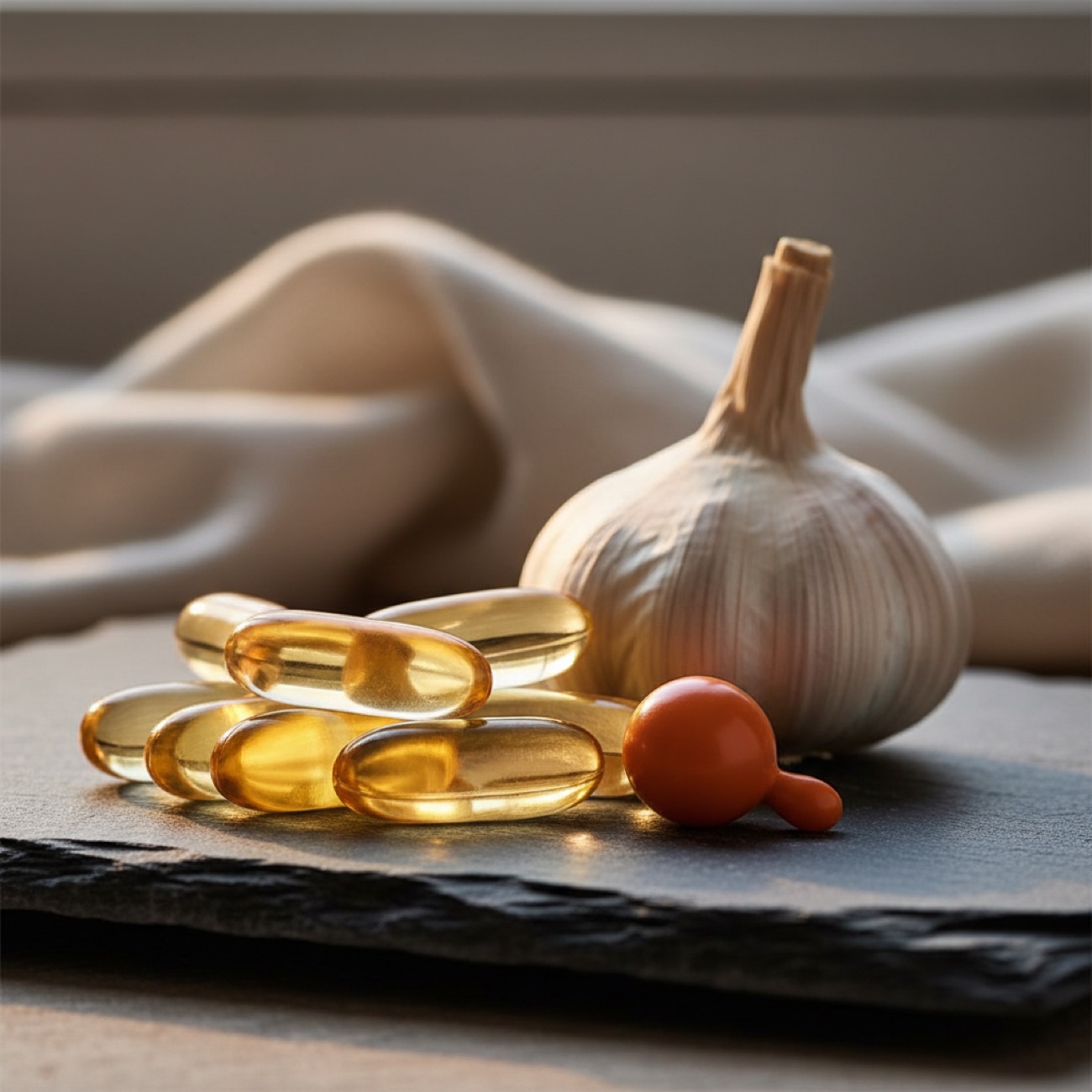
Omega-3 fatty acids, coenzyme Q10, and garlic are among the most widely purchased supplements marketed for cardiovascular wellness. The evidence behind each one varies considerably, and understanding those differences can help you have a more informed conversation with your doctor or pharmacist.
Important Disclaimer
Dietary supplements are not intended to diagnose, treat, cure, or prevent any disease, and these statements have not been evaluated by the FDA. The information below is drawn from the NIH Office of Dietary Supplements (ODS) and the National Center for Complementary and Integrative Health (NCCIH). Always consult a qualified clinician or pharmacist before starting any supplement, especially if you take prescription medications or have an existing health condition.
Omega-3 Fatty Acids (EPA and DHA)
What They Are and What They Do
Omega-3 fatty acids include alpha-linolenic acid (ALA), eicosapentaenoic acid (EPA), and docosahexaenoic acid (DHA). According to the NIH ODS, these fats serve as structural components of the phospholipids that form cell membranes, with DHA especially concentrated in the retina, brain, and sperm. They also act as precursors to eicosanoids, signaling molecules that play roles in cardiovascular, pulmonary, immune, and endocrine function, and they provide a source of energy for the body.
Intake Reference Values
The Institute of Medicine set an Adequate Intake (AI) for ALA only, not an RDA, because data were insufficient to establish an Estimated Average Requirement. The AI is 1.6 g per day for adult men and 1.1 g per day for adult women ages 19 to 50. No specific intake recommendation exists for EPA or DHA, and no Tolerable Upper Intake Level has been established for any omega-3, according to the NIH ODS. The FDA does specify that dietary supplement labels should not recommend a daily intake of EPA and DHA higher than 2 g from supplements.
What the Research Shows
- Triglycerides (Moderate evidence): Long-chain omega-3 supplements lower elevated serum triglyceride levels. This is among the better-supported findings in the cardiovascular space.
- Cardiovascular events (Limited evidence): Omega-3 supplements reduce the risk of most cardiovascular events in the general population, though the evidence is rated limited by the NIH ODS.
- Cognitive decline and eye disease (Insufficient evidence): Current data are insufficient to conclude that omega-3 supplements prevent cognitive decline, dementia, or slow age-related macular degeneration.
Safety and Interactions
Omega-3s from food and supplements are generally regarded as safe. Side effects are usually mild and may include an unpleasant taste, bad breath, heartburn, nausea, or digestive discomfort. Because omega-3s can reduce platelet aggregation, combining them with anticoagulant or antiplatelet medications such as warfarin, aspirin, or clopidogrel may theoretically increase bleeding risk. Clinical trials have generally not shown clinically significant bleeding, but periodic monitoring is advised. High doses, roughly 900 mg per day EPA plus 600 mg per day DHA or more for several weeks, may suppress inflammatory immune responses. Prescription high-dose omega-3 products used to lower triglycerides are drug-strength doses and should be taken only under medical supervision.
Coenzyme Q10 (CoQ10)
What It Is and What It Does
CoQ10 is a fat-soluble compound concentrated in the most energy-demanding organs, including the heart, liver, kidneys, and pancreas. The NIH ODS notes that CoQ10 serves as a component of the mitochondrial electron transport chain, helping cells convert nutrients into usable energy (ATP), and acts as a fat-soluble antioxidant that can help protect cell membranes and lipids from oxidative damage.
Intake Reference Values
No Dietary Reference Intake or Adequate Intake has been established for CoQ10 by any authoritative body. There is also no established Tolerable Upper Intake Level. Consult a clinician or pharmacist for guidance on personal dosing.
What the Research Shows
- Energy production and antioxidant role (Strong evidence): CoQ10 has a well-established role in mitochondrial energy production and functions as an antioxidant in the body.
- Blood pressure (Limited evidence): Some research suggests CoQ10 may lower blood pressure to a modest degree.
- Heart surgery complications and chemotherapy-related heart damage (Limited evidence): There is limited evidence that CoQ10 may reduce certain complications of heart surgery and may reduce heart damage from one type of cancer chemotherapy drug.
- Heart failure, statin-related muscle pain, Parkinson's disease (Insufficient evidence): The NCCIH rates evidence as insufficient to conclude CoQ10 helps in heart failure, prevents heart disease, or reliably reduces statin-related muscle pain.
Safety and Interactions
No serious side effects of CoQ10 have been reported. Mild effects such as insomnia or digestive upset may occur. CoQ10 is not a substitute for medical care. It may interact with the anticoagulant warfarin, the diabetes drug insulin, and some types of cancer chemotherapy. Anyone who is pregnant, breastfeeding, or taking prescription drugs should speak with a health care provider before use.
Garlic
What It Is and What It Does
Garlic contains organosulfur compounds, including allicin, that have been studied for effects on blood lipids, blood pressure, and blood sugar. The NCCIH notes that garlic may modestly affect blood cholesterol and LDL levels in people with high cholesterol, and may have a small effect on blood pressure and blood sugar based on limited research.
Intake Reference Values
No Dietary Reference Intake has been established for garlic or its active compounds. There is no established Tolerable Upper Intake Level. A clinician or pharmacist can help you evaluate whether garlic supplementation is appropriate for your situation.
What the Research Shows
- Cholesterol (Moderate evidence): Garlic supplements may reduce total and LDL cholesterol to a small extent in people with high blood cholesterol.
- Blood pressure and blood sugar (Limited evidence): Garlic supplements may reduce blood pressure and blood sugar to a small extent in people with hypertension or diabetes, respectively.
- Cancer prevention and immune function (Insufficient evidence): Current evidence is insufficient to conclude that garlic influences cancer risk or supports immune function and prevents colds or flu.
Safety and Interactions
Garlic taken orally has been used safely in studies lasting up to 7 years. Common side effects include breath and body odor, abdominal pain, flatulence, and nausea, which are more common with raw garlic. Allergic reactions can occur. Fresh raw garlic applied to the skin may not be safe and can cause severe skin irritation and chemical burns. Garlic supplements may increase bleeding risk, which is particularly relevant for people taking warfarin, aspirin, antiplatelet medicines, or anyone preparing for surgery. Garlic has also been reported to reduce blood levels of saquinavir, an HIV protease inhibitor. Disclose all supplement use to your health care team.
Putting It Together
Among these three supplements, omega-3 fatty acids have the broadest body of evidence for cardiovascular-related outcomes, particularly for lowering elevated triglycerides at a moderate evidence level. CoQ10 and garlic each show limited or insufficient evidence for most heart-related claims, though both have well-characterized physiological roles. None of these supplements replaces proven lifestyle changes or prescribed medications. If you are considering any of them, speak with your doctor or pharmacist to weigh the potential benefits against your individual health profile and any medications you take.
Sources
- S1.gov verifiedNIH Office of Dietary Supplements (ODS)Omega-3 Fatty Acids - Fact Sheet for Health Professionalsods.od.nih.gov/factsheets/Omega3FattyAcids-HealthPro
- S2.gov verifiedNIH Office of Dietary Supplements (ODS)Omega-3 Fatty Acids - Consumer Fact Sheetods.od.nih.gov/factsheets/Omega3FattyAcids-Consumer/
- S3.gov verifiedNIH National Center for Complementary and Integrative Health (NCCIH)Omega-3 Supplements: What You Need To Knowwww.nccih.nih.gov/health/omega3-supplements-what-you
- S4.gov verifiedInstitute of Medicine (IOM) / National Academies, Food and Nutrition BoardDietary Reference Intakes for Energy, Carbohydrate, Fiber, Fat, Fatty Acids, Cholesterol, Protein, and Amino Acids (Adequate Intakes for ALA)nap.nationalacademies.org/catalog/10490/dietary-refe
- S5.gov verifiedNIH National Center for Complementary and Integrative Health (NCCIH)Coenzyme Q10www.nccih.nih.gov/health/coenzyme-q10