Dosing
How much iron per day for women, men, and pregnancy
A plain-language guide to daily iron targets, upper limits, food sources, and what the research actually shows.
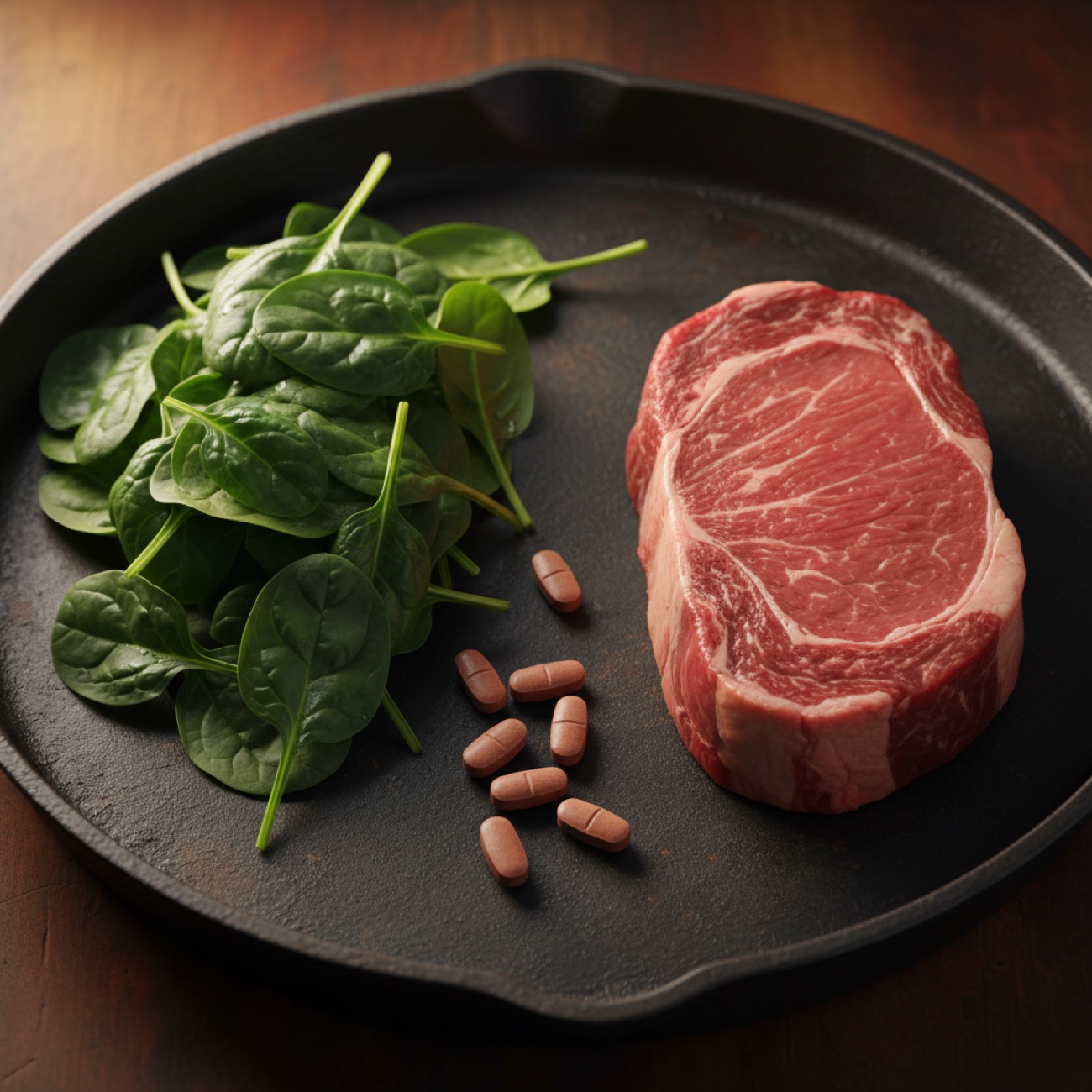
Most healthy adults get enough iron from food, but needs vary considerably by sex, age, and life stage. According to the NIH Office of Dietary Supplements, women aged 19 to 50 need roughly twice as much iron per day as men of the same age, largely because of menstrual blood loss.
Daily iron targets by group
The following Recommended Dietary Allowances (RDAs) come from the NIH Office of Dietary Supplements and reflect the amount needed to meet the requirements of most healthy people in each group.
- Men 19 to 50: 8 mg per day
- Women 19 to 50: 18 mg per day
- Men and women 51 and older: 8 mg per day
- Pregnant women: 27 mg per day
- Breastfeeding women: 9 to 10 mg per day
Women's needs drop after menopause because monthly iron losses cease. Pregnancy raises the requirement substantially because the body must support increased blood volume, fetal development, and placental tissue.
The tolerable upper intake level
The NIH Office of Dietary Supplements sets the Tolerable Upper Intake Level (UL) for iron at 45 mg per day for adults. This limit applies to the combined total from food and supplements and is based on gastrointestinal effects such as nausea, constipation, and abdominal discomfort. People in the United States generally obtain adequate iron from diet, and adults with normal intestinal function have very little risk of iron overload from food alone.
Higher doses are sometimes prescribed by clinicians to replenish iron stores in people with confirmed deficiency, but that is a medical decision. Do not exceed the UL without guidance from a healthcare provider.
What iron does in the body
Iron plays several well-established physiological roles, supported by strong evidence according to the NIH:
- Oxygen transport: Iron is an essential component of hemoglobin, the red blood cell protein that carries oxygen from the lungs to the tissues throughout the body.
- Muscle function: Iron forms part of myoglobin, a protein that supplies oxygen to muscle and supports muscle metabolism and healthy connective tissue.
- Growth and development: Iron supports physical growth and neurological development, making adequate intake especially important during childhood and pregnancy.
What the research shows
Evidence for iron's roles ranges from strong to limited depending on the specific claim. Here is an honest summary based on NIH ODS grading:
- Strong evidence: Iron is essential for hemoglobin formation and oxygen transport.
- Strong evidence: Iron supports muscle oxygen supply through myoglobin and is important for growth and neurological development.
- Moderate evidence: Daily iron supplementation reduces the risk of anemia and iron deficiency in pregnant women.
- Moderate evidence: Iron supplementation helps frequent blood donors recover hemoglobin and iron stores faster after donation.
- Limited evidence: Treating iron deficiency in people with chronic diseases such as heart failure may improve clinical outcomes. More research is needed before strong conclusions can be drawn.
Iron supplements are not intended to diagnose, treat, cure, or prevent any disease, and these statements have not been evaluated by the FDA.
Food sources of iron
Two forms of iron exist in food. Heme iron, found in meat, poultry, and seafood, is absorbed more efficiently by the body. Nonheme iron is found in plant foods such as beans, lentils, tofu, fortified cereals, and dark leafy greens. Eating a source of vitamin C alongside nonheme iron can improve absorption.
Drug and supplement interactions
Iron can interact with several common medications. Always talk to a doctor or pharmacist before combining iron supplements with any prescription or over-the-counter medication.
- Levodopa (Sinemet, Stalevo): Iron supplements can reduce the absorption of levodopa, possibly through chelation, and may reduce its clinical effectiveness.
- Levothyroxine (Synthroid, Levoxyl, Tirosint, Unithroid): Taking iron at the same time as levothyroxine can reduce levothyroxine absorption and efficacy. Product labels advise separating iron by at least 4 hours.
- Proton pump inhibitors (lansoprazole, omeprazole): These drugs lower stomach acidity and can reduce nonheme iron absorption. People with iron deficiency may respond less well to iron supplements while taking them.
- Calcium: Calcium may reduce the bioavailability of both nonheme and heme iron, though the effect is not definitively established. Some experts suggest taking calcium and iron supplements at different times of day as a precaution.
Who may need to pay closer attention to iron intake
Certain groups are more likely to have difficulty meeting iron needs through diet alone, including pregnant women, people who menstruate heavily, frequent blood donors, and those following a strictly plant-based diet. Individuals with conditions affecting the digestive tract may also absorb iron less efficiently. If you fall into one of these groups, a clinician can assess whether your intake is adequate and whether a supplement is appropriate for you.
A note on testing and personal dosing
Population reference values like the RDA describe the needs of most healthy people in a given group. They are not personal prescriptions. Iron status is best assessed through blood tests, including serum ferritin and hemoglobin, ordered by a clinician. Taking iron supplements without a confirmed need is not recommended because excess iron can cause gastrointestinal side effects and, in rare cases of genetic conditions such as hereditary hemochromatosis, contribute to iron overload.
If you are considering an iron supplement, consult a clinician or pharmacist to determine whether it is appropriate for your situation and to confirm a safe and effective dose.
Sources
- NIH Office of Dietary Supplements, Iron Fact Sheet for Health Professionals: https://ods.od.nih.gov/factsheets/Iron-HealthProfessional/
- NIH Office of Dietary Supplements, Iron Fact Sheet for Consumers: https://ods.od.nih.gov/factsheets/Iron-Consumer/
- National Academies of Sciences, Dietary Reference Intakes: https://nap.nationalacademies.org/catalog/10026
Sources
- S1.gov verifiedNIH Office of Dietary SupplementsIron - Health Professional Fact Sheetods.od.nih.gov/factsheets/Iron-HealthProfessional/
- S2.gov verifiedNIH Office of Dietary SupplementsIron - Consumer Fact Sheetods.od.nih.gov/factsheets/Iron-Consumer/
- S3.gov verifiedInstitute of Medicine (NASEM), Food and Nutrition BoardDietary Reference Intakes for Vitamin A, Vitamin K, Arsenic, Boron, Chromium, Copper, Iodine, Iron, Manganese, Molybdenum, Nickel, Silicon, Vanadium, and Zincnap.nationalacademies.org/catalog/10026