Vegetarian
Iron for Vegetarians and Boosting Non-Heme Absorption
Plant-based eaters can meet their iron needs, but understanding the difference between heme and non-heme iron, and learning a few practical pairing strategies, makes a real difference.
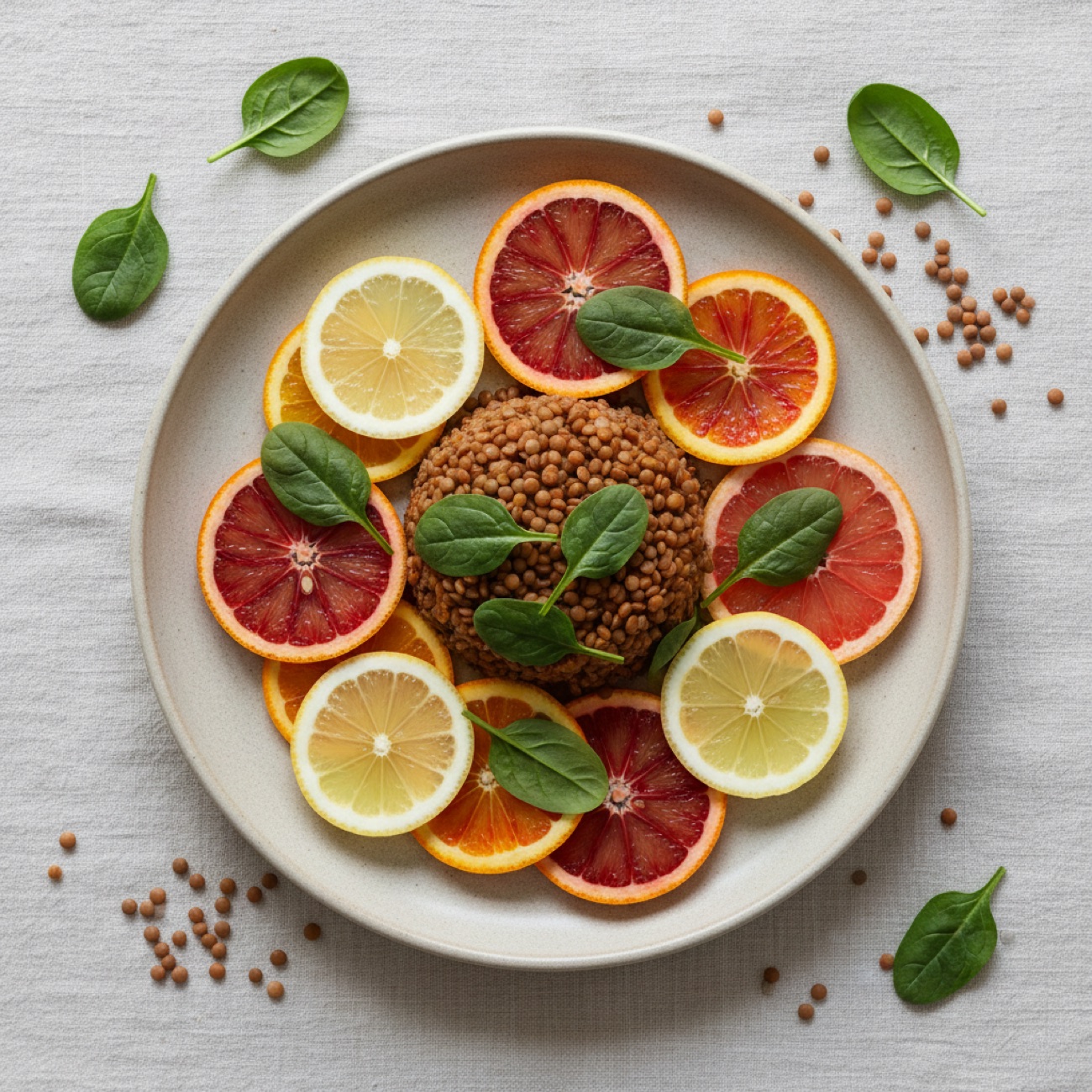
Vegetarians can absolutely get enough iron from food, but plant-based iron is absorbed less efficiently than the iron found in meat, which means intentional food choices and smart pairing strategies matter more. This guide explains why that gap exists, what the NIH Office of Dietary Supplements recommends for daily intake, and how nutrients like vitamin C can help close the absorption difference.
Why Iron Matters
According to the NIH Office of Dietary Supplements, iron serves several essential roles in the body. It is a core component of hemoglobin, the red blood cell protein responsible for carrying oxygen from the lungs to tissues throughout the body. Iron also forms part of myoglobin, a protein that supplies oxygen directly to muscle and supports muscle metabolism and healthy connective tissue. Beyond oxygen transport, iron supports physical growth and neurological development.
Daily Targets and the Upper Limit
The NIH Office of Dietary Supplements reports the following Dietary Reference Intake values for adults:
- Men aged 19 to 50: 8 mg per day
- Women aged 19 to 50: 18 mg per day
- Tolerable Upper Intake Level for adults: 45 mg per day from food and supplements combined
The higher target for women of reproductive age reflects iron losses through menstruation. The 45 mg upper limit is based on gastrointestinal effects such as nausea and constipation. The NIH notes that adults in the United States with normal intestinal function have very little risk of iron overload from food alone. Higher doses are sometimes prescribed by clinicians to replenish stores in people with confirmed deficiency, but self-directing doses above 45 mg is not appropriate without medical supervision.
Please consult a clinician or pharmacist for personal dosing guidance, as individual needs vary based on health status, life stage, and dietary pattern.
Heme vs. Non-Heme Iron: The Core Challenge for Vegetarians
Dietary iron comes in two forms. Heme iron is found in animal products, particularly red meat, poultry, and seafood, and is absorbed relatively efficiently by the body. Non-heme iron is found in plant foods such as lentils, beans, tofu, fortified cereals, spinach, pumpkin seeds, and whole grains. The body absorbs non-heme iron at a lower rate, and that rate is influenced significantly by what else is eaten at the same meal.
Because vegetarians rely entirely on non-heme sources, understanding what enhances and what inhibits absorption is a practical priority, not just a nutrition footnote.
The Vitamin C Connection
The NIH Office of Dietary Supplements rates the evidence as strong that vitamin C enhances absorption of non-heme iron. Vitamin C, also called ascorbic acid, helps convert iron into a form the intestine can absorb more readily. Pairing a vitamin C rich food with an iron rich plant food at the same meal is one of the most well-supported dietary strategies available to vegetarians.
The NIH Office of Dietary Supplements reports the following Recommended Dietary Allowances for vitamin C in adults:
- Men aged 19 and older: 90 mg per day
- Women aged 19 and older: 75 mg per day
- Tolerable Upper Intake Level for adults: 2,000 mg per day
Intakes above 2,000 mg per day raise the risk of gastrointestinal effects such as diarrhea and cramps. For most people, meeting the vitamin C target through food, such as bell peppers, citrus fruit, strawberries, or broccoli, is straightforward and supports iron absorption without any need for supplementation.
Practical examples of pairing include adding lemon juice to lentil soup, eating strawberries alongside fortified oatmeal, or including bell pepper strips in a bean-based meal.
What Can Reduce Non-Heme Absorption
Several compounds found naturally in plant foods can inhibit non-heme iron absorption when consumed at the same meal. These include phytates in whole grains and legumes, polyphenols in tea and coffee, and calcium from dairy or fortified foods. Soaking legumes, fermenting grains, and spacing tea or coffee away from iron-rich meals are common strategies used to reduce this inhibition.
Regarding calcium specifically, the NIH notes that calcium may reduce the bioavailability of both non-heme and heme iron, though the effect is not definitively established in all research. Some experts suggest taking calcium and iron supplements at different times of day as a precaution.
Supplement Interactions to Know
If you take iron supplements alongside any prescription medication, it is important to speak with your doctor or pharmacist first. The NIH Office of Dietary Supplements identifies several clinically relevant interactions:
- Levodopa (found in Sinemet and Stalevo): iron supplements can reduce absorption of levodopa, possibly through chelation, and may reduce its clinical effectiveness.
- Levothyroxine (Synthroid, Levoxyl, Tirosint, Unithroid): taking iron at the same time as levothyroxine can reduce the absorption and efficacy of the thyroid medication. Medication labels advise separating iron by at least four hours.
- Proton pump inhibitors such as lansoprazole (Prevacid) and omeprazole (Prilosec): these drugs lower stomach acidity and can reduce non-heme iron absorption. People with iron deficiency who take these medications may respond less well to iron supplements.
- Calcium supplements: as noted above, calcium may reduce iron bioavailability, and spacing the two supplements apart during the day is a reasonable precaution.
Always talk to a doctor before combining supplements with any medication.
What the Evidence Shows
The NIH rates the evidence as strong that iron is essential for hemoglobin formation, oxygen transport, and neurological development. Evidence is also strong that iron supports muscle oxygen supply through myoglobin. For supplementation specifically, the NIH rates evidence as moderate that daily iron supplementation reduces the risk of anemia and iron deficiency in pregnant women, and that iron supplementation helps frequent blood donors recover hemoglobin and iron stores more quickly. Evidence is rated limited for the finding that treating iron deficiency in people with chronic diseases such as heart failure improves clinical outcomes.
A Note on Supplements and Regulation
Dietary supplements are not intended to diagnose, treat, cure, or prevent any disease, and these statements have not been evaluated by the FDA. Iron supplements can be a useful tool for people who cannot meet their needs through food alone, but they should be used based on confirmed need rather than assumption. A blood test ordered by a clinician is the appropriate way to assess iron status before starting supplementation.
Key Takeaways
- Non-heme iron from plant foods is absorbed less efficiently than heme iron, but absorption can be meaningfully improved by pairing iron-rich foods with vitamin C at the same meal.
- Adult iron targets from the NIH are 8 mg per day for men and 18 mg per day for women aged 19 to 50, with an upper limit of 45 mg per day.
- Tea, coffee, phytates, and calcium can inhibit non-heme iron absorption when consumed at the same time as iron-rich foods.
- Iron supplements interact with several medications including levothyroxine and levodopa. Speak with a clinician or pharmacist before combining them.
- Consult a doctor for personal dosing recommendations and to confirm iron status through testing before supplementing.
Sources
- S1.gov verifiedNIH Office of Dietary SupplementsIron - Health Professional Fact Sheetods.od.nih.gov/factsheets/Iron-HealthProfessional/
- S2.gov verifiedNIH Office of Dietary SupplementsIron - Consumer Fact Sheetods.od.nih.gov/factsheets/Iron-Consumer/
- S3.gov verifiedInstitute of Medicine (NASEM), Food and Nutrition BoardDietary Reference Intakes for Vitamin A, Vitamin K, Arsenic, Boron, Chromium, Copper, Iodine, Iron, Manganese, Molybdenum, Nickel, Silicon, Vanadium, and Zincnap.nationalacademies.org/catalog/10026
- S4.gov verifiedNIH Office of Dietary SupplementsVitamin C - Health Professional Fact Sheetods.od.nih.gov/factsheets/VitaminC-HealthProfessiona
- S5.gov verifiedNIH Office of Dietary SupplementsVitamin C - Consumer Fact Sheetods.od.nih.gov/factsheets/VitaminC-Consumer/