Ashwagandha extracts
KSM-66 vs Sensoril Ashwagandha: Comparing Standardized Root Extracts
Both KSM-66 and Sensoril are branded, standardized forms of ashwagandha, but they differ in plant part, withanolide concentration, and the research behind them.
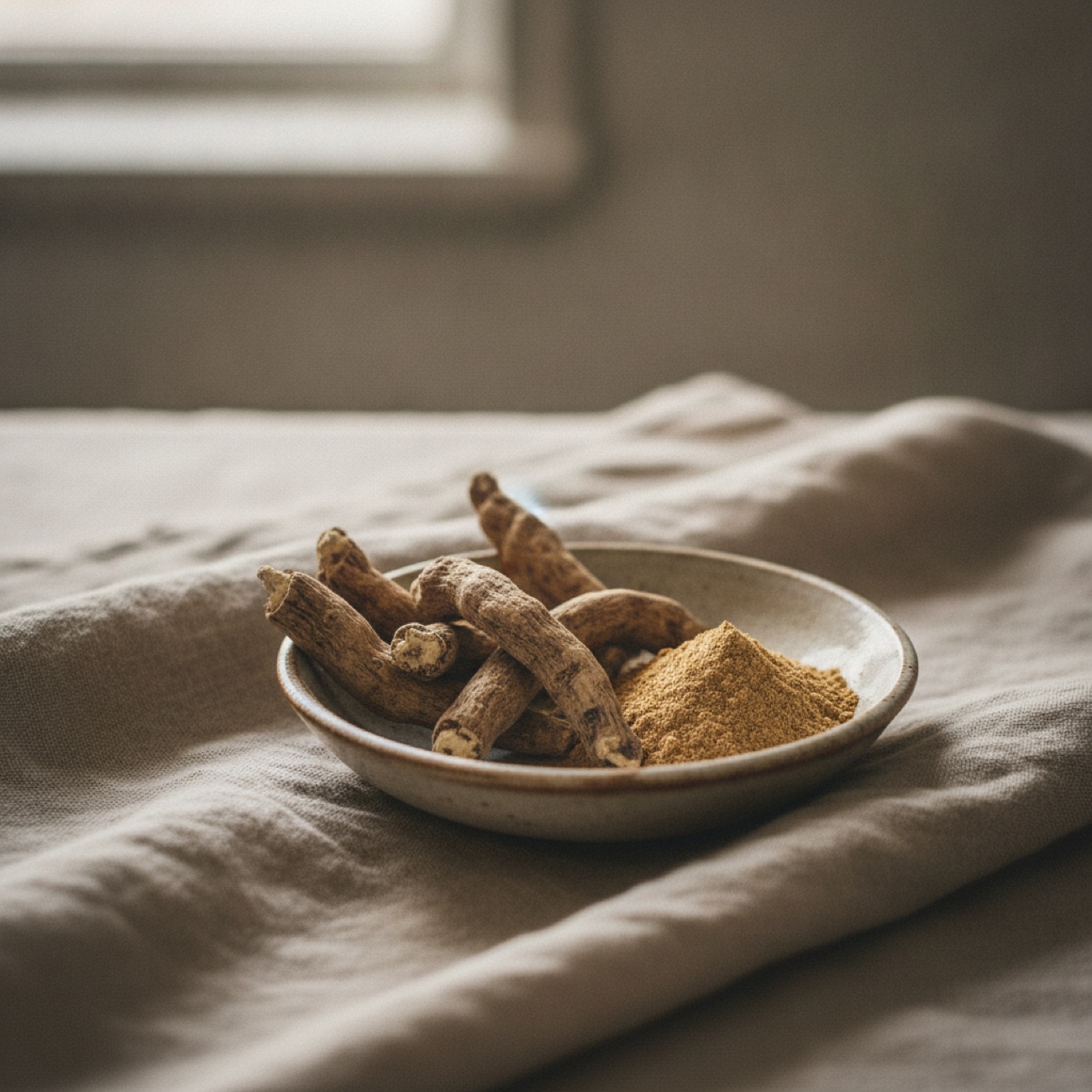
KSM-66 and Sensoril are two of the most widely recognized branded ashwagandha extracts on the supplement market. Both are standardized to specific levels of withanolides, the steroidal lactone compounds believed to drive many of ashwagandha's proposed effects, yet they are manufactured differently and have been studied in separate sets of clinical trials.
What Is Ashwagandha?
Ashwagandha (Withania somnifera) is a plant used for centuries in Ayurvedic practice. It is commonly marketed as an adaptogen, a traditional-use concept describing an agent said to help the body resist and adapt to physical, chemical, and biological stress. The NIH Office of Dietary Supplements notes that this adaptogen concept is a traditional-use claim and is not an established nutrient function recognized by modern regulatory bodies.
The plant is rich in phytochemicals, chiefly steroidal lactones called withanolides as well as alkaloids, which are believed to drive many of its proposed effects. No adult daily target or upper tolerable intake level has been established for ashwagandha, according to the NIH Office of Dietary Supplements.
How KSM-66 and Sensoril Differ
Plant Part Used
- KSM-66 is extracted exclusively from the root of the ashwagandha plant. Manufacturers state it is standardized to a minimum of approximately 5 percent withanolides by HPLC analysis.
- Sensoril is a dual extract derived from both the root and leaf of the plant. Manufacturers state it is standardized to a higher withanolide concentration, typically cited at around 10 percent, along with oligosaccharides and withaferin A limits.
Typical Dose Range Studied
- KSM-66 has most often appeared in clinical trials at daily doses ranging from roughly 300 mg to 600 mg.
- Sensoril trials have more commonly used daily doses in the range of roughly 125 mg to 250 mg, which manufacturers attribute to its higher withanolide concentration per gram.
These figures are drawn from published trial protocols and manufacturer documentation. Because no official dietary reference intake exists for ashwagandha, readers should consult a clinician or pharmacist before selecting a dose for personal use.
What the Evidence Actually Shows
Supplements are not intended to diagnose, treat, cure, or prevent any disease, and these statements have not been evaluated by the FDA.
Stress and Anxiety
The NIH Office of Dietary Supplements rates the evidence that ashwagandha extracts may reduce perceived stress and anxiety and lower serum cortisol as limited. Several randomized controlled trials using KSM-66 have reported reductions in scores on validated stress and anxiety questionnaires alongside modest decreases in serum cortisol compared to placebo. Sensoril has been studied in a smaller number of trials with broadly similar findings on self-reported stress measures. In both cases, study populations have been relatively small, follow-up periods have been short, and results should not be generalized to all individuals.
Sleep
The NIH Office of Dietary Supplements also rates as limited the evidence that ashwagandha extracts may improve sleep quality, efficiency, total sleep time, and sleep latency, particularly in people with insomnia. KSM-66 has been the extract most frequently examined in sleep-focused trials. Sensoril has appeared in some sleep-related outcomes within broader stress studies. Neither extract has enough long-term trial data to draw firm conclusions.
Cognitive Function
Evidence that ashwagandha improves cognitive function is rated insufficient by the NIH Office of Dietary Supplements. Some small trials using KSM-66 have reported improvements in memory and reaction time measures, but the body of evidence is too preliminary to support a reliable conclusion.
Adaptogen Claims
The claim that ashwagandha acts as an adaptogen that helps the body resist stress is also rated insufficient by the NIH Office of Dietary Supplements. This applies to both KSM-66 and Sensoril, regardless of their standardization levels.
Safety Considerations
According to the NIH Office of Dietary Supplements, ashwagandha appears well tolerated for up to approximately three months of use, but its long-term safety is not known. Common side effects include loose stools, nausea, drowsiness, and stomach upset, and these are usually mild. There are also a small number of reports of more serious effects, including adverse effects on liver function and effects on thyroid hormone levels. Some experts advise against use by women who are pregnant because of reports suggesting potential risk.
Neither KSM-66 nor Sensoril carries a different safety classification from the other based on currently available data. Both are ashwagandha extracts subject to the same general safety considerations.
Drug Interactions to Know
The NIH Office of Dietary Supplements identifies several potential interactions that apply to ashwagandha extracts broadly, including both KSM-66 and Sensoril.
- Thyroid hormone medications: Ashwagandha may affect thyroid function. Small increases in T4 have been reported, and cases of lowered TSH with increased T3 and T4 have been observed in subclinical hypothyroidism. Cases of thyrotoxicosis have also been reported. Anyone taking thyroid medication should speak with a doctor before using ashwagandha in any form.
- Antidiabetes medications: A potential interaction exists because ashwagandha may affect blood glucose levels.
- Antihypertensive medications: A potential interaction exists because ashwagandha may affect blood pressure.
- Immunosuppressants: A potential interaction exists because ashwagandha may stimulate immune activity.
Always talk to a doctor or pharmacist before combining any ashwagandha supplement with prescription or over-the-counter medications.
How to Choose Between Them
The practical difference for most consumers comes down to dose size and the specific trial data a manufacturer cites. KSM-66 has a larger volume of published clinical trials behind it, which makes it somewhat easier to evaluate. Sensoril's higher withanolide concentration per gram allows for smaller capsule sizes, which some people find convenient. Neither extract has been proven superior to the other in a head-to-head clinical trial.
When comparing products, look for a certificate of analysis from a third-party testing organization, a clearly stated withanolide percentage, and transparent sourcing information. Because no official daily target exists for ashwagandha, a qualified clinician or registered dietitian is the most reliable resource for guidance on whether either extract is appropriate for your individual health situation.
Sources
NIH Office of Dietary Supplements, Ashwagandha Fact Sheet for Health Professionals: https://ods.od.nih.gov/factsheets/Ashwagandha-HealthProfessional/ and Ashwagandha Fact Sheet for Consumers: https://ods.od.nih.gov/factsheets/Ashwagandha-Consumer/
Sources
- S1.gov verifiedNIH Office of Dietary Supplements (ODS)Ashwagandha: Is it helpful for stress, anxiety, or sleep? - Health Professional Fact Sheetods.od.nih.gov/factsheets/Ashwagandha-HealthProfessi
- S2.gov verifiedNIH Office of Dietary Supplements (ODS)Ashwagandha: Is it helpful for stress, anxiety, or sleep? - Consumer Fact Sheetods.od.nih.gov/factsheets/Ashwagandha-Consumer/