Seniors
Lutein and Zeaxanthin for Aging Eyes and Macular Health
A plain-language look at what the research actually shows about these two carotenoids and the aging retina.
Short answer: Lutein and zeaxanthin are carotenoids that accumulate in the central retina, where they act as antioxidants and blue-light filters. Research, including the large AREDS2 clinical trial, suggests they may play a meaningful role in supporting macular health, though the strength of that evidence varies by outcome.
What Are Lutein and Zeaxanthin?
Lutein and zeaxanthin belong to the carotenoid family, the same broad group of pigments that give marigolds their yellow color and egg yolks their deep hue. Unlike beta-carotene, another well-known carotenoid, lutein and zeaxanthin are not converted into vitamin A in the body. Instead, they concentrate in a specific region of the eye called the macula, the small central area of the retina responsible for sharp, detailed vision.
According to the NIH Office of Dietary Supplements (ODS), these two carotenoids form what researchers call the macular pigment, a yellow layer that sits directly over the most light-sensitive photoreceptors in the eye. This positioning is thought to be important for two reasons: the macular pigment acts as an antioxidant that helps defend retinal tissue against oxidative stress, and it filters high-energy blue light before it can reach the underlying photoreceptors. The evidence for both of these physiological roles is graded as moderate by the ODS.
Dietary Sources
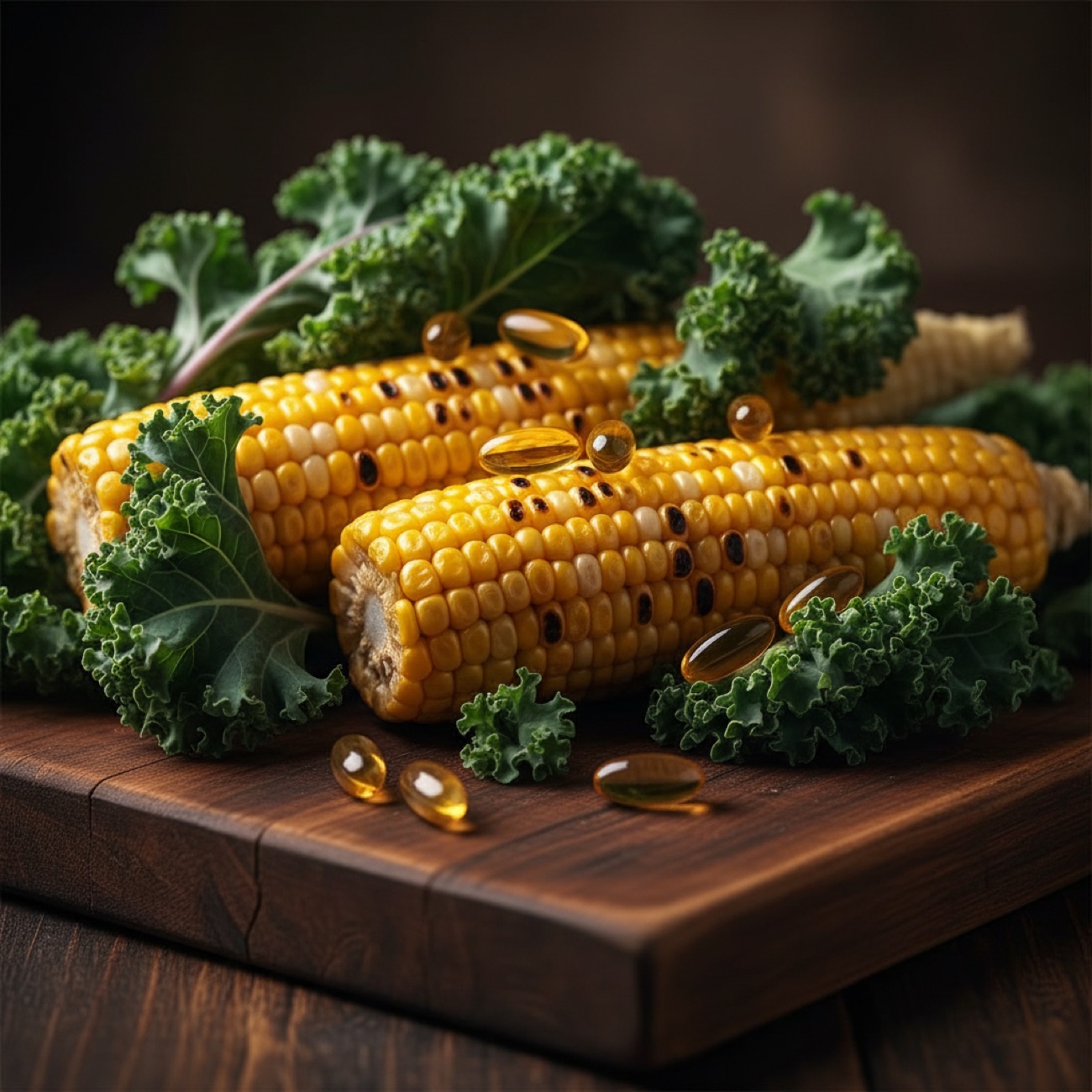
Lutein and zeaxanthin are found naturally in a range of foods. Dark leafy greens such as kale, spinach, and collard greens tend to be among the richest sources of lutein. Zeaxanthin is found in foods including corn, orange peppers, and egg yolks. Because both carotenoids are fat-soluble, the ODS notes that their absorption depends on dietary fat. Eating these foods alongside a small amount of healthy fat, or taking a supplement with a meal containing fat, supports uptake. Conversely, fat-blocking weight-loss agents or very low-fat diets can reduce absorption.
No Established Daily Target
One of the most important things to understand about lutein and zeaxanthin is that, as of the ODS's most recent data, no Recommended Dietary Allowance, Adequate Intake, or Tolerable Upper Intake Level has been formally established for either nutrient. There is no government-defined daily target for adults, and no formally defined safe upper limit from supplements. This does not mean higher amounts are automatically safe for everyone; it means the data needed to set those benchmarks have not yet been assembled. Always consult a clinician or pharmacist before choosing a supplement dose.
What the Research Shows
Retinal Accumulation (Strong Evidence)
The ODS rates the evidence as strong that lutein and zeaxanthin selectively accumulate in the retina and form the macular pigment. This is one of the best-established facts about these nutrients and forms the scientific rationale for studying them in relation to age-related macular degeneration (AMD).
The AREDS2 Trial
The Age-Related Eye Disease Study 2 (AREDS2), a five-year clinical trial of more than 4,000 participants funded by the National Eye Institute, is the most frequently cited study in this area. The trial tested whether adding lutein and zeaxanthin to the original AREDS supplement formula, and replacing beta-carotene with them, changed outcomes for people at moderate-to-high risk of advanced AMD.
The ODS rates the finding that replacing beta-carotene with lutein and zeaxanthin in the AREDS formula reduces progression to advanced AMD as moderate evidence. A separate finding, that lutein and zeaxanthin supplements reduce advanced AMD risk specifically in people with low dietary intake of these nutrients, is rated as limited evidence. The distinction matters: moderate evidence reflects a more consistent body of data, while limited evidence means results are promising but not yet definitive.
Cataracts
Some analyses from AREDS2 and related studies have looked at whether lutein and zeaxanthin affect the likelihood of needing cataract surgery. The ODS rates this evidence as limited, meaning it is not strong enough to draw firm conclusions.
Non-Eye Outcomes
There is ongoing interest in whether lutein and zeaxanthin might support cognition or other health outcomes outside the eye. The ODS currently rates the evidence for these non-eye benefits as insufficient, meaning there is not enough reliable data to draw conclusions.
Safety Profile
According to the NIH ODS, lutein and zeaxanthin have a high safety profile. In the AREDS2 trial, a daily dose of 10 mg lutein plus 2 mg zeaxanthin produced no adverse health effects other than minor, harmless skin yellowing in some participants. The FDA classifies lutein as Generally Recognized as Safe (GRAS). Because no Tolerable Upper Intake Level has been set, a formal safe maximum from supplements has not been defined. These statements have not been evaluated by the FDA, and supplements are not intended to diagnose, treat, cure, or prevent any disease.
Interactions and Considerations
The ODS and the National Center for Complementary and Integrative Health (NCCIH) do not report well-established, specific drug interactions for lutein or zeaxanthin themselves. However, several practical considerations are worth knowing.
- Beta-carotene competition: Beta-carotene and other carotenoids can compete with lutein and zeaxanthin for intestinal absorption. High-dose beta-carotene supplements may lower the uptake of lutein and zeaxanthin, which is one reason the AREDS2 formula replaced beta-carotene rather than adding lutein and zeaxanthin alongside it.
- AREDS2-type combination supplements: These products contain large amounts of zinc, copper, vitamin C, and vitamin E alongside the carotenoids. Per NCCIH, these other ingredients may affect food digestion and could change how certain medications are metabolized. Anyone taking prescription medications should discuss AREDS2-type supplements with a clinician before starting them.
- Fat absorption: As noted above, fat-blocking agents and very low-fat diets can reduce how well lutein and zeaxanthin are absorbed from both food and supplements.
Practical Takeaways
Lutein and zeaxanthin are well-established components of the macular pigment with a reasonable body of evidence supporting their relevance to retinal health, particularly in the context of AMD risk. The strongest evidence relates to their physiological role in the retina. Evidence that supplements meaningfully change clinical outcomes is more limited, and no benefits outside the eye have been sufficiently demonstrated to date.
If you are considering a lutein or zeaxanthin supplement, especially an AREDS2-type formula, talk with an eye care specialist or primary care clinician first. They can assess whether your situation matches the populations studied in clinical trials and help you weigh potential benefits against any interactions with medications you may already be taking. A pharmacist is also a good resource for reviewing supplement and drug combinations.
Sources
- S1.gov verifiedNIH Office of Dietary SupplementsVitamin A and Carotenoids - Health Professional Fact Sheetods.od.nih.gov/factsheets/VitaminA-HealthProfessiona
- S2.gov verifiedNIH National Center for Complementary and Integrative Health (NCCIH)Dietary Supplements for Eye Conditions: What the Science Sayswww.nccih.nih.gov/health/providers/digest/dietary-su
- S3.gov verifiedNIH National Center for Complementary and Integrative Health (NCCIH)Dietary Supplements for Eye Conditionswww.nccih.nih.gov/health/providers/digest/dietary-su
- S4.gov verifiedNIH National Eye InstituteAREDS/AREDS2 Frequently Asked Questionswww.nei.nih.gov/eye-health-information/clinical-tria
- S5.gov verifiedNIH Office of Dietary SupplementsODS Update: AREDS Supplements Continue to Have Benefits (September 2024)ods.od.nih.gov/pubs/ODS_Update_September_2024.pdf