Men
Saw Palmetto for Men's Prostate and Urinary Health
A calm, evidence-based look at what the research actually shows about saw palmetto, BPH symptoms, and related men's health concerns.
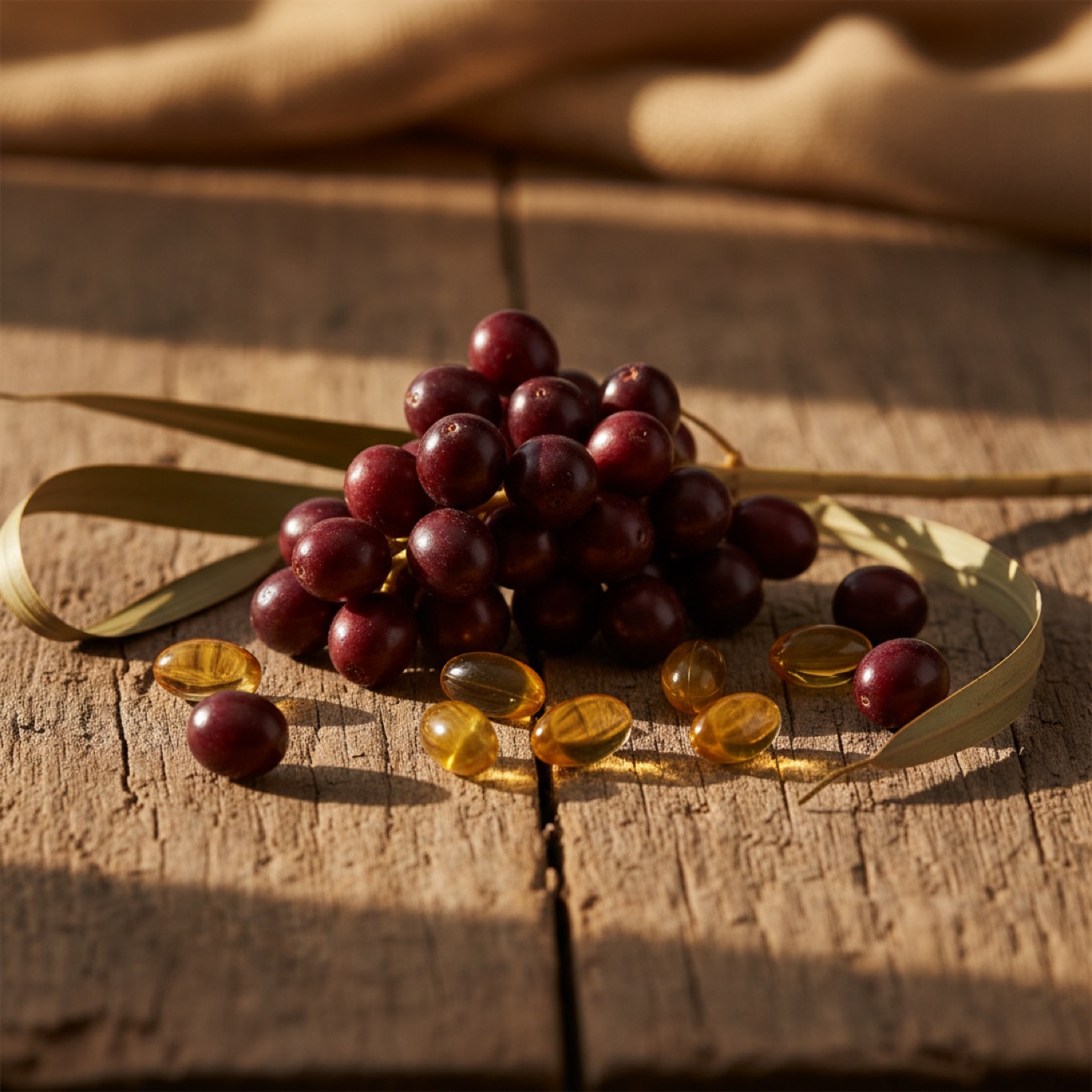
Saw palmetto is one of the most commonly purchased herbal supplements among men, largely because of its long-standing reputation for supporting urinary comfort and prostate health. The honest picture, however, is more nuanced than most marketing suggests, and understanding what the science does and does not support can help you make a better-informed decision with your doctor.
What Is Saw Palmetto?
Saw palmetto (Serenoa repens) is a small palm native to the southeastern United States. Supplement products are typically made from an extract of its berries, which are rich in fatty acids and plant sterols. Researchers have proposed that these compounds may influence androgen-related pathways in the body, though a confirmed clinical benefit has not been established by the National Institutes of Health.
Saw palmetto is marketed primarily for urinary symptoms associated with benign prostatic hyperplasia (BPH), a non-cancerous enlargement of the prostate gland. It is also promoted for male-pattern hair loss and chronic prostatitis/chronic pelvic pain syndrome. These statements have not been evaluated by the FDA, and dietary supplements are not intended to diagnose, treat, cure, or prevent any disease.
What the Research Shows: An Honest Evidence Summary
The NIH Office of Dietary Supplements and the National Center for Complementary and Integrative Health (NCCIH) review available studies and assign an informal weight of evidence to each claim. Here is how saw palmetto fares across its main proposed uses.
Urinary Symptoms and BPH (Used Alone)
Evidence grade: Strong against benefit. This may surprise many readers. The NCCIH notes that when saw palmetto is studied on its own, the current body of evidence does not support the idea that it meaningfully improves urinary tract symptoms related to BPH compared to placebo. Larger, well-designed clinical trials have generally not found a significant benefit. This does not mean every individual will have the same experience, but it does mean the evidence does not back the common marketing claim.
Combination Therapy for BPH and Lower Urinary Tract Symptoms
Evidence grade: Limited. Some research has explored saw palmetto combined with other ingredients such as lycopene, selenium, or the prescription drug tamsulosin. Results here are preliminary and inconsistent. The evidence is not strong enough to draw reliable conclusions, and combining a supplement with a prescription medication always warrants a conversation with your doctor first.
Effect on PSA Levels and Prostate Cancer Screening
Evidence grade: Moderate, with an important reassurance. Prostate-specific antigen (PSA) is a blood marker used to screen for prostate cancer. Some supplements can interfere with this reading. According to the NCCIH, saw palmetto does not appear to affect PSA levels, even at higher-than-usual amounts. This means it should not distort that lab value or mask a potential concern during routine screening. This is a meaningful safety distinction compared to some other supplements and medications used for prostate symptoms.
Chronic Prostatitis and Chronic Pelvic Pain Syndrome
Evidence grade: Insufficient. There is not enough reliable research at this time to draw any conclusions about whether saw palmetto helps with chronic prostatitis or chronic pelvic pain syndrome. If you are experiencing ongoing pelvic pain, a clinician evaluation is essential.
Male-Pattern Hair Loss
Evidence grade: Insufficient. Saw palmetto is frequently promoted for androgenetic alopecia (male-pattern baldness) based on the theory that it may influence androgen activity. However, the current evidence is too limited and inconsistent to support this use. Speak with a dermatologist or physician if hair loss is a concern.
Safety and Tolerability
The NCCIH reports that saw palmetto is generally well tolerated. Adverse effects are described as mild and infrequent, and may include digestive upset, dizziness, and headache. Studies have used saw palmetto safely for periods of up to three years, which provides some reassurance about short-to-medium-term use in adults.
Important safety notes from the NIH include the following:
- Saw palmetto may be unsafe during pregnancy or breastfeeding and should be avoided in those populations.
- Very little is known about its safety in women or children more broadly.
- Because it is theorized to influence androgen pathways, some caution is reasonable if you are taking 5-alpha-reductase inhibitors or other hormone-related drugs, though no clinically confirmed interaction has been documented by the NIH.
- As with any supplement, tell your clinician and pharmacist that you are using it, particularly if you are approaching surgery or have any concerns about bleeding risk.
Dosing: No Established Target
The NIH Office of Dietary Supplements has not established an adult target intake or an upper limit for saw palmetto. There is no universally agreed-upon dose in the research literature. Product labels vary widely. Because of this, it is especially important to consult a clinician or pharmacist for personal dosing guidance rather than relying on label recommendations alone. Do not exceed the amount on a product label without professional input.
Drug Interactions
The NCCIH states that saw palmetto has not been shown to interact with medications in clinically confirmed ways. That said, the theoretical connection to androgen pathways means it is wise to flag its use to your prescribing doctor if you take finasteride, dutasteride, or any other hormone-related therapy. The general principle applies here as it does with all supplements: always tell your doctor and pharmacist everything you are taking before starting something new or before any medical procedure.
Practical Takeaways
- Saw palmetto is widely used but the strongest available evidence does not support it as an effective standalone remedy for BPH-related urinary symptoms.
- It does not appear to interfere with PSA screening, which is a meaningful safety point.
- Evidence for hair loss and chronic prostatitis is insufficient to support use for those purposes at this time.
- It is generally well tolerated in adult men, with mild side effects reported infrequently in studies lasting up to three years.
- No established daily target or upper limit exists, so personal dosing should be discussed with a healthcare provider.
- Always disclose supplement use to your doctor and pharmacist, especially if you take prescription medications or are planning surgery.
The Bottom Line
Saw palmetto remains one of the most popular men's health supplements on the market, but the evidence for its core proposed uses is weaker than its reputation implies. If you are experiencing urinary symptoms, prostate concerns, or pelvic pain, these warrant a proper clinical evaluation rather than self-management with a supplement alone. Use this guide as a starting point for an informed conversation with your healthcare provider.
Sources: NCCIH Saw Palmetto Consumer Page, NCCIH Provider Spotlight on Saw Palmetto, NIH Office of Dietary Supplements Supplement Fact Sheets, and PMC peer-reviewed literature (PMC10286776).
Sources
- S1.gov verifiedNIH National Center for Complementary and Integrative Health (NCCIH)Saw Palmetto: Usefulness and Safetywww.nccih.nih.gov/health/saw-palmetto
- S2.gov verifiedNIH National Center for Complementary and Integrative Health (NCCIH)Spotlight on Saw Palmetto: What the Science Says (NCCIH Clinical Digest, for health professionals)www.nccih.nih.gov/health/providers/digest/spotlight-
- S3.gov verifiedCochrane Database of Systematic ReviewsFranco JV, et al. Serenoa repens for the treatment of lower urinary tract symptoms due to benign prostatic enlargement. 2023;6(6):CD001423pmc.ncbi.nlm.nih.gov/articles/PMC10286776/
- S4.gov verifiedNIH Office of Dietary Supplements (ODS)Note: ODS publishes no Saw Palmetto fact sheet and no Dietary Reference Intake (DRI) exists for this botanical; ODS refers to NCCIH for herbal supplement informationods.od.nih.gov/factsheets/list-all/