Fiber types
Soluble vs Insoluble Fiber: Psyllium, Methylcellulose, and Inulin Compared
A plain-language look at how three common fiber supplements differ in structure, function, and evidence so you can have a more informed conversation with your clinician.
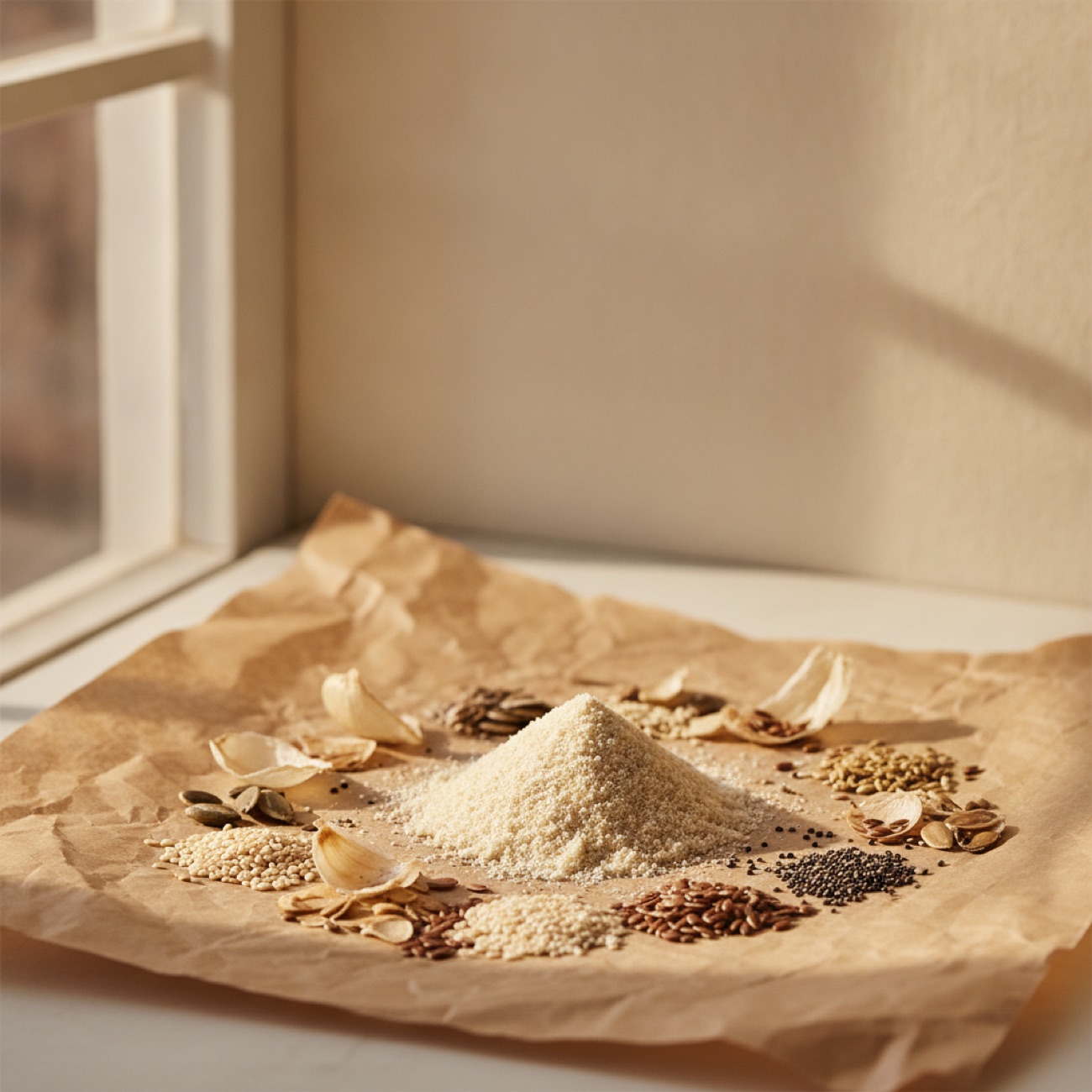
Not all fiber supplements work the same way, and choosing between psyllium, methylcellulose, and inulin depends on what you are hoping to support and how your body responds. This guide draws on data from the NIH Office of Dietary Supplements and the National Academies Dietary Reference Intakes to explain the differences clearly.
What Fiber Actually Does in the Body
Dietary fiber is the indigestible portion of plant foods. It falls into two broad categories based on how it behaves in water, and that behavior shapes nearly every health effect attributed to it.
- Soluble fiber dissolves or swells in water to form a thick, viscous gel inside the digestive tract. This gel slows the movement of digested food, which affects how quickly glucose and cholesterol are absorbed.
- Insoluble fiber does not dissolve in water. It adds physical bulk to stool and helps move material through the colon more quickly.
Many fiber sources contain both types in varying proportions. Supplements tend to concentrate one type, which is why they are not interchangeable.
How Much Fiber Do Adults Need?
According to the NIH Office of Dietary Supplements and the National Academies, the Adequate Intake (AI) for total dietary fiber is 38 grams per day for men aged 19 to 50 and 25 grams per day for women aged 19 to 50. This is an AI, not a Recommended Dietary Allowance, meaning it reflects the intake observed in populations with good health outcomes rather than a precisely calculated requirement. The target is derived from approximately 14 grams of fiber per 1,000 calories consumed. No established Tolerable Upper Intake Level exists for fiber, though digestive side effects increase as intake rises quickly.
Most adults in the United States fall well short of these targets through food alone, which is one reason fiber supplements are widely used.
Psyllium: The Best-Studied Soluble Fiber Supplement
Psyllium husk comes from the seeds of Plantago ovata and is one of the most researched fiber supplements available. It is primarily a soluble, gel-forming fiber, though it also contributes some insoluble bulk.
What the Evidence Shows
- Bowel regularity (Strong evidence): Soluble gel-forming and coarse insoluble fibers, including psyllium, increase stool bulk and water content and support normal laxation, according to the NIH Office of Dietary Supplements.
- LDL cholesterol (Strong evidence): Psyllium and other soluble gel-forming fibers lower serum LDL cholesterol as part of a diet low in saturated fat and cholesterol. The gel binds bile acids and dietary cholesterol in the gut, reducing how much is reabsorbed.
- Blood glucose response (Moderate evidence): Viscous fibers such as psyllium improve glycemic and insulin responses and can aid blood glucose control by slowing glucose absorption from the small intestine.
- Cardiovascular disease and type 2 diabetes risk (Moderate evidence): Higher dietary fiber intake is associated with lower risk of cardiovascular disease and type 2 diabetes, though fiber supplements alone have not been proven to prevent these conditions.
- Colorectal cancer association (Limited evidence): Higher fiber intake is associated with lower risk of some cancers such as colorectal cancer, but evidence remains limited.
- Appetite and weight (Limited evidence): Fiber, including psyllium, increases fullness and may support weight management and appetite control, though evidence is limited.
These statements have not been evaluated by the FDA, and fiber supplements are not intended to diagnose, treat, cure, or prevent any disease.
Safety and Side Effects
For most people, psyllium is safe and well tolerated. The most common side effects are gas, bloating, and cramping. These are typically reduced by increasing intake gradually and drinking adequate fluid. Psyllium must always be taken with a full glass of water. Taking it without enough liquid can cause choking or obstruction in the throat, esophagus, or bowel. Anyone with difficulty swallowing should not use psyllium or other bulk-forming fiber products.
Drug Interactions
Because psyllium forms a gel that slows absorption, it can reduce or delay how much of a medication the body absorbs. The NIH notes specific concerns with lithium, carbamazepine, digoxin, and levothyroxine. Thyroid medication in particular should be separated from fiber doses. Psyllium can also enhance the blood-glucose-lowering effect of insulin and oral diabetes medications, so blood glucose should be monitored carefully. As a general rule, separate other medications from fiber supplements by one to two hours, or follow the advice of a pharmacist. Always talk to a doctor before combining fiber supplements with any prescription medication.
Methylcellulose: A Synthetic Soluble Fiber
Methylcellulose is a semi-synthetic fiber derived from plant cellulose. Like psyllium, it absorbs water and forms a gel, which gives it similar bulk-forming and stool-softening properties. It is not fermented by gut bacteria to any meaningful degree, which means it tends to produce less gas than some other soluble fibers. This can make it a more comfortable option for people who are particularly sensitive to fermentation-related bloating.
The evidence base for methylcellulose is smaller than for psyllium. It is generally considered to support bowel regularity through the same physical mechanism, but it does not have the same volume of clinical data supporting effects on cholesterol or blood glucose. The same fluid requirements and swallowing precautions that apply to psyllium apply here as well. Consult a clinician or pharmacist for personal dosing guidance.
Inulin: A Fermentable Prebiotic Fiber
Inulin is a soluble fiber found naturally in chicory root, garlic, onions, and other plants. Unlike psyllium and methylcellulose, inulin does not form a thick gel. Instead, it passes largely intact to the large intestine, where gut bacteria ferment it. This fermentation produces short-chain fatty acids and selectively feeds beneficial bacterial species, which is why inulin is classified as a prebiotic.
Because inulin is highly fermentable, it tends to produce more gas and bloating than psyllium or methylcellulose, particularly at higher doses or when introduced too quickly. It has a modest effect on stool bulk compared to gel-forming fibers. Research on inulin and outcomes such as cholesterol or blood glucose is less extensive than the psyllium literature, and evidence for most specific health claims remains limited or preliminary. People with irritable bowel syndrome may find fermentable fibers worsen symptoms and should speak with a clinician before use.
Choosing Between the Three
- For bowel regularity and LDL cholesterol support, psyllium has the strongest evidence base.
- For people who experience significant gas with psyllium or inulin, methylcellulose may be better tolerated.
- For those interested in supporting gut microbiome diversity, inulin offers prebiotic activity that psyllium and methylcellulose do not.
No supplement replaces a fiber-rich diet built around vegetables, legumes, whole grains, and fruit. These foods provide a mix of fiber types alongside vitamins, minerals, and phytonutrients that isolated supplements cannot replicate. Please consult a clinician or pharmacist for personal dosing recommendations, and always speak with a doctor before adding fiber supplements if you take prescription medications.
Sources
- National Academies of Sciences. Dietary Reference Intakes for Energy, Carbohydrate, Fiber, Fat, Fatty Acids, Cholesterol, Protein, and Amino Acids. https://nap.nationalacademies.org/catalog/10490/dietary-reference-intakes-for-energy-carbohydrate-fiber-fat-fatty-acids-cholesterol-protein-and-amino-acids
- NIH Office of Dietary Supplements Fact Sheet Index. https://ods.od.nih.gov/factsheets/list-all/
- Linus Pauling Institute Micronutrient Information Center, Fiber. https://lpi.oregonstate.edu/mic/other-nutrients/fiber
- FDA Electronic Code of Federal Regulations, 21 CFR 101.81. https://www.ecfr.gov/current/title-21/chapter-I/subchapter-B/part-101/subpart-E/section-101.81
- NIH Dietary Supplement Label Database, Label ID 74719. https://dsld.od.nih.gov/label/74719
Sources
- S1.gov verifiedNIH / National Academies (NASEM, formerly IOM)Dietary Reference Intakes for Energy, Carbohydrate, Fiber, Fat, Fatty Acids, Cholesterol, Protein, and Amino Acids (2005) - Total Fiber Adequate Intake tablesnap.nationalacademies.org/catalog/10490/dietary-refe
- S2.gov verifiedNIH Office of Dietary SupplementsDietary Supplement Fact Sheets (list of ODS resources; no standalone Fiber or Psyllium ODS fact sheet)ods.od.nih.gov/factsheets/list-all/
- S3.gov verifiedLinus Pauling Institute, Oregon State UniversityFiber - Micronutrient Information Centerlpi.oregonstate.edu/mic/other-nutrients/fiber
- S4.gov verifiedU.S. Food and Drug Administration21 CFR 101.81 - Health claims: soluble fiber from certain foods and risk of coronary heart disease (psyllium husk)www.ecfr.gov/current/title-21/chapter-I/subchapter-B
- S5.gov verifiedNIH Office of Dietary SupplementsDietary Supplement Label Database (DSLD) - psyllium fiber supplement labelsdsld.od.nih.gov/label/74719