Timing
Can You Take Zinc and Copper Together Safely
Understanding the zinc-copper relationship helps you avoid a common supplementation mistake that can quietly deplete an essential mineral.
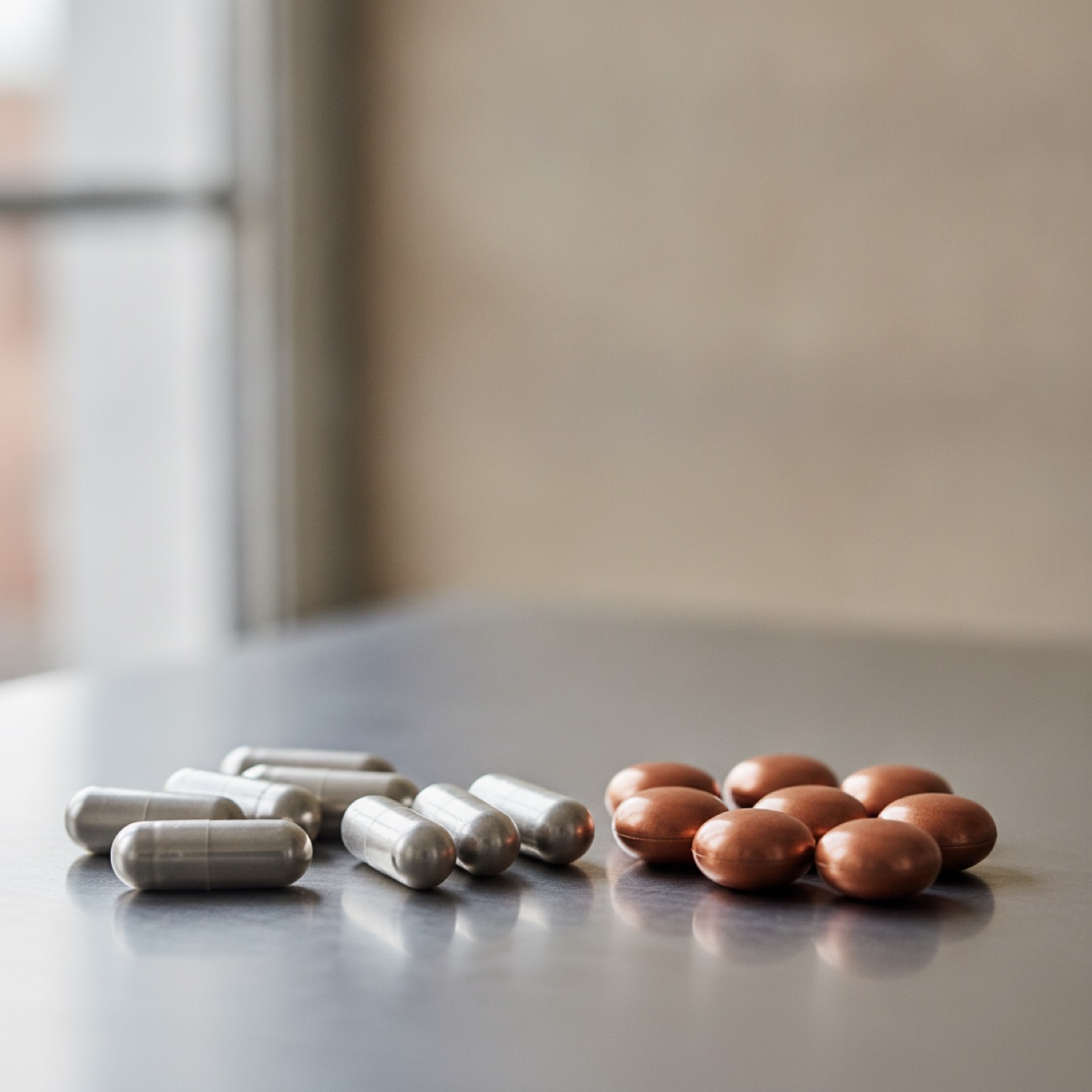
Short answer: Yes, most healthy adults can take zinc and copper together safely, provided the doses stay within established limits and the ratio between the two minerals is reasonable. The main concern is that high zinc intake can reduce copper absorption, so the two are often paired deliberately to prevent that problem.
Why These Two Minerals Are Linked
Zinc and copper are both essential trace minerals, but they compete for absorption in the gastrointestinal tract. According to the NIH Office of Dietary Supplements (ODS), moderately high zinc intakes of about 60 mg per day for up to ten weeks have been shown to reduce erythrocyte copper-zinc superoxide dismutase activity, which is a marker of copper status. In plain terms, taking too much zinc without accounting for copper can quietly lower your copper levels over time.
This is not a reason to avoid zinc. It is a reason to be aware of how much you are taking and whether adding copper alongside it makes sense for your situation. A clinician or pharmacist is the right person to help you decide that for your individual circumstances.
What Each Mineral Does in the Body
Zinc
The NIH ODS describes zinc as required for the catalytic activity of hundreds of enzymes. It also plays a role in immune function and supports protein and DNA synthesis, wound healing, and cell division. The evidence for these physiological roles is graded as strong.
On the research side, the NIH ODS notes that supplemental zinc in lozenge or syrup form taken shortly after cold onset may reduce the duration, but not the severity, of common cold symptoms, though this evidence is graded as limited. Zinc combined with copper and antioxidants in AREDS-type formulas has been studied for slowing progression of age-related macular degeneration in people at high risk of the advanced form, with moderate evidence supporting that use. Zinc supplementation has also shown moderate evidence for reducing the duration of acute diarrhea in children in low-income countries. Claims that zinc prevents or improves type 2 diabetes or benefits people with HIV are currently graded as insufficient by the NIH ODS.
Copper
Copper serves as a cofactor for cuproenzymes involved in energy production in the form of ATP. It supports iron metabolism largely through the copper-containing enzyme ceruloplasmin, and it contributes to connective tissue formation. Copper also contributes to antioxidant defense through copper-containing superoxide dismutases. The NIH ODS grades both of these roles as strong evidence.
Claims that copper concentrations or supplementation affect cardiovascular disease risk, or that copper status is associated with Alzheimer's disease risk or symptoms, are currently graded as insufficient by the NIH ODS. As always, supplements are not intended to diagnose, treat, cure or prevent any disease and these statements have not been evaluated by the FDA.
Reference Values from the NIH ODS
Knowing the established targets and upper limits helps put supplement labels in context.
- Zinc daily target: 11 mg for adult men, 8 mg for adult women
- Zinc Tolerable Upper Intake Level (UL): 40 mg per day from food and supplements combined for adults, based on levels that adversely affect copper status
- Copper daily target: 900 mcg for adults
- Copper Tolerable Upper Intake Level (UL): 10,000 mcg (10 mg) per day for adults
These figures come from the NIH ODS and the National Academies Dietary Reference Intakes report. The zinc UL does not apply to individuals receiving zinc for medical treatment under the care of a physician.
The Key Safety Concern: High Zinc Depleting Copper
The NIH ODS states that doses of 50 mg or more of zinc per day over weeks can reduce copper status and immune function. Because the zinc UL of 40 mg per day was set specifically to protect copper status, staying at or below that level is the primary safeguard for most people.
Many multivitamin and mineral formulas already include both zinc and copper together for exactly this reason. If you are taking a standalone zinc supplement on top of a multivitamin, it is worth adding up your total daily zinc from all sources to make sure you are not exceeding 40 mg. If you are taking zinc at higher doses for a medical reason, that should be supervised by a physician who can monitor your copper status.
People with Wilson's disease, a condition involving abnormal copper accumulation, must avoid extra copper and should speak with their doctor before taking any supplement containing it.
Drug Interactions to Know
The NIH ODS identifies several clinically relevant interactions for zinc that are worth discussing with a doctor or pharmacist before you start supplementing.
- Quinolone and tetracycline antibiotics (such as ciprofloxacin): zinc in the gastrointestinal tract can inhibit absorption of both the zinc and the antibiotic. Take the antibiotic at least 2 hours before or 4 to 6 hours after the zinc supplement.
- Penicillamine (used for rheumatoid arthritis and Wilson's disease): zinc can reduce its absorption and action. Take zinc and penicillamine at least 1 hour apart.
- Thiazide diuretics such as chlorthalidone and hydrochlorothiazide: these increase urinary zinc excretion, which can decrease serum zinc concentrations.
- Iron supplements containing 25 mg or more of elemental iron taken at the same time as zinc can reduce zinc absorption and plasma zinc concentrations.
The NIH ODS notes that copper is not known to have any clinically relevant interactions with medications. Even so, if you are on any prescription medication, talk to your doctor before adding any new supplement to your routine.
Practical Takeaways
- Staying at or below the 40 mg per day zinc UL is the most important step for protecting copper status in healthy adults.
- If your zinc supplement provides 25 mg or more, pairing it with a small amount of copper is a reasonable precaution that many formulas already build in.
- Total daily intake from food plus all supplements counts toward both the zinc and copper ULs.
- No supplement replaces a varied diet, and most people in the United States consume adequate amounts of zinc from food alone, according to the NIH ODS.
- For personal dosing guidance, consult a clinician or registered dietitian who can review your full diet and supplement picture.
Sources
- S1.gov verifiedNIH Office of Dietary SupplementsZinc - Fact Sheet for Health Professionalsods.od.nih.gov/factsheets/Zinc-HealthProfessional/
- S2.gov verifiedNIH Office of Dietary SupplementsZinc - Fact Sheet for Consumersods.od.nih.gov/factsheets/Zinc-Consumer/
- S3.gov verifiedNational Academies of Sciences, Engineering, and Medicine (Institute of Medicine, Food and Nutrition Board)Dietary Reference Intakes for Vitamin A, Vitamin K, Arsenic, Boron, Chromium, Copper, Iodine, Iron, Manganese, Molybdenum, Nickel, Silicon, Vanadium, and Zincnap.nationalacademies.org/catalog/10026/
- S4.gov verifiedNIH Office of Dietary Supplements (ODS)Copper - Health Professional Fact Sheetods.od.nih.gov/factsheets/Copper-HealthProfessional/
- S5.gov verifiedNIH Office of Dietary Supplements (ODS)Copper - Consumer Fact Sheetods.od.nih.gov/factsheets/Copper-Consumer/