Dosing
How much thiamin (vitamin B1) you need each day
A practical, evidence-based guide to daily thiamin targets, what the vitamin actually does, and when to talk to a clinician.
Short answer: Most adult men need 1.2 mg of thiamin per day and most adult women need 1.1 mg, according to the NIH Office of Dietary Supplements. For most people eating a varied diet, reaching that target is straightforward, and excess thiamin is simply excreted in urine.
What is thiamin and why does the body need it?
Thiamin is a water-soluble B vitamin found naturally in foods such as whole grains, legumes, nuts, and pork. Once absorbed, the body converts it into thiamin diphosphate (TDP), the biologically active form that does the real work at the cellular level.
According to the NIH Office of Dietary Supplements, TDP serves as an essential cofactor for five enzymes involved in glucose, amino acid, and lipid metabolism. In plain terms, that means thiamin plays a central role in the process of converting the food you eat into usable energy. It also supports the normal growth, development, and function of cells throughout the body.
Daily targets by age and sex
The values below come from the Dietary Reference Intakes published by the National Academies and summarised by the NIH Office of Dietary Supplements. The Recommended Dietary Allowance (RDA) represents the amount sufficient to meet the needs of nearly all healthy individuals in a given group.
- Men aged 19 and older: 1.2 mg per day
- Women aged 19 and older: 1.1 mg per day
- Pregnant women: 1.4 mg per day
- Breastfeeding women: 1.4 mg per day
These are population reference values. Your personal requirement may differ based on health status, medications, and other factors. Consult a clinician or registered dietitian for guidance tailored to your situation.
Is there an upper limit?
No Tolerable Upper Intake Level has been established for thiamin. The NIH Office of Dietary Supplements notes that no adverse effects have been reported from high intakes of 50 mg per day or more from food or supplements. Because the kidneys efficiently filter and excrete excess thiamin in urine, the risk of toxicity is considered low. That said, the absence of a defined upper limit does not mean more is always better. Stick to amounts supported by evidence unless a clinician advises otherwise.
How common is deficiency?
Outright thiamin deficiency is uncommon in the United States. A national dietary survey cited by the NIH Office of Dietary Supplements found that only about 6 percent of people had usual intakes below the Estimated Average Requirement. Groups at higher risk include people with alcohol use disorder, older adults with poor dietary variety, and individuals with certain malabsorption conditions.
Severe deficiency causes beriberi, a condition affecting the nervous system and heart, and Wernicke-Korsakoff syndrome, a serious neurological disorder. The evidence that supplemental thiamin can correct these deficiency-related conditions is rated strong by the NIH Office of Dietary Supplements.
What the research shows about supplements
It is important to be clear: dietary supplements are not intended to diagnose, treat, cure or prevent any disease, and these statements have not been evaluated by the FDA. The summary below reflects how the NIH Office of Dietary Supplements grades the current evidence.
Strong evidence
- Thiamin diphosphate acts as an essential cofactor for enzymes in glucose, amino acid, and lipid metabolism. This is well established biochemistry.
- Thiamin deficiency causes beriberi and Wernicke-Korsakoff syndrome, and supplemental thiamin can correct these deficiency states.
Limited evidence
- Some research suggests thiamin or benfotiamine supplements may improve glucose control or symptoms of diabetic neuropathy in people with diabetes. The evidence is promising but not yet conclusive.
- A small body of research indicates thiamin supplementation may benefit people with heart failure. Again, more robust trials are needed before firm conclusions can be drawn.
Insufficient evidence
- Claims that thiamin supplements improve cognition or help treat Alzheimer's disease are not currently supported by sufficient clinical evidence.
- The optimal dose and route of administration for preventing or treating Wernicke-Korsakoff syndrome have not been firmly established in clinical trials.
Medication interactions to know about
Thiamin can interact with certain medications. Always talk to a doctor or pharmacist before combining any supplement with a prescription drug.
- Furosemide (Lasix) and other loop diuretics: Research has linked furosemide use to decreases in thiamin concentrations, possibly to deficient levels, because the drug increases urinary thiamin loss. People taking loop diuretics long term may want to discuss thiamin status with their prescribing clinician.
- Fluorouracil (5-fluorouracil, Adrucil) chemotherapy: Several cases of beriberi and Wernicke's encephalopathy have been reported in people receiving this treatment. The drug may increase thiamin metabolism and block the formation of TDP, the active form. Thiamin supplements might reverse some of these effects, but this should only be managed under medical supervision.
Getting enough through food
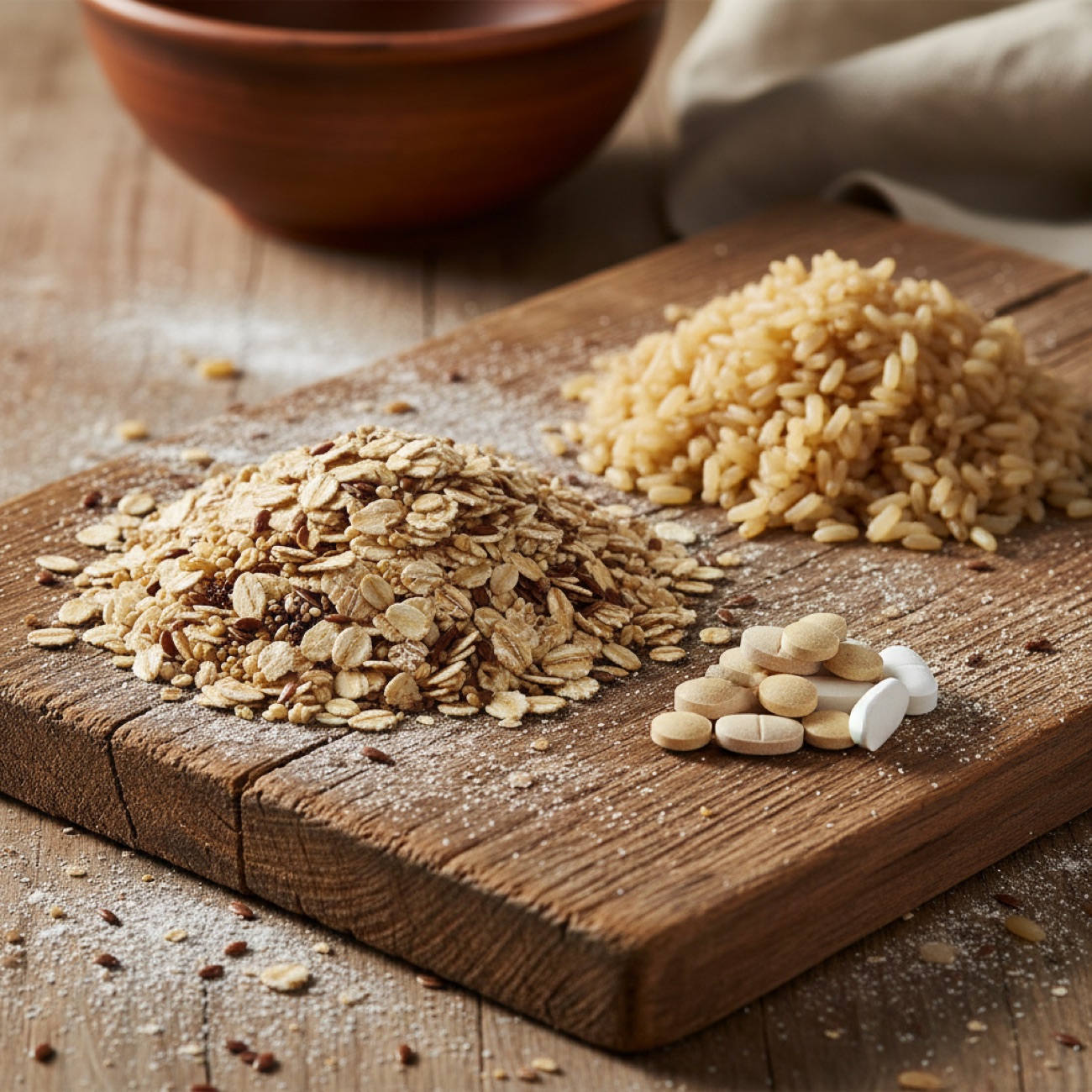
For most adults, a balanced diet provides adequate thiamin without the need for supplementation. Good food sources include whole grain breads and cereals, legumes such as black beans and lentils, nuts and seeds, pork, and fish. Many breakfast cereals are also fortified with thiamin. Checking a nutrition label is a simple way to see how much a particular food contributes toward your daily target.
The bottom line
The NIH Office of Dietary Supplements sets the daily thiamin target at 1.2 mg for adult men and 1.1 mg for adult women aged 19 and older, rising to 1.4 mg during pregnancy and breastfeeding. Most people in the United States meet this target through diet alone. No upper intake limit has been established, and the vitamin is considered safe at high intakes. If you take loop diuretics or fluorouracil-based chemotherapy, speak with your doctor about monitoring your thiamin status. For personalised dosing advice, consult a clinician or pharmacist rather than relying on general population figures.
Sources
- NIH Office of Dietary Supplements. Thiamin: Fact Sheet for Health Professionals. https://ods.od.nih.gov/factsheets/Thiamin-HealthProfessional/
- NIH Office of Dietary Supplements. Thiamin: Fact Sheet for Consumers. https://ods.od.nih.gov/factsheets/Thiamin-Consumer/
- National Academies of Sciences, Engineering, and Medicine. Dietary Reference Intakes for Thiamin, Riboflavin, Niacin, Vitamin B6, Folate, Vitamin B12, Pantothenic Acid, Biotin, and Choline. https://nap.nationalacademies.org/catalog/6015/dietary-reference-intakes-for-thiamin-riboflavin-niacin-vitamin-b6-folate-vitamin-b12-pantothenic-acid-biotin-and-choline
Sources
- S1.gov verifiedNIH Office of Dietary Supplements (ODS)Thiamin - Health Professional Fact Sheetods.od.nih.gov/factsheets/Thiamin-HealthProfessional
- S2.gov verifiedNIH Office of Dietary Supplements (ODS)Thiamin - Consumer Fact Sheetods.od.nih.gov/factsheets/Thiamin-Consumer/
- S3.gov verifiedInstitute of Medicine (NASEM), Food and Nutrition BoardDietary Reference Intakes: Thiamin, Riboflavin, Niacin, Vitamin B6, Folate, Vitamin B12, Pantothenic Acid, Biotin, and Choline (1998)nap.nationalacademies.org/catalog/6015/dietary-refer