Absorption
Should You Take Turmeric Curcumin With or Without Food
Taking turmeric curcumin with food, especially a meal that contains fat, appears to support absorption, though optimal timing depends on your formulation and health context.
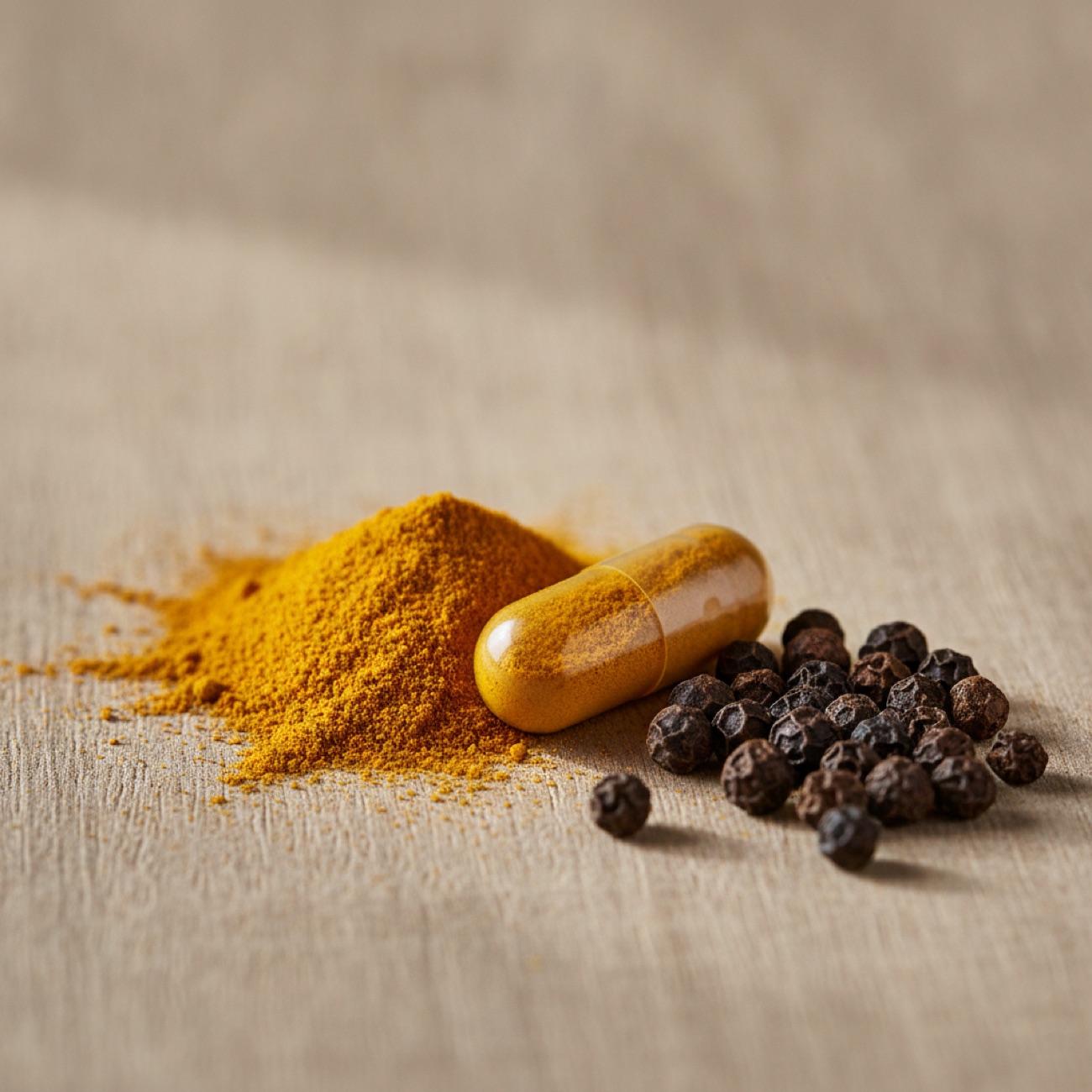
The short answer is that taking turmeric curcumin with a meal, particularly one that contains some fat, is generally the most practical approach for most adults. Because no official adult target dose or upper limit has been established by the NIH Office of Dietary Supplements, the guidance below focuses on what is currently known about absorption, safety, and timing rather than on specific milligram targets.
What Turmeric and Curcumin Actually Are
Turmeric is a spice derived from the root of Curcuma longa. Its yellow color and characteristic flavor come from a group of compounds called curcuminoids, the most studied of which is curcumin. According to the NIH Office of Dietary Supplements, turmeric has been used in Ayurvedic, Chinese, Islamic, and Thai traditional medicine for a wide range of complaints, and curcumin has been studied in laboratory research for antioxidant and anti-inflammatory activity. It is important to note, however, that clinical benefit in people has not been established for most conditions.
Supplements containing turmeric or curcumin are not intended to diagnose, treat, cure, or prevent any disease, and these statements have not been evaluated by the FDA.
Why Food Matters for Absorption
Curcumin on its own is poorly absorbed by the body. The compound is fat-soluble, which means it dissolves in fat rather than water. Taking a standard curcumin supplement with a meal that contains dietary fat, such as olive oil, nuts, avocado, or a piece of fish, may help the body absorb more of the compound compared with taking it on an empty stomach.
Many manufacturers try to address this limitation through specialized formulations. These include products that combine curcumin with piperine (a compound from black pepper), phospholipid complexes, nanoparticle delivery systems, or other technologies marketed as high-bioavailability options. While these formulations can increase the amount of curcumin that reaches the bloodstream, they also carry a specific safety consideration discussed below.
Timing Recommendations at a Glance
- Standard powder or capsule formulations: Take with a meal containing fat to support absorption. Avoid taking on a completely empty stomach, as this may also reduce tolerability for some people.
- High-bioavailability formulations: Follow the manufacturer label instructions and, more importantly, discuss use with a clinician before starting. These formulations have been linked to liver injury in some individuals, according to the National Center for Complementary and Integrative Health (NCCIH).
- Mouthwash formulations: Used in some research settings for oral mucositis in cancer patients. Timing and method differ entirely from oral supplements, and this use should be supervised by a healthcare provider.
What the Evidence Shows
It is worth understanding the current state of research before deciding whether turmeric curcumin is appropriate for you at all. The NIH grades the evidence as follows.
Strong Evidence
Turmeric provides the yellow color and flavor of the spice used in cooking. This is well established.
Limited Evidence
Some studies suggest that oral curcumin may improve symptoms of osteoarthritis. The evidence exists but is not yet strong enough to support a firm clinical recommendation.
Insufficient Evidence
Research on curcumin for nonalcoholic fatty liver disease (NAFLD) measures, oral mucositis relief as a mouthwash in cancer patients, and benefit for any other specific health condition is currently rated as insufficient by the NIH. Insufficient does not mean the research is negative, it means there is not yet enough high-quality human evidence to draw conclusions.
Safety Considerations
According to NCCIH, conventionally formulated oral turmeric or curcumin is likely safe in recommended amounts for up to 2 to 3 months and is generally well tolerated at usual food and supplement amounts. No established upper limit exists for adults, per the NIH Office of Dietary Supplements.
There are two population groups that require extra caution.
- Pregnant individuals: Use of turmeric or curcumin beyond typical food amounts may be unsafe during pregnancy. Speak with an obstetrician before using any supplement.
- Breastfeeding individuals: Safety beyond typical food amounts is unclear. Consult a healthcare provider before use.
As noted above, high-bioavailability curcumin formulations have been linked to liver damage in some people. NCCIH notes that this risk may be greater when combined with other substances that can stress the liver. If you take any medications or have any liver-related health history, discuss this with your doctor before choosing a high-bioavailability product.
Drug Interactions to Know
NCCIH advises that if you take any medicine, you should talk with your healthcare provider before using any herbal product, because some herbs and medicines interact in harmful ways. For curcumin specifically, two interaction categories are worth highlighting.
Blood-Thinning Medications
Curcumin may add to the effect of anticoagulant or antiplatelet medicines such as warfarin, aspirin, and clopidogrel. This interaction is based on limited evidence, but the potential consequence, increased bleeding risk, is serious enough to warrant a conversation with your doctor or pharmacist before combining them.
Diabetes Medications
Curcumin may lower blood sugar and could add to the effect of diabetes medicines. If you use insulin or oral diabetes medications, monitor your blood sugar and consult your provider. This is also based on limited evidence.
Practical Tips Before You Start
- Choose a formulation that matches your needs and discuss it with a clinician, especially if you are considering a high-bioavailability product.
- Take standard capsules or powders with a fat-containing meal to support absorption and tolerability.
- Do not exceed the dosage on the product label without guidance from a healthcare provider.
- Because no official adult target or upper limit has been set, personal dosing decisions should involve a clinician or pharmacist who knows your full health picture.
- If you experience any unusual symptoms, including digestive discomfort, yellowing of the skin or eyes, or dark urine, stop use and contact a healthcare provider promptly.
The Bottom Line
Taking turmeric curcumin with a fat-containing meal is a reasonable, practical approach for most adults using standard formulations. The evidence for meaningful clinical benefit remains limited to insufficient for most conditions, and no adult intake target or upper limit has been established by the NIH Office of Dietary Supplements. If you take medications, are pregnant or breastfeeding, or are considering a high-bioavailability product, talk with your doctor or pharmacist before starting. Informed, supervised use is always the safest path.
Sources
- S1.gov verifiedNIH National Center for Complementary and Integrative Health (NCCIH)Turmericwww.nccih.nih.gov/health/turmeric
- S2.gov verifiedNIH Office of Dietary Supplements (ODS)Dietary Supplements for Whole-Body Health (background on supplement regulation; ODS maintains no turmeric-specific Health Professional fact sheet)ods.od.nih.gov/factsheets/list-all/