Curcumin forms
Turmeric vs Curcumin Extract vs Curcumin With Piperine: Potency and Absorption
A plain-language breakdown of how these three supplement forms differ, what the evidence actually shows, and what to watch for before you buy.
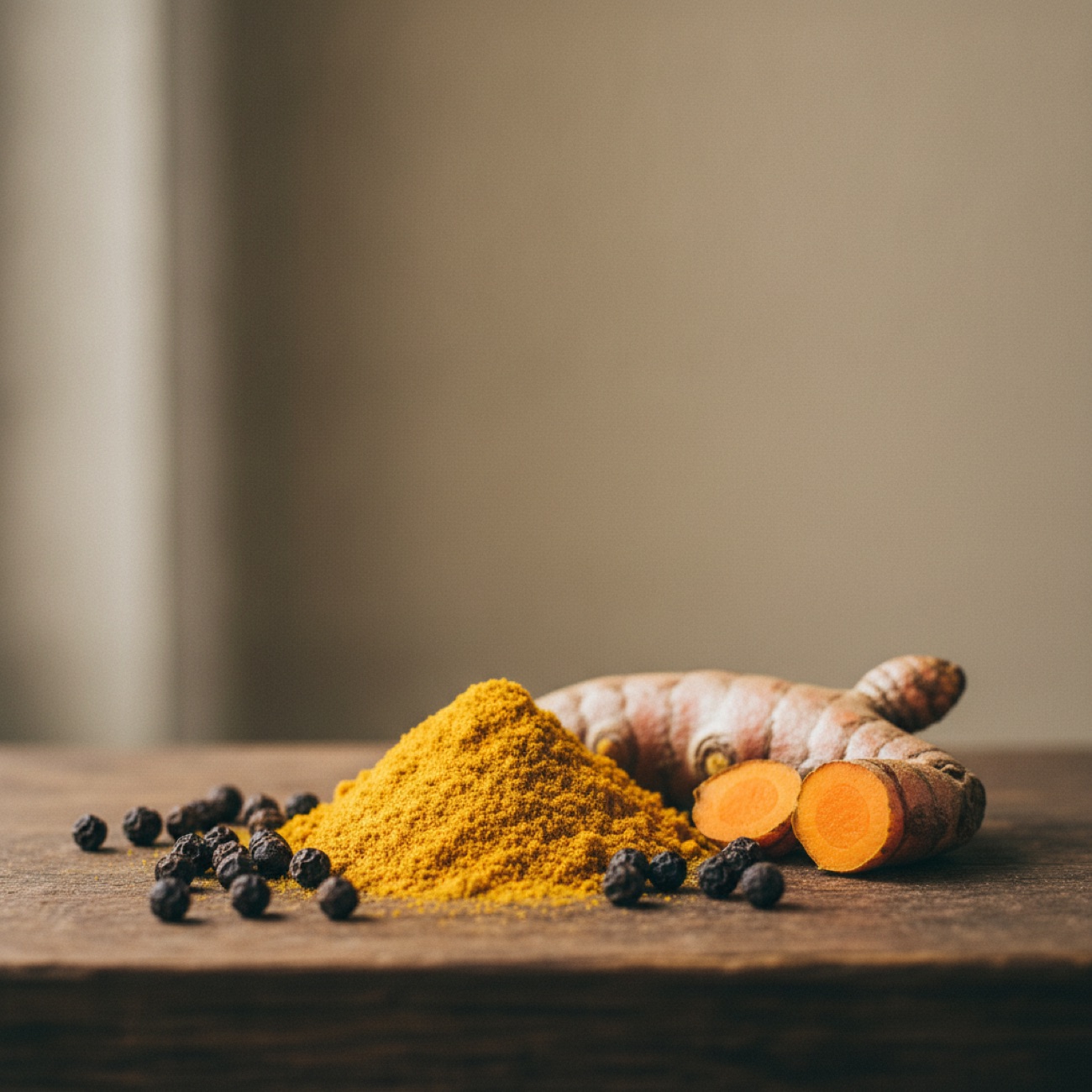
Turmeric, curcumin extract, and curcumin combined with piperine are often sold side by side, but they are not interchangeable products. Understanding how they differ in concentration, absorption, and safety can help you make a more informed choice alongside your healthcare provider.
What Each Form Actually Contains
Whole Turmeric Powder
Turmeric is the dried, ground root of Curcuma longa. The spice contains a family of compounds called curcuminoids, of which curcumin is the most studied. Whole turmeric powder is the form most familiar from cooking, and according to the National Center for Complementary and Integrative Health (NCCIH), it provides the characteristic yellow pigment and flavor used in food. Curcuminoid content in the raw spice is relatively low, and the body absorbs curcumin poorly when it is consumed in this form.
Curcumin Extract
Curcumin extract is a concentrated form that removes much of the starch, fiber, and other components of the turmeric root, leaving a higher proportion of curcuminoids. Because the compound is still poorly absorbed on its own, manufacturers have developed a range of delivery technologies, including phospholipid complexes, nanoparticles, and lipid-based formulations, marketed as highly bioavailable curcumin. These formulations can raise blood levels of curcumin significantly compared with standard powder.
Curcumin With Piperine
Piperine is the active compound in black pepper. Research has examined whether adding piperine to curcumin supplements improves absorption. This combination is one of the more widely available enhanced-absorption formats on the market. The mechanism proposed is that piperine slows the metabolism of curcumin in the gut and liver, allowing more of it to reach circulation. As with other enhanced formulations, higher absorption means higher systemic exposure, which affects both potential benefit and potential risk.
What the Research Shows
According to data from the NIH Office of Dietary Supplements (ODS) and the NCCIH, the evidence for curcumin in human health falls into the following categories.
- Yellow color and flavor in food - Strong evidence supports this role. Turmeric has a long, well-documented history as a culinary spice.
- Osteoarthritis symptom relief - Limited evidence suggests oral curcumin may improve osteoarthritis symptoms. The evidence base is not yet strong enough to draw firm conclusions.
- Nonalcoholic fatty liver disease (NAFLD) measures - The evidence is currently rated insufficient by the NIH ODS.
- Oral mucositis in cancer patients - Used as a mouthwash in this context, the evidence is insufficient.
- Any specific health condition overall - The NIH ODS rates the evidence as insufficient to confirm benefit for any specific condition.
Laboratory studies have explored curcumin's antioxidant and anti-inflammatory activity, and this research is ongoing. However, activity observed in a laboratory setting does not automatically translate into clinical benefit in people. These statements have not been evaluated by the FDA, and supplements are not intended to diagnose, treat, cure, or prevent any disease.
Dosage and Safety: What NIH Data Says
According to the NIH ODS, no adult target intake or upper tolerable limit has been established for turmeric or curcumin. The NCCIH states that conventionally formulated oral turmeric or curcumin is likely safe in recommended amounts for up to two to three months and is generally well tolerated at typical food and supplement amounts.
The picture changes with highly bioavailable formulations. The NCCIH has linked high-bioavailability curcumin products to liver damage in some people. This is a meaningful distinction: the same enhanced absorption that may improve efficacy can also increase the risk of adverse effects. Anyone considering a phospholipid-based, nanoparticle, or other enhanced-absorption curcumin product should discuss this risk with a clinician before starting.
Use during pregnancy may be unsafe beyond typical food amounts, and safety during breastfeeding is unclear at supplement doses, according to the NCCIH. People who are pregnant or breastfeeding should consult a healthcare provider before using any curcumin supplement.
Drug Interactions to Know
The NCCIH advises that anyone taking medication should talk with a healthcare provider before using any herbal product, because some herbs and medicines interact in harmful ways. Specific interactions to be aware of with curcumin include the following.
- Anticoagulant and antiplatelet medicines - Curcumin may add to the blood-thinning effect of medicines such as warfarin, aspirin, and clopidogrel. This interaction is based on limited evidence, but the potential consequence is serious enough to warrant medical advice before combining them.
- Diabetes medicines - Curcumin may lower blood sugar and could add to the effect of glucose-lowering medications, increasing the risk of hypoglycemia. Monitor blood sugar and consult a provider if you take diabetes medicines.
- Liver-stressing substances - Because high-bioavailability formulations have been linked to liver injury, the risk may be greater when these products are combined with other substances that can stress the liver, including certain medications and alcohol.
Choosing Between the Three Forms
Whole turmeric powder carries the longest safety record and is the form most consistent with traditional use. Its curcumin content and bioavailability are low, which may limit any physiological effect beyond its role as a food ingredient.
Standard curcumin extract offers higher curcuminoid concentration but still faces the absorption barrier that limits how much reaches the bloodstream.
Enhanced-absorption formulations, including curcumin with piperine and proprietary high-bioavailability products, deliver more curcumin to circulation. This may matter if the goal is to reach levels studied in clinical research. However, higher bioavailability also means greater systemic exposure and a more pronounced safety and interaction profile. The NCCIH's warning about liver damage applies specifically to this category.
No single form is right for every person. The appropriate choice depends on individual health status, medications, and goals. Because no adult recommended intake has been established by the NIH ODS, there is no universal dose to follow from a reference standpoint.
The Bottom Line
Turmeric, curcumin extract, and curcumin with piperine differ in concentration, absorption, and risk profile. Evidence for clinical benefit in people remains limited to insufficient across most studied conditions, according to the NIH ODS and NCCIH. The safest path is to treat these products as supplements with an evolving evidence base rather than established treatments. Consult a clinician or pharmacist to determine whether any form is appropriate for you, what dose makes sense given your health history, and whether it is safe to combine with any medicines you currently take.
Sources
- S1.gov verifiedNIH National Center for Complementary and Integrative Health (NCCIH)Turmericwww.nccih.nih.gov/health/turmeric
- S2.gov verifiedNIH Office of Dietary Supplements (ODS)Dietary Supplements for Whole-Body Health (background on supplement regulation; ODS maintains no turmeric-specific Health Professional fact sheet)ods.od.nih.gov/factsheets/list-all/