Vegan
Vitamin B12 for Vegans: Why Plant Diets Fall Short
A fully plant-based diet contains virtually no reliable B12, making supplementation the most practical way to meet the adult target of 2.4 mcg per day.
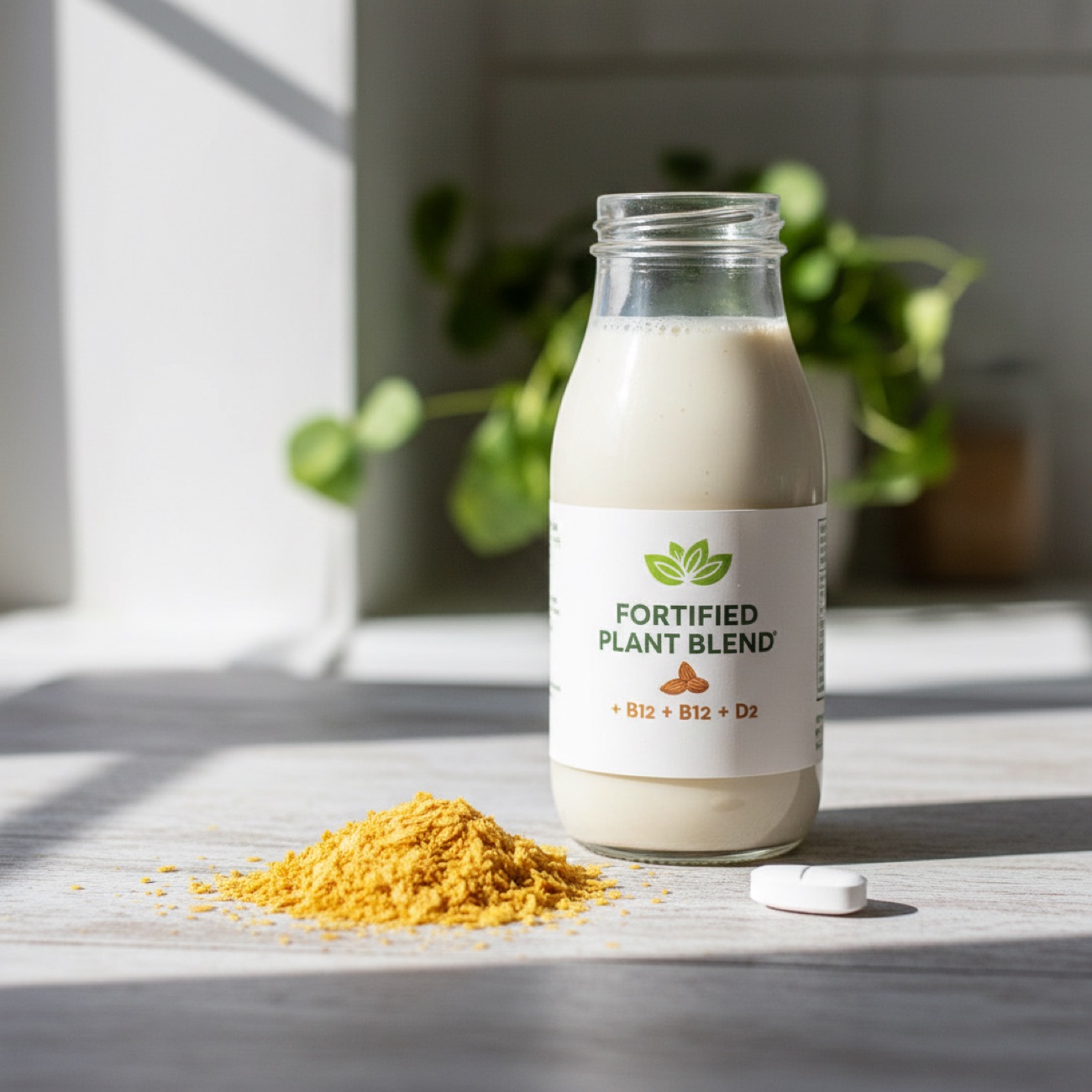
Short answer: Vitamin B12 is found almost exclusively in animal-derived foods, so people following vegan diets are at high risk of falling short of the adult daily target of 2.4 mcg set by the NIH Office of Dietary Supplements (ODS). A consistent supplement or fortified food strategy is the evidence-backed way to close that gap.
What Vitamin B12 Does in Your Body
Before exploring why plant diets come up short, it helps to understand what B12 actually does. According to the NIH ODS, vitamin B12 serves three core physiological roles:
- It is required for healthy red blood cell formation.
- It is required for the development, myelination, and function of the central nervous system.
- It is required for DNA synthesis.
The evidence that B12 performs these roles is rated strong by the NIH ODS. Separately, there is also strong evidence that adequate vitamin B12 helps prevent megaloblastic anemia, a condition in which red blood cells grow abnormally large and cannot function properly. These are well-established physiological facts, not marketing claims.
It is worth being clear about what the evidence does not show. The NIH ODS rates evidence as insufficient for claims that B12 supplementation reduces cardiovascular disease or stroke risk, improves cognitive function or slows dementia, boosts energy or athletic performance in people who are not deficient, or affects cancer risk. Those claims circulate widely online, but they are not supported by the current weight of research.
Why Plant-Based Diets Create a B12 Gap
Vitamin B12 is naturally present in meaningful amounts only in animal products such as meat, fish, poultry, eggs, and dairy. Plant foods, including vegetables, legumes, grains, nuts, and seeds, do not provide B12 in a form the human body can reliably use. Some fermented foods and certain algae are sometimes promoted as plant-based B12 sources, but the NIH ODS does not recognize these as dependable contributors to B12 status.
This is not a flaw in plant-based eating overall. It is simply a nutritional reality that requires a deliberate solution. For vegans, that solution comes down to two options: regularly eating B12-fortified foods such as certain plant milks, breakfast cereals, and nutritional yeast, or taking a B12 supplement.
The Adult Daily Target and Safety Profile
The NIH ODS sets the Recommended Dietary Allowance for vitamin B12 at 2.4 mcg per day for adults. This figure applies to most healthy adults. Requirements differ for pregnant and breastfeeding individuals, so those groups should speak with a clinician about their specific needs.
On the question of safety, the NIH ODS notes that vitamin B12 is generally considered safe even at high doses. No Tolerable Upper Intake Level has been established because of its low potential for toxicity. The body does not store excess amounts indefinitely, and absorption becomes self-limiting at high oral doses, meaning the body absorbs a smaller percentage as dose increases. This self-regulating mechanism contributes to the favorable safety profile.
Supplements are not intended to diagnose, treat, cure, or prevent any disease, and these statements have not been evaluated by the FDA.
Forms of B12 in Supplements
B12 supplements are available in several forms, most commonly cyanocobalamin and methylcobalamin. Both are used widely. For personal guidance on which form and what dose is appropriate for your situation, consult a clinician or registered dietitian. Population-level reference values like the 2.4 mcg RDA are a useful starting point, but individual needs can vary based on age, digestive health, and other factors.
Who Should Pay Extra Attention
Vegans are not the only group at risk of low B12. The NIH ODS identifies several other situations that warrant closer attention:
- Older adults: Absorption of B12 from food declines with age because the stomach produces less acid and intrinsic factor, both of which are needed to free and absorb B12 from food. Supplemental B12 does not require the same digestive steps, which is why it is often recommended for people over 50.
- People with certain medical conditions: Conditions affecting the stomach or small intestine can impair B12 absorption. Anyone with a known digestive condition should discuss B12 status with a health care provider.
- People taking specific medications: This is an important interaction category. Proton pump inhibitors such as omeprazole and lansoprazole can interfere with B12 absorption from food by slowing gastric acid release and may lead to B12 deficiency over time. Histamine H2-receptor antagonists such as cimetidine and ranitidine can similarly reduce absorption from food. Metformin, used for prediabetes and type 2 diabetes, might reduce B12 absorption and has been associated with significantly lower serum B12 concentrations. If you take any of these medications, talk to your doctor before combining them with a B12 supplement, and ask about monitoring your B12 levels.
Practical Steps for Vegans
Meeting the 2.4 mcg daily target on a vegan diet is straightforward once you have a consistent plan. Here are the main approaches:
- Check labels on plant milks, breakfast cereals, and nutritional yeast for B12 fortification, and note how much each serving provides toward the daily target.
- Consider a daily or weekly B12 supplement. Because absorption is self-limiting at higher oral doses, some people prefer a lower daily dose while others use a higher weekly dose. A clinician or pharmacist can help you choose what fits your routine.
- If you have been vegan for a year or more without a reliable B12 source, ask your doctor about a blood test to assess your current status.
A Note on Realistic Expectations
Vitamin B12 is genuinely important, and vegans genuinely need to plan for it. At the same time, it is worth keeping the conversation grounded. The strong evidence supports B12 as essential for red blood cell formation, nervous system function, and DNA synthesis. It does not support B12 as an energy booster, a cognitive enhancer, or a disease treatment. Correcting a deficiency can resolve symptoms caused by that deficiency, but supplementing beyond adequacy does not appear to deliver extra benefits based on current research.
For personalized advice on dosing, testing, or managing B12 alongside any medications or health conditions, speak with your doctor, a registered dietitian, or a pharmacist. The information in this guide is based on population reference data from the NIH Office of Dietary Supplements and is intended for general educational purposes only.
Sources: NIH Office of Dietary Supplements, Vitamin B12 Fact Sheet for Health Professionals and Consumer versions. Available at ods.od.nih.gov/factsheets/VitaminB12-HealthProfessional/ and ods.od.nih.gov/factsheets/VitaminB12-Consumer/
Sources
- S1.gov verifiedNIH Office of Dietary Supplements (ODS)Vitamin B12 - Health Professional Fact Sheetods.od.nih.gov/factsheets/VitaminB12-HealthProfessio
- S2.gov verifiedNIH Office of Dietary Supplements (ODS)Vitamin B12 - Consumer Fact Sheetods.od.nih.gov/factsheets/VitaminB12-Consumer/
- S3.gov verifiedInstitute of Medicine (National Academies), Food and Nutrition BoardDietary Reference Intakes for Thiamin, Riboflavin, Niacin, Vitamin B6, Folate, Vitamin B12, Pantothenic Acid, Biotin, and Choline (1998)ods.od.nih.gov/factsheets/VitaminB12-HealthProfessio