Dosing
Daily vitamin E needs and the supplement upper limit
A practical, evidence-based overview of how much vitamin E adults need, what supplements can and cannot do, and when high doses become a concern.
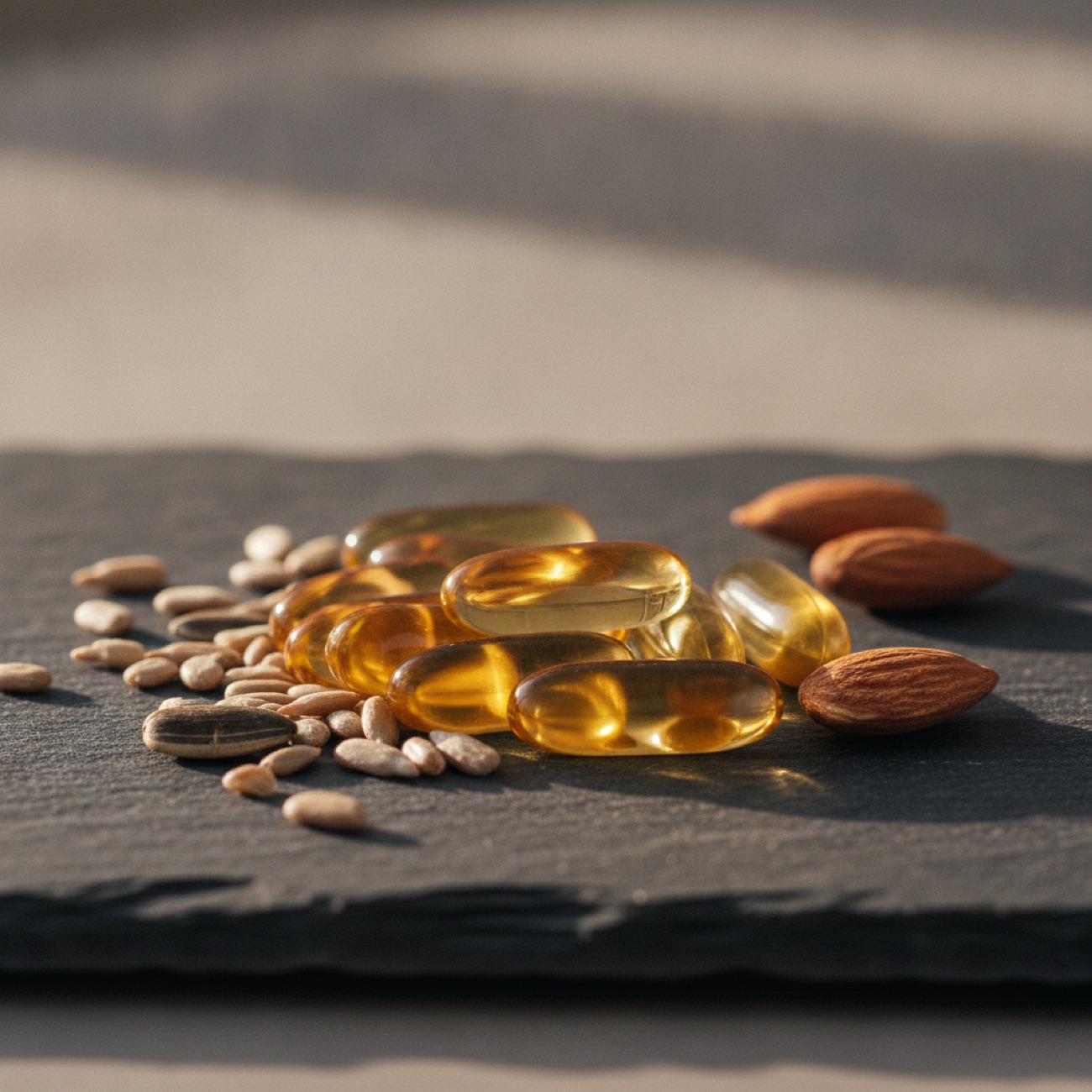
Short answer: Most adults need 15 mg of vitamin E per day, a target that is easy to meet through a varied diet. Supplemental vitamin E has a Tolerable Upper Intake Level of 1,000 mg per day, a ceiling set because of bleeding risk rather than a therapeutic goal.
What vitamin E actually does in the body
Vitamin E is a fat-soluble nutrient. According to the NIH Office of Dietary Supplements (ODS), it serves three broad physiological roles.
- Antioxidant protection. Vitamin E acts as a fat-soluble antioxidant that stops the production of reactive oxygen species formed when fat undergoes oxidation, protecting cells from free-radical damage.
- Immune function. The ODS notes that vitamin E contributes to normal immune function.
- Cell signaling and gene regulation. Vitamin E is involved in cell signaling, regulation of gene expression, and other metabolic processes, though the ODS points out that this evidence comes primarily from in vitro cell studies rather than human trials.
These are physiological roles, not disease claims. Vitamin E supplements are not intended to diagnose, treat, cure or prevent any disease, and these statements have not been evaluated by the FDA.
The daily target: 15 mg for adults
The Recommended Dietary Allowance for vitamin E is 15 mg per day for adult men and women, as established in the Dietary Reference Intakes published by the National Academies and reported by the NIH ODS. This figure refers specifically to alpha-tocopherol, the form the body preferentially uses.
Good dietary sources include nuts, seeds, vegetable oils, and green leafy vegetables. Most people who eat a reasonably varied diet come close to this target through food alone. The ODS considers vitamin E from food safe with no established adverse effects.
The supplement upper limit: 1,000 mg per day
The Tolerable Upper Intake Level (UL) for supplemental vitamin E is 1,000 mg per day for adults, according to the NIH ODS. This is equivalent to 1,500 IU per day of the natural form or 1,100 IU per day of the synthetic form. The UL applies to all forms of supplemental alpha-tocopherol.
The UL is not a recommended dose. It is the highest daily intake judged unlikely to cause harm in healthy adults. The threshold was set specifically because of the risk of hemorrhage. Long-term intakes above the UL may increase bleeding risk, and the ODS advises caution accordingly.
To put the numbers in perspective, the gap between the daily target (15 mg) and the upper limit (1,000 mg) is wide, but that does not mean doses near the UL are beneficial. Higher is not better when the evidence for benefit at high doses is weak.
What the evidence says about supplements
The ODS grades the evidence for common reasons people take vitamin E supplements. Here is an honest summary of those grades.
Deficiency correction: strong evidence
Preventing or correcting vitamin E deficiency in people with fat-malabsorption conditions or rare genetic disorders avoids neurological and other deficiency symptoms. This is where the evidence is clearest and the clinical rationale is most straightforward.
Cardiovascular disease: insufficient evidence
The ODS rates the evidence that vitamin E supplements prevent cardiovascular disease or reduce its morbidity and mortality as insufficient. Large clinical trials have not demonstrated a consistent benefit.
Cancer prevention: insufficient evidence
Similarly, the evidence that vitamin E supplements prevent cancer is rated insufficient by the ODS. Some trials have shown no benefit, and at least one large trial raised questions about possible harm at high doses in certain populations.
Eye health: limited evidence
The evidence that vitamin E supplements reduce the risk of age-related macular degeneration or cataracts is rated limited by the ODS.
Cognitive health: insufficient evidence
The evidence that vitamin E supplements maintain cognitive performance or slow cognitive decline and Alzheimer's disease is rated insufficient by the ODS.
Drug interactions to know about
Vitamin E at supplemental doses can interact with several medications. Always talk to a doctor or pharmacist before combining any supplement with prescription or over-the-counter drugs.
- Anticoagulant and antiplatelet medications (for example warfarin). Vitamin E can inhibit platelet aggregation and antagonize vitamin K-dependent clotting factors. Large doses can increase bleeding risk, especially when vitamin K intake is low. The ODS notes that the amount needed for a clinically significant effect is unknown but probably exceeds 400 IU per day.
- Simvastatin plus niacin. In one study, vitamin E taken alongside vitamin C, selenium, and beta-carotene blunted the rise in HDL cholesterol, including the cardioprotective HDL2 fraction, in people receiving a simvastatin-niacin combination. This interaction is specific to that combination regimen and may not apply broadly, but it illustrates that antioxidant supplements can sometimes interfere with intended medication effects.
- Chemotherapy and radiotherapy. The ODS notes that oncologists generally advise against antioxidant supplements during cancer treatment because they might reduce effectiveness by protecting cancer cells from oxidative damage. The evidence is mixed and further research is needed, but the precaution is widely observed in clinical practice.
Practical takeaways
The points below summarize the key numbers and considerations from the NIH ODS data reviewed in this guide.
- The adult daily target for vitamin E is 15 mg, easily met through diet for most people.
- The supplement upper limit is 1,000 mg per day, based on bleeding risk, not a therapeutic ceiling.
- Evidence for supplementation beyond correcting deficiency is weak to insufficient for most commonly cited uses.
- Vitamin E from food carries no established risk. High-dose supplements carry real interaction and bleeding concerns.
- People taking blood thinners, statins combined with niacin, or undergoing cancer treatment should be especially cautious.
These are population reference values drawn from NIH ODS and National Academies data. They are not personal medical advice. Consult a clinician or pharmacist to determine whether a vitamin E supplement is appropriate for your individual situation, and always discuss supplement use with your doctor if you take any medication.
Sources
- NIH Office of Dietary Supplements, Vitamin E Health Professional Fact Sheet: https://ods.od.nih.gov/factsheets/VitaminE-HealthProfessional/
- NIH Office of Dietary Supplements, Vitamin E Consumer Fact Sheet: https://ods.od.nih.gov/factsheets/VitaminE-Consumer/
- National Academies, Dietary Reference Intakes for Vitamin C, Vitamin E, Selenium, and Carotenoids: https://nap.nationalacademies.org/catalog/9810/dietary-reference-intakes-for-vitamin-c-vitamin-e-selenium-and-carotenoids
Sources
- S1.gov verifiedNIH Office of Dietary SupplementsVitamin E - Health Professional Fact Sheetods.od.nih.gov/factsheets/VitaminE-HealthProfessiona
- S2.gov verifiedNIH Office of Dietary SupplementsVitamin E - Consumer Fact Sheetods.od.nih.gov/factsheets/VitaminE-Consumer/
- S3.gov verifiedInstitute of Medicine (National Academies), Food and Nutrition BoardDietary Reference Intakes for Vitamin C, Vitamin E, Selenium, and Carotenoids (2000)nap.nationalacademies.org/catalog/9810/dietary-refer