Ginseng types
Asian vs American Ginseng: Comparing Panax Species and Ginsenoside Content
A plain-language look at what the research actually says about two popular Panax species, their ginsenoside profiles, and the safety questions you should know before using either one.
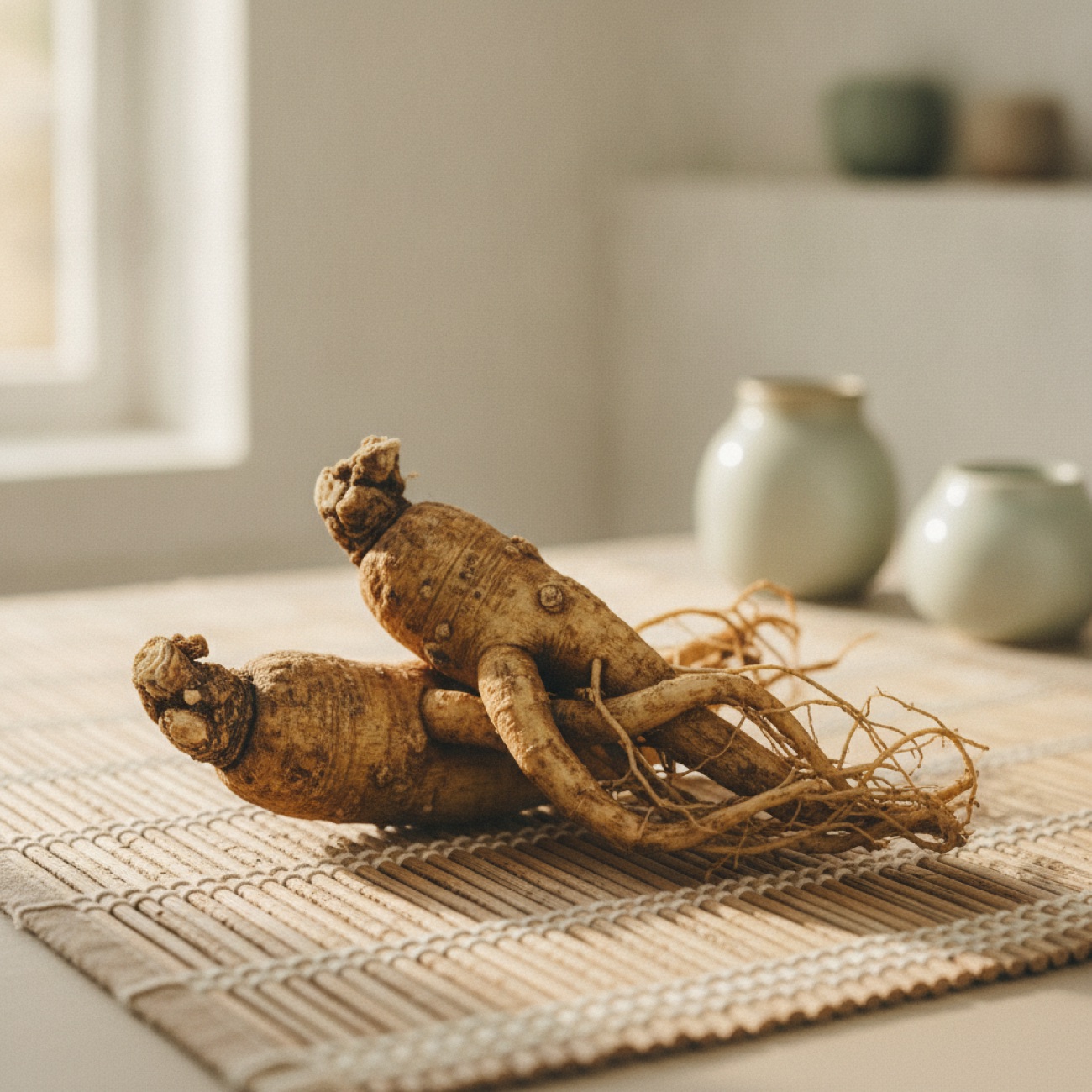
Asian ginseng and American ginseng both belong to the Panax genus and contain compounds called ginsenosides, but they differ in their ginsenoside profiles and in the way traditional medicine systems have historically used them. Neither species has an established adult dietary reference intake, and neither has been proven to treat or cure any condition, so understanding what the evidence actually supports is important before you decide to use either one.
What Are Ginsenosides?
Ginsenosides, also called panaxosides, are a family of steroidal saponins found in the root of Panax plants. According to the NIH Office of Dietary Supplements, ginsenosides are considered the biologically most important constituents in ginseng root. Researchers have identified more than 100 individual ginsenosides across Panax species, and the relative proportions of these compounds vary meaningfully between Asian ginseng (Panax ginseng) and American ginseng (Panax quinquefolius).
Asian ginseng root tends to be richer in Rb1, Rg1, and Re ginsenosides, while American ginseng root contains a higher ratio of Rb1 relative to Rg1. Traditional herbalism has long described Asian ginseng as more stimulating and American ginseng as more cooling or calming, a distinction some researchers link to these differing ginsenoside ratios, though the clinical significance of this difference has not been firmly established in controlled trials.
Traditional and Proposed Uses
Both species have been promoted as adaptogens, a term describing substances thought to help the body resist physiological and psychological stress. The NIH National Center for Complementary and Integrative Health notes that Asian ginseng has historically been promoted for cognitive functions such as attention and reaction time in middle-aged adults, as well as for energy, sexual function, and general well-being. American ginseng has similarly been explored for immune support, blood sugar regulation, and fatigue, though the evidence base for both species remains limited or insufficient across most proposed uses.
It is important to note that supplements are not intended to diagnose, treat, cure, or prevent any disease, and these statements have not been evaluated by the FDA.
What the Evidence Shows for Asian Ginseng
The NIH ODS and NCCIH grade the current research for Asian ginseng as follows:
- Limited evidence that it may improve sexual function in men with erectile dysfunction.
- Limited evidence that it may reduce general fatigue not related to a specific disease.
- Limited evidence that it may improve cognitive function such as attention and reaction time.
- Limited evidence that it may improve cardiometabolic markers in people with prediabetes or type 2 diabetes.
- Insufficient evidence for reducing flu risk, improving athletic performance, or supporting aging, asthma, anxiety, or stress in an adaptogenic role.
Limited evidence means some positive findings exist but study quality or consistency is not strong enough to draw firm conclusions. Insufficient evidence means there is not yet enough reliable research to say whether the supplement helps or does not help.
Safety and Dosing
According to the NIH and NCCIH, short-term oral use of Asian ginseng in recommended amounts, generally up to six months, appears to be safe for most healthy adults. Questions remain about long-term safety beyond six months, and some experts recommend against use in infants, children, and women who are pregnant or breastfeeding. The NIH notes there is not enough reliable information to know whether applying ginseng topically to the skin is safe, and it may cause skin reactions in some people.
No adult upper limit or recommended dietary allowance has been established for either Asian or American ginseng by the NIH Office of Dietary Supplements, because ginseng is not classified as an essential nutrient. Product labels carry widely varying dose suggestions, and actual ginsenoside content can differ significantly between brands due to differences in root age, plant part used, and processing method. For personal dosing guidance, consult a qualified clinician or pharmacist who can review your full health picture.
Drug Interactions: A Critical Section
Both species can interact with medications. The interactions documented for Asian ginseng by the NIH and NCCIH include the following categories, and similar caution is generally advised for American ginseng:
- Diabetes medications including insulin and oral antidiabetes drugs: Asian ginseng may lower blood sugar on its own. Combining it with blood-sugar-lowering medications could cause levels to drop too low. Close monitoring is essential.
- Anticoagulant and antiplatelet drugs such as warfarin, aspirin, and NSAIDs: Ginseng may interfere with normal blood clotting. Case reports describe both reduced warfarin effect and altered clotting times, which could increase either bleeding or clotting risk depending on the situation.
- Immunosuppressant medications: Ginseng can increase immune system activity, which may reduce the effectiveness of drugs used to suppress the immune system, such as those prescribed after organ transplantation.
- Medications processed by liver enzymes, including CYP3A4 and other cytochrome P450 substrates: Ginseng may change how quickly the liver breaks down certain drugs, potentially raising or lowering their effects. Reported cases of liver toxicity have been documented when ginseng was combined with imatinib and raltegravir.
If you take any prescription or over-the-counter medication, talk to your doctor or pharmacist before adding any ginseng supplement to your routine.
Choosing Between the Two Species
There is no universal answer to which species is better. The choice depends on your health status, any medications you take, and the specific outcome you are hoping to support. Asian ginseng has a somewhat larger body of clinical research behind it, while American ginseng has been studied more specifically in areas like blood sugar response and upper respiratory health. In both cases, the evidence grades remain limited or insufficient for most outcomes.
When selecting a product, look for a standardized extract that lists ginsenoside content on the label, and consider brands that have undergone third-party testing for purity and potency. Because no dietary reference intake exists for either species, a clinician or pharmacist is the right person to help you determine whether a product is appropriate for you and at what amount.
Bottom Line
Asian and American ginseng share a ginsenoside-based chemistry but differ in their ginsenoside ratios and traditional uses. Current NIH-graded evidence supports only limited conclusions about their benefits, and neither species has an established safe upper limit for long-term use. Drug interactions are real and clinically significant. Before starting either supplement, speak with a healthcare provider, particularly if you manage a chronic condition or take any medications.
Sources
- S1.gov verifiedNIH National Center for Complementary and Integrative Health (NCCIH)Asian Ginseng: Usefulness and Safetywww.nccih.nih.gov/health/asian-ginseng
- S2.gov verifiedNIH Office of Dietary Supplements (ODS)Dietary Supplements: What You Need To Know (ODS directs the public to NCCIH botanical fact sheets; ODS has no dedicated Asian ginseng fact sheet and no DRI exists for this botanical)ods.od.nih.gov/factsheets/list-all/
- S3.gov verifiedNIH National Library of Medicine, MedlinePlusPanax Ginsengmedlineplus.gov/druginfo/natural/1000.html
- S4.gov verifiedNIH National Library of Medicine, NCBI Bookshelf (LiverTox)Ginsengwww.ncbi.nlm.nih.gov/books/NBK548200/
- S5.gov verifiedNIH National Library of Medicine, NCBI Bookshelf (StatPearls)Ginsengwww.ncbi.nlm.nih.gov/books/NBK538198/