B6 forms
Pyridoxine vs P5P: Comparing Vitamin B6 Forms and Upper Limit Safety
A plain-language look at how pyridoxine and pyridoxal-5-phosphate differ, what the research actually supports, and why the safe upper limit matters more than most labels suggest.
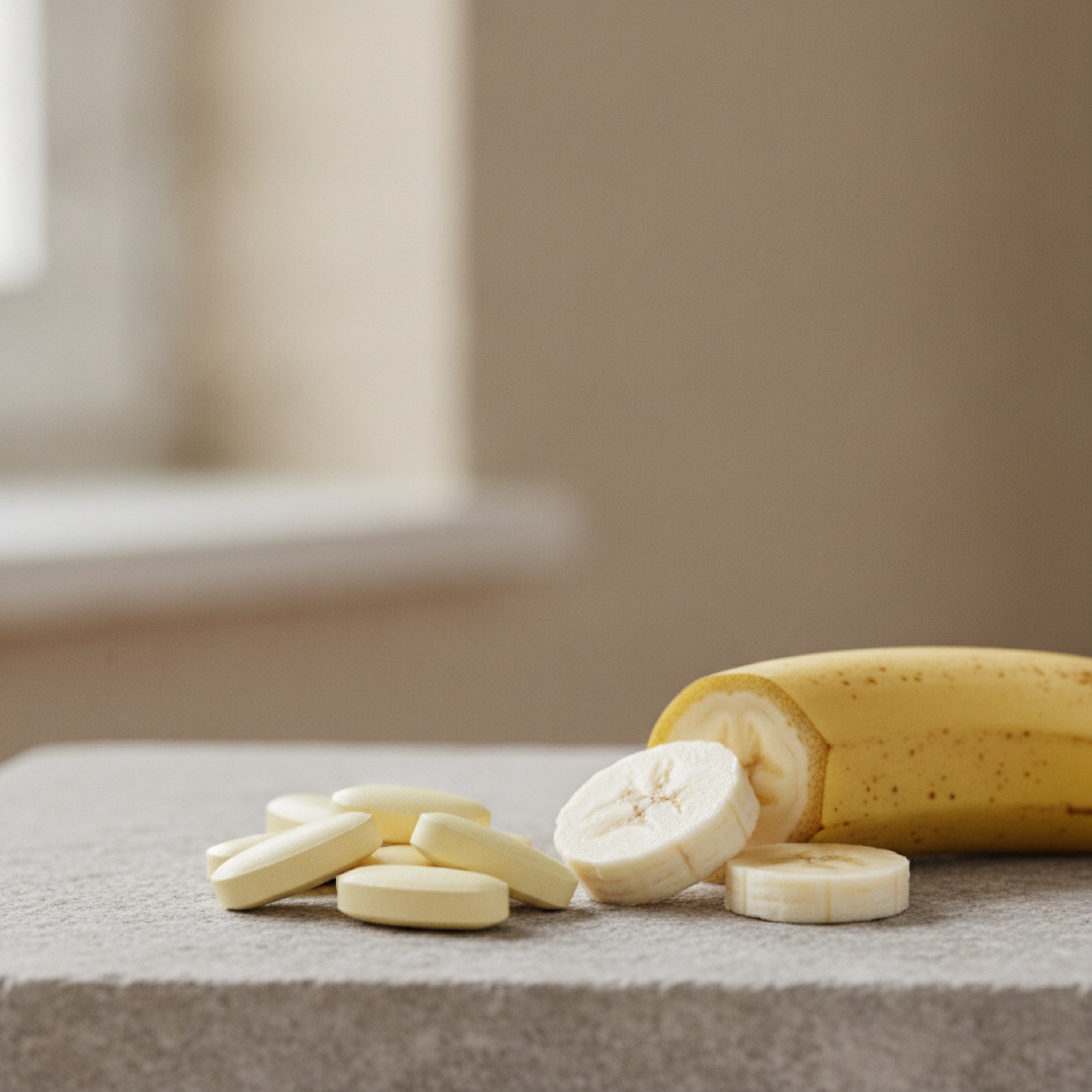
Both pyridoxine and pyridoxal-5-phosphate (P5P) are forms of vitamin B6, and both ultimately support the same coenzyme functions in the body. Choosing between them, and deciding how much to take, requires understanding what the evidence actually shows and where the safety boundaries sit.
What Is Vitamin B6 and Why Does the Form Matter?
Vitamin B6 is a water-soluble vitamin that exists in several chemical forms. The two most common in supplements are pyridoxine (also written as pyridoxine hydrochloride) and pyridoxal-5-phosphate, often labeled P5P or PLP. According to the NIH Office of Dietary Supplements (ODS), the body must convert pyridoxine into PLP before it can be used. P5P supplements skip that conversion step because PLP is already the active coenzyme form.
A third natural vitamer, pyridoxamine-5-phosphate (PMP), also acts as a coenzyme. Together, PLP and PMP support amino acid metabolism, and PLP additionally supports the metabolism of one-carbon units, carbohydrates, and lipids, per the NIH ODS.
What Vitamin B6 Does in the Body
The NIH ODS notes that vitamin B6, primarily as PLP, acts as a coenzyme in more than 100 enzyme reactions, most of them involved in protein metabolism. Specific physiological roles include:
- Amino acid metabolism, supporting the breakdown and synthesis of proteins
- Metabolism of one-carbon units, carbohydrates, and lipids
- Cognitive development through the biosynthesis of neurotransmitters such as serotonin, dopamine, and gamma-aminobutyric acid
- Helping maintain normal blood homocysteine levels
These are physiological roles, not therapeutic claims. Supplements are not intended to diagnose, treat, cure or prevent any disease and these statements have not been evaluated by the FDA.
Pyridoxine vs P5P: Practical Differences
Because pyridoxine requires enzymatic conversion to PLP in the liver, some researchers have suggested that P5P may be more bioavailable in people with impaired liver function or certain genetic variants. However, head-to-head clinical trials comparing the two forms in healthy adults are limited, and the NIH ODS does not currently recommend one form over the other for the general population.
One practical concern with pyridoxine specifically is that very high doses of supplemental pyridoxine have been associated with sensory neuropathy in the research literature, a point discussed in the safety section below. Whether P5P carries the same risk at equivalent doses is not yet clearly established, so caution at high doses applies to both forms.
How Much Do Adults Need?
According to the NIH ODS and the Dietary Reference Intakes published by the National Academies, the Recommended Dietary Allowance (RDA) for vitamin B6 in adults aged 19 to 50 years is 1.3 mg per day for both men and women. Most people who eat a varied diet that includes poultry, fish, potatoes, and non-citrus fruits meet this target through food alone.
The Upper Limit: A Number Worth Knowing
The Food and Nutrition Board (FNB) set an adult Tolerable Upper Intake Level (UL) of 100 mg per day for adults aged 19 years and older, according to the NIH ODS. This limit applies to the combined total from food and supplements.
Importantly, in 2023 the European Food Safety Authority (EFSA) set a considerably lower upper limit of 12 mg per day for all adults, including during pregnancy and lactation. The gap between the US and European limits reflects ongoing scientific debate about the dose at which long-term supplementation poses neurological risk.
The NIH ODS states that high intakes from food alone have not been reported to cause harm. The concern arises specifically with long-term high-dose supplementation, which can cause sensory neuropathy, a form of nerve damage affecting sensation. Symptoms have been reported at doses well above the UL, but because individual sensitivity varies, staying within established limits is prudent unless a clinician recommends otherwise.
Many over-the-counter B-complex and standalone B6 supplements contain doses ranging from 25 mg to 100 mg per serving, which is already at or approaching the US UL and far above the EFSA limit. Reading labels carefully matters.
What the Evidence Actually Shows
The NIH ODS grades the evidence for several commonly cited uses of vitamin B6:
- Coenzyme role in protein and amino acid metabolism: Strong evidence
- Maintaining normal blood homocysteine levels: Strong evidence
- Reducing nausea and vomiting in pregnancy: Moderate evidence
- Reducing symptoms of premenstrual syndrome (PMS): Limited evidence
- Reducing the risk or severity of cardiovascular disease or stroke (alone or combined with folate and B12): Insufficient evidence
- Preventing cancer or reducing cancer mortality: Insufficient evidence
- Improving cognitive function or preventing cognitive decline in older adults: Insufficient evidence
Honest grading matters. Strong evidence for a physiological role does not automatically translate into a proven benefit from supplementation in people who are not deficient.
Drug Interactions to Discuss With Your Doctor
Vitamin B6 interacts with several medications. The NIH ODS identifies the following:
- Cycloserine (Seromycin), an antibiotic used for tuberculosis, increases urinary excretion of pyridoxine and can worsen seizures and neurotoxicity. Pyridoxine supplements may help prevent these effects, but this should be managed by a clinician.
- Antiepileptic drugs including valproic acid, carbamazepine, and phenytoin increase the breakdown of vitamin B6 vitamers, lowering plasma PLP and raising homocysteine levels.
- Pyridoxine supplementation at 200 mg per day for 12 to 120 days may reduce serum concentrations of phenytoin and phenobarbital, possibly by speeding their metabolism, which could affect seizure control.
- Levetiracetam (Keppra): preliminary evidence suggests vitamin B6 at 50 to 100 mg per day in adults may reduce behavioral side effects such as irritability and agitation, but this evidence is early stage.
If you take any of these medications, talk to your doctor or pharmacist before adding a vitamin B6 supplement in any form or dose.
Choosing a Form and Dose
For most healthy adults who eat a varied diet, additional vitamin B6 supplementation is unlikely to be necessary. If a supplement is appropriate, the form (pyridoxine or P5P) is less important than keeping the dose within safe limits. Given the divergence between the US UL of 100 mg per day and the 2023 EFSA limit of 12 mg per day, many clinicians now favor conservative doses closer to the lower European threshold for long-term use.
Always consult a clinician or pharmacist for personal dosing guidance, particularly if you are pregnant, nursing, older, or managing a chronic health condition. The figures in this guide are population reference values from the NIH ODS and the National Academies and are not a substitute for individualized medical advice.
Sources
- NIH Office of Dietary Supplements, Vitamin B6 Health Professional Fact Sheet: https://ods.od.nih.gov/factsheets/VitaminB6-HealthProfessional/
- NIH Office of Dietary Supplements, Vitamin B6 Consumer Fact Sheet: https://ods.od.nih.gov/factsheets/VitaminB6-Consumer/
- National Academies of Sciences, Dietary Reference Intakes for Thiamin, Riboflavin, Niacin, Vitamin B6, Folate, Vitamin B12, Pantothenic Acid, Biotin, and Choline: https://nap.nationalacademies.org/catalog/6015/dietary-reference-intakes-for-thiamin-riboflavin-niacin-vitamin-b6-folate-vitamin-b12-pantothenic-acid-biotin-and-choline
Sources
- S1.gov verifiedNIH Office of Dietary SupplementsVitamin B6 - Health Professional Fact Sheetods.od.nih.gov/factsheets/VitaminB6-HealthProfession
- S2.gov verifiedNIH Office of Dietary SupplementsVitamin B6 - Consumer Fact Sheetods.od.nih.gov/factsheets/VitaminB6-Consumer/
- S3.gov verifiedInstitute of Medicine (NASEM), Food and Nutrition BoardDietary Reference Intakes: Thiamin, Riboflavin, Niacin, Vitamin B6, Folate, Vitamin B12, Pantothenic Acid, Biotin, and Choline (1998)nap.nationalacademies.org/catalog/6015/dietary-refer